
I love a beautiful desk, but I also want to finish my work without knocking over my water bottle, covering sticky notes in highlighter, or somehow losing my favorite pen five minutes after using it.
If you’re searching for desk decoration ideas for office, the goal is simple: create a workspace that looks intentional, feels comfortable, and still functions like a tiny command center. A desk can be stylish and practical at the same time.
And yes, coffee rings may still happen. That’s part of the working-life experience.
Table of Contents show
Start With the “Office-Friendly” Desk Rules
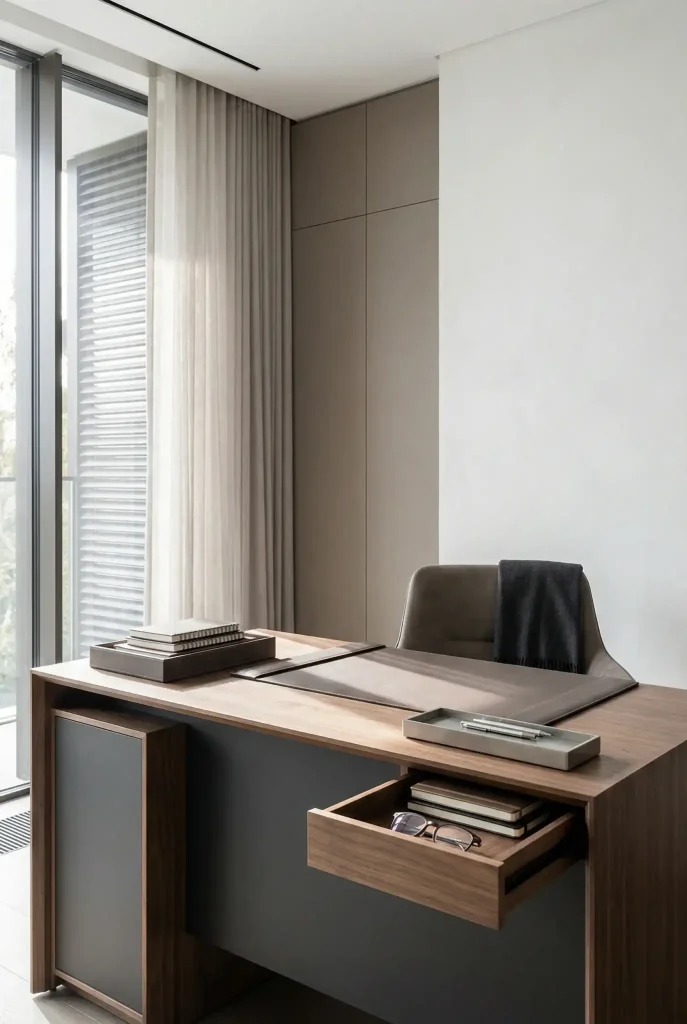
A workspace can feel personal and welcoming without looking like a bedroom nightstand. The easiest approach is to establish a few simple office-friendly rules and then decorate within those boundaries.
The 3 clutter lines (desktop / visible storage / hidden storage)

Most desk clutter usually comes from one of three areas getting out of control. Think of your workspace as having a desktop zone, a visible-storage zone, and a hidden-storage zone.
Here’s an easy way to organize them:
- Desktop: Keep only the things you use every day, such as your keyboard, mouse, notepad, and drink.
- Visible storage: Use attractive containers for items you need nearby, such as pens, documents, or small supplies.
- Hidden storage: Reserve drawers for backups, extra cables, refills, snacks, and less frequently used items.
Once everything has a designated zone, office desk decorations feel more curated and can complement a zen office instead of creating more visual clutter. If your desk is overflowing, adding more organizers probably isn’t the answer. Start by removing things that don’t belong on the surface.
Scent & sound etiquette (office-safe swaps)
A shared office requires a little consideration when it comes to sound and scent. Your workspace should feel comfortable to you without becoming distracting for everyone nearby.
If you enjoy music while working, use headphones and keep the volume at a level that won’t disturb coworkers. White noise or quiet focus playlists can also help create a calmer environment, particularly when the office gets noisy.
For scent, candles usually aren’t appropriate for workplaces. Instead, consider subtle alternatives such as:
- lightly scented hand cream
- a small sachet inside a drawer
- a low-scent diffuser, but only when workplace policies allow it
The idea is to create a pleasant personal environment without filling the entire office with fragrance.
Personal items without looking unprofessional (the “3 personal items” guideline)
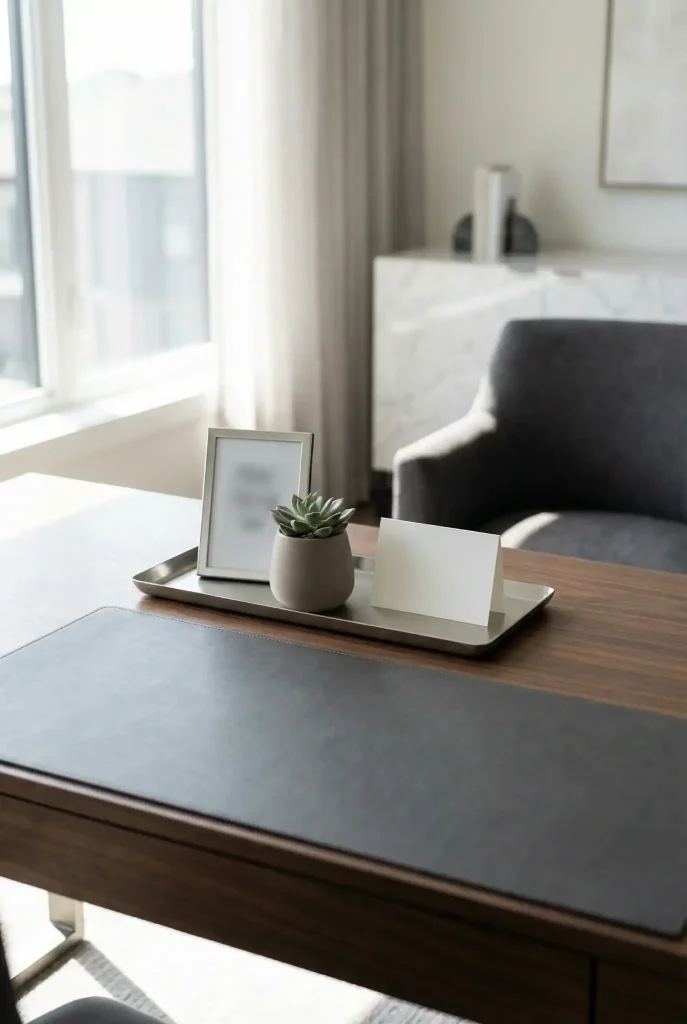
Personal touches can make a workspace feel much more comfortable. The trick is to keep them edited rather than covering every available surface.
A simple three-item formula works well:
- one framed photograph
- one small piece of artwork
- one meaningful object, such as a travel souvenir or ceramic dish
Pay attention to scale. Your personal items should complement your workspace rather than compete with your computer, documents, and other essentials. You can also personalize functional items, such as using a favorite mug as a pen holder.
The 5-Layer Desk Styling System (Your Step-by-Step)
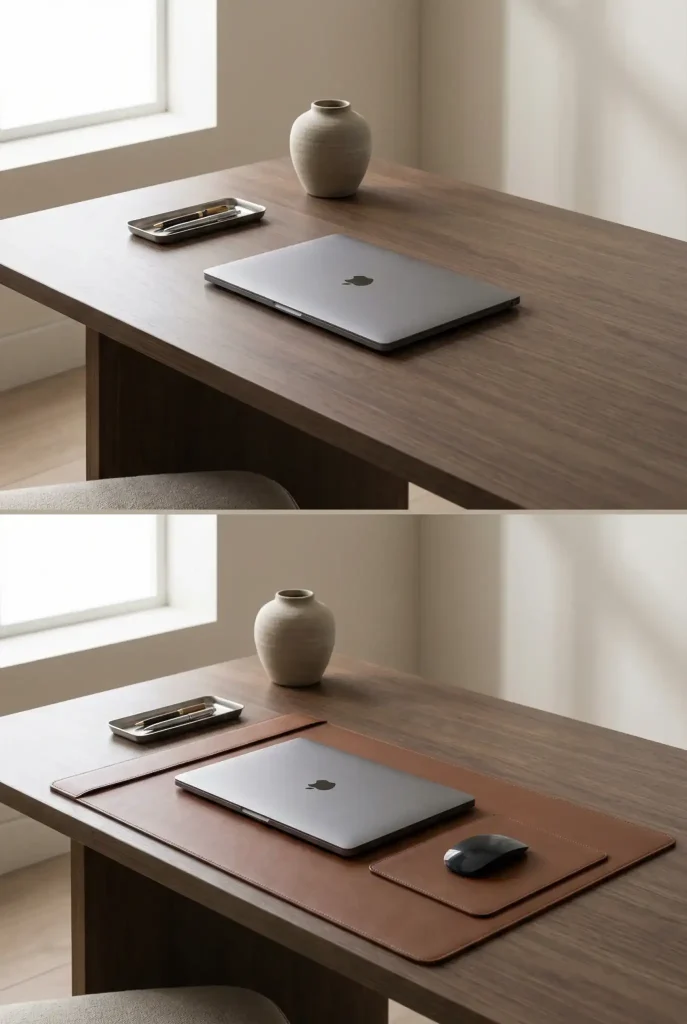
If your desk always feels like it is missing something, try thinking in layers. Each layer serves a different purpose, and together they create a workspace that feels complete without becoming crowded.
Layer 1: Base — desk mat, color foundation, mouse pad choice (modern desk decor)

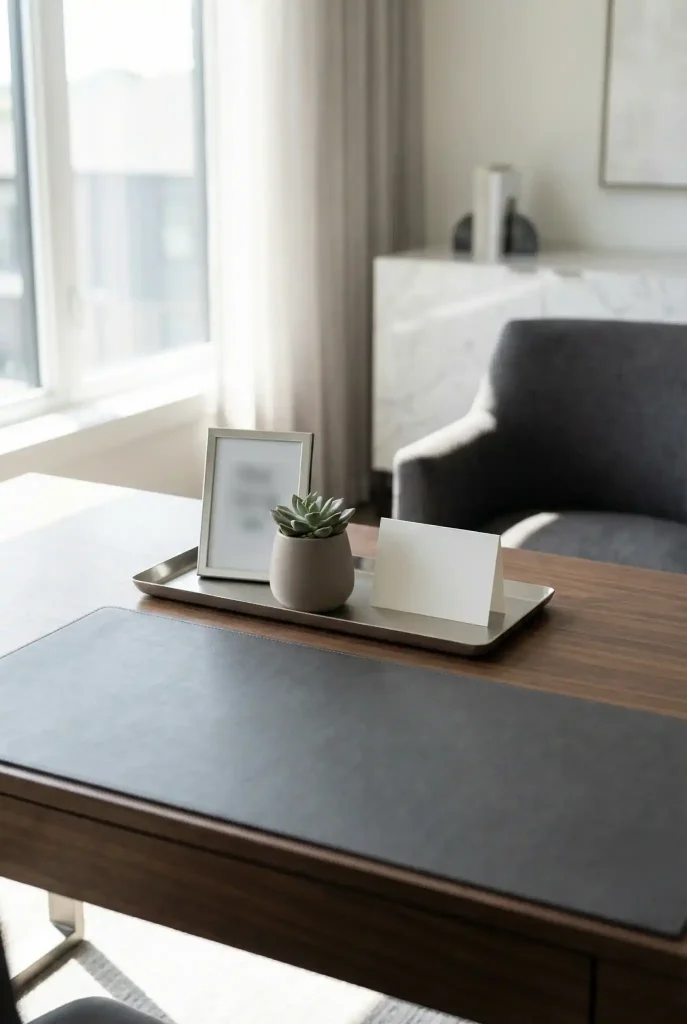
The base establishes the overall look of your desk. A desk mat is one of the easiest ways to make the surface look finished while also protecting it from scratches, spills, and everyday wear.
Choose one main neutral color and pair it with one accent, or use two neutrals with different textures. Black, warm beige, soft gray, and natural wood tones are especially easy to style.
Your mouse pad should coordinate with the mat rather than compete with it. If you don’t have room for a full desk mat, use a mouse pad and small tray in complementary colors to create the same cohesive effect.
This simple foundation can make modern desk decor look polished without requiring a large collection of accessories.
Layer 2: Function — pen cup, notepad, inbox tray, functional desk accessories
The functional layer includes everything you reach for throughout the day. These pieces should be practical first but can still contribute to your overall aesthetic.
Useful basics include:
- a pen holder large enough for pens, scissors, and highlighters
- one attractive notepad for daily tasks
- a slim inbox or paper tray for documents
If most of your work happens digitally, you may not need a paper tray. Instead, use a small catchall for everyday essentials.
The best functional desk accessories are the ones that solve a real problem while fitting naturally into your desk design.
Layer 3: Contain — trays, magazine holders/bookends, drawer dividers, desk storage solutions

Containment is what keeps small items from spreading across your entire workspace. A few carefully chosen organizers can make a big difference.
Try a simple combination:
- one tray for small daily items such as badges, sticky notes, lip balm, or a stapler
- one vertical holder for notebooks, folders, or magazines
- drawer dividers for cords, refills, and miscellaneous supplies
Vertical storage is especially useful when your desktop is small because it takes advantage of unused height. Good desk storage solutions don’t need to hide everything. They simply give frequently used items a logical home.
Layer 4: Lift — lighting + monitor riser/stand (height + comfort)
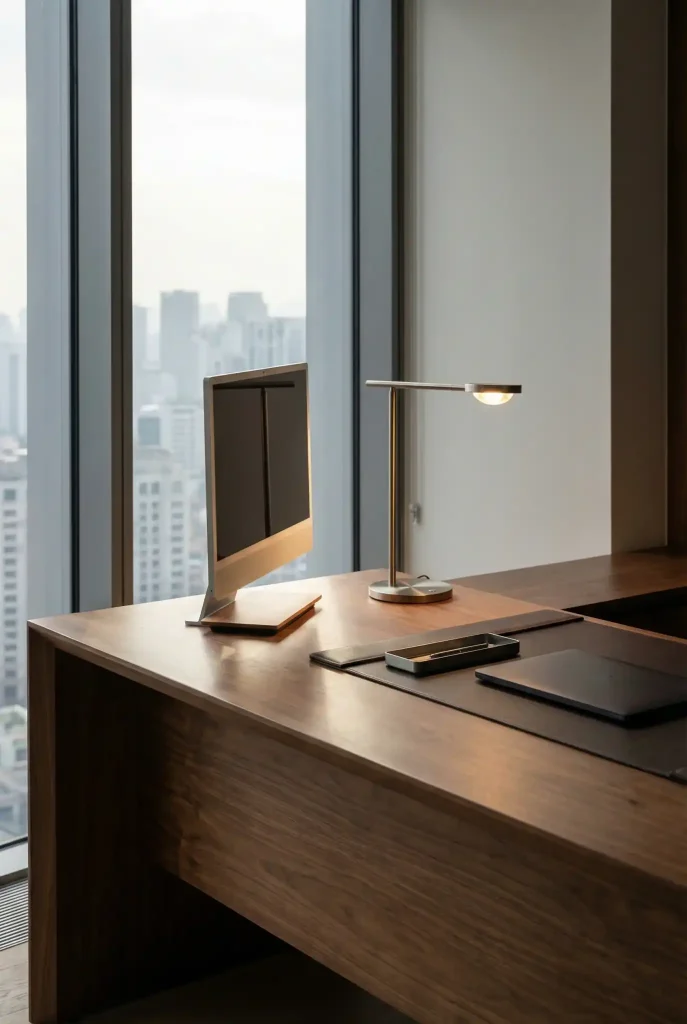
Adding height helps break up a flat desktop and can also improve your comfort. A monitor riser or laptop stand can raise your screen while creating useful storage space underneath.
Choose a finish that complements your desk mat and other accessories. A wood riser can add warmth, while metal or neutral finishes can create a cleaner modern look.
Lighting also belongs in this layer. A small task lamp adds height, improves visibility, and gives the desk a more finished appearance. It can completely change the atmosphere of a workspace without taking up much room.
Layer 5: Personal — photos, art, plants, meaningful objects (personalized desk decor)

The final layer is where your personality comes through. This can include photographs, artwork, plants, or one meaningful decorative object.
For personalized desk decor, less is usually more. Try one framed print, one small plant, or one sculptural object rather than filling every corner.
Choose items that reflect your style, whether that means soft neutrals, playful colors, vintage pieces, or minimalist shapes. Giving each item enough breathing room helps the entire desk feel more intentional.
Pick a Desk “Vibe Recipe” (So It Looks Intentional)
A simple style formula makes decorating much easier. Instead of buying random accessories you like individually, choose a general vibe and repeat a few colors, materials, and shapes throughout the setup.
Modern Minimal (black/white + one warm wood)
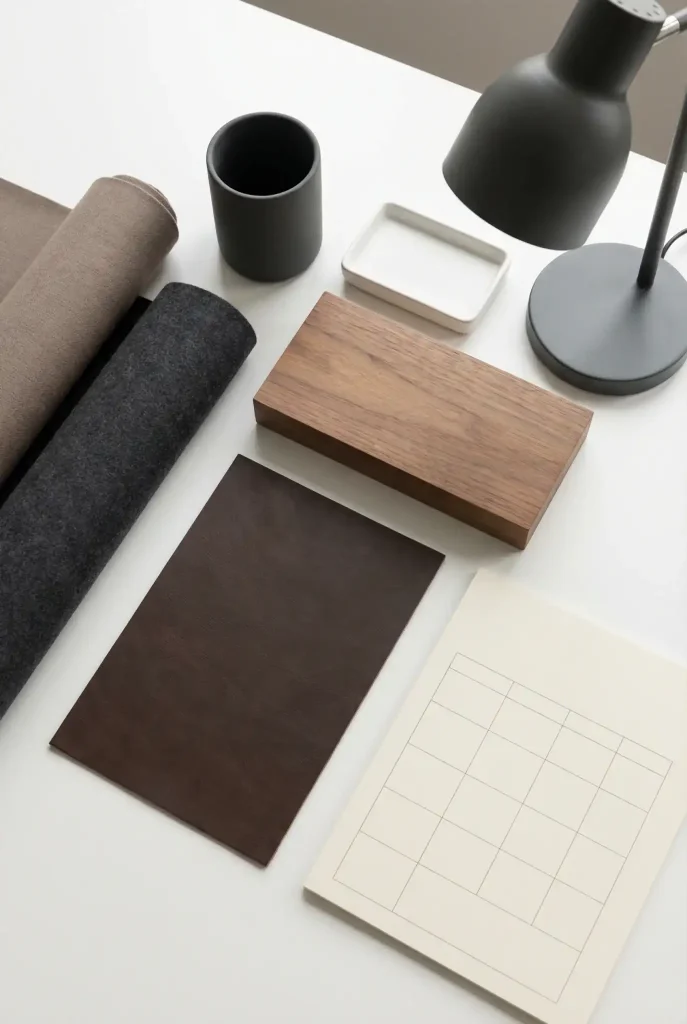
Modern minimal is ideal if you prefer a clean, sophisticated workspace. Use black and white as your main colors and introduce one warm wood element to keep the space from feeling too cold.
A simple formula could include:
- black or white desk accessories
- a neutral desk mat
- one warm wood riser or organizer
- one small plant or artwork
Leave plenty of open space around your accessories. Minimalism works best when the desk isn’t overloaded.
And don’t forget the cables. Even the most beautiful minimalist desk can quickly look messy when cords are scattered everywhere.
Color Pop Creative (bright accessories + contained clutter)
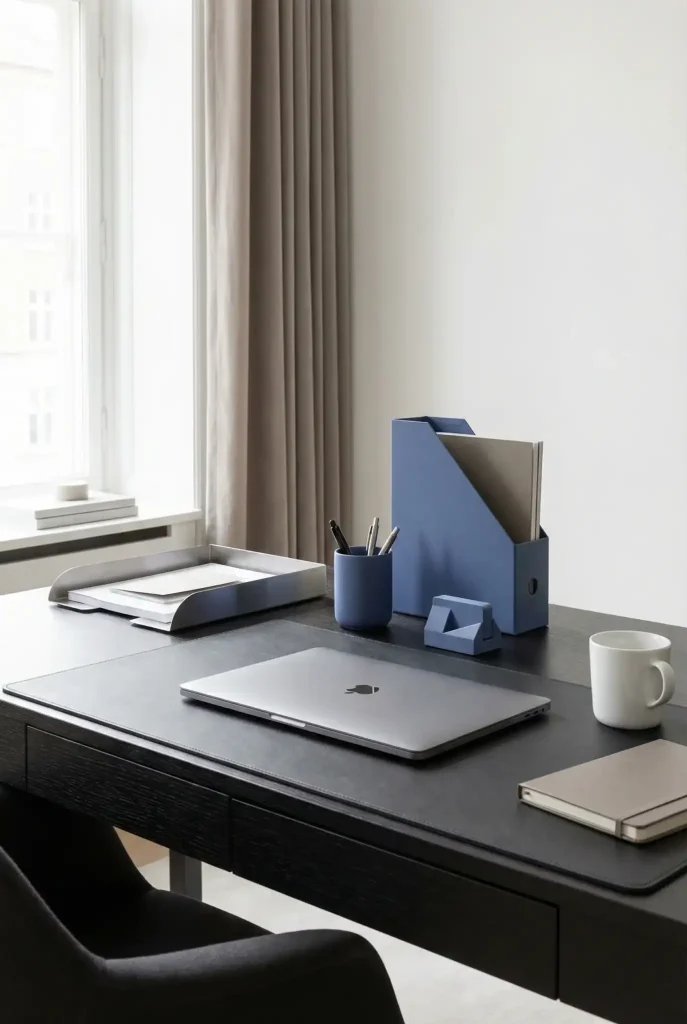
A colorful desk can feel energetic and inspiring, especially if your work involves creativity. The key is controlling the amount of color.
Choose one or two bright shades and repeat them through smaller accessories such as:
- pen holders
- notebooks
- trays
- sticky notes
- desk organizers
Keep the larger pieces neutral so the brighter colors stand out. This creates a fun look without turning the desk into a visual overload.
For creative desk decor, containment is especially important. Small colorful items should have a designated tray, drawer, or container rather than sitting loose across the desktop.
Sleek Corporate (neutral + metal accent + clean lines)

For a polished professional workspace, stick with neutral shades such as black, gray, navy, beige, or white. Then add one subtle metallic element.
You might use a silver lamp, brushed-gold organizer, or metal document tray. Keep the shapes simple and the desktop relatively clear.
This style works particularly well in shared offices because it feels professional while still giving the space some personality. It also provides a neutral foundation for seasonal updates or other office theme ideas.
Cozy WFH (soft texture + warm light + calm palette)
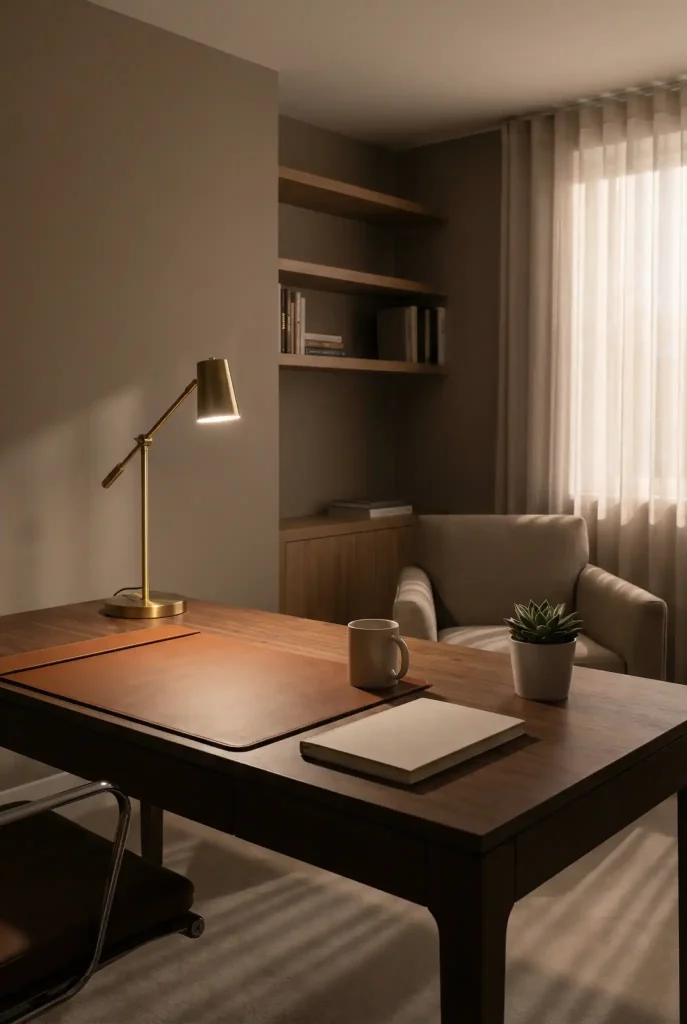
A home office gives you more freedom to make your desk feel like part of your home. Soft textures, warm lighting, and calming colors can make long workdays feel more comfortable.
Try adding:
- a woven tray
- a fabric or linen-look desk mat
- warm lighting
- a soft coaster
- a small plant
- a low-pile rug beneath the chair
This is where home office decor gets to be a little more personal. When decorating home office spaces, choose pieces that connect with the rest of the room instead of making the desk look like a completely separate area.
The only danger is overdoing the cozy look. A comfortable workspace still needs breathing room.
If you want a dramatic change without buying lots of accessories, consider a backdrop feature such as removable wallpaper behind the desk or a monochrome setup that coordinates with the wall. One strong visual element can make the entire workspace feel more designed.
Organization That Counts as Decor (Clutter-Free Desk, But Pretty)
Good organization can actually become part of your desk decor. The right systems keep clutter controlled while making the workspace look more polished.
Trays + catchalls (paper + small items)
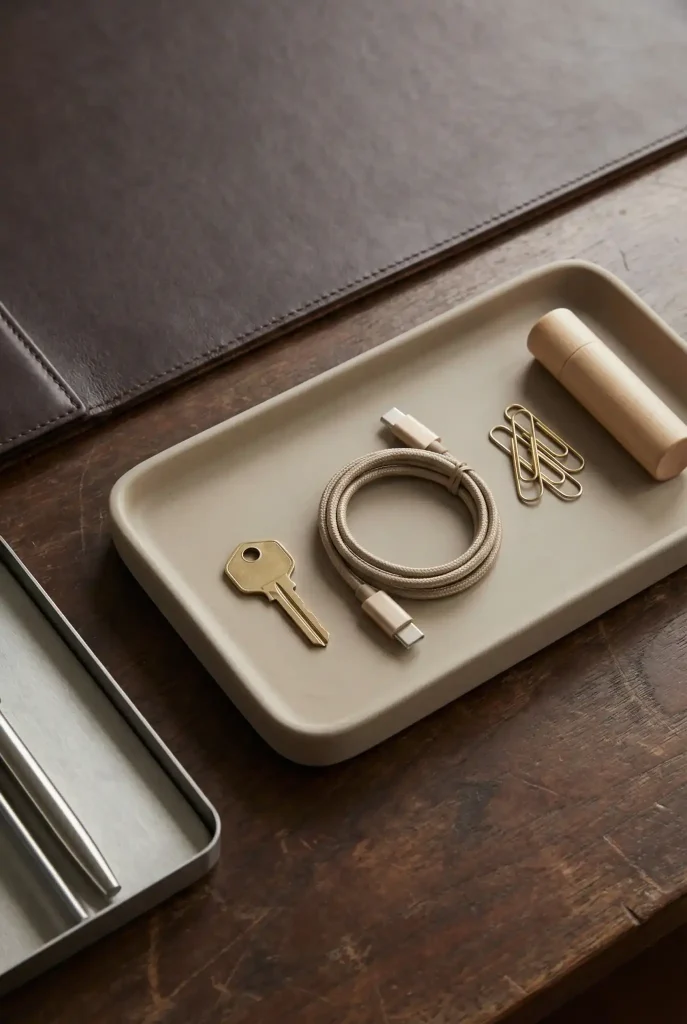
A tray is one of the easiest ways to instantly organize a desk. It gives small objects a defined boundary instead of allowing them to spread across the surface.
Use one tray for everyday items and another container for loose paperwork if needed. Choose wood, acrylic, ceramic, or metal depending on your desk style.
The most important thing is size. A tray should be large enough to hold your essentials without becoming another overflowing storage area.
If you’re collecting workspace organization ideas, start with a tray. It combines organization and decoration in one simple piece.
Cable management that disappears (clips, box, under-desk route)
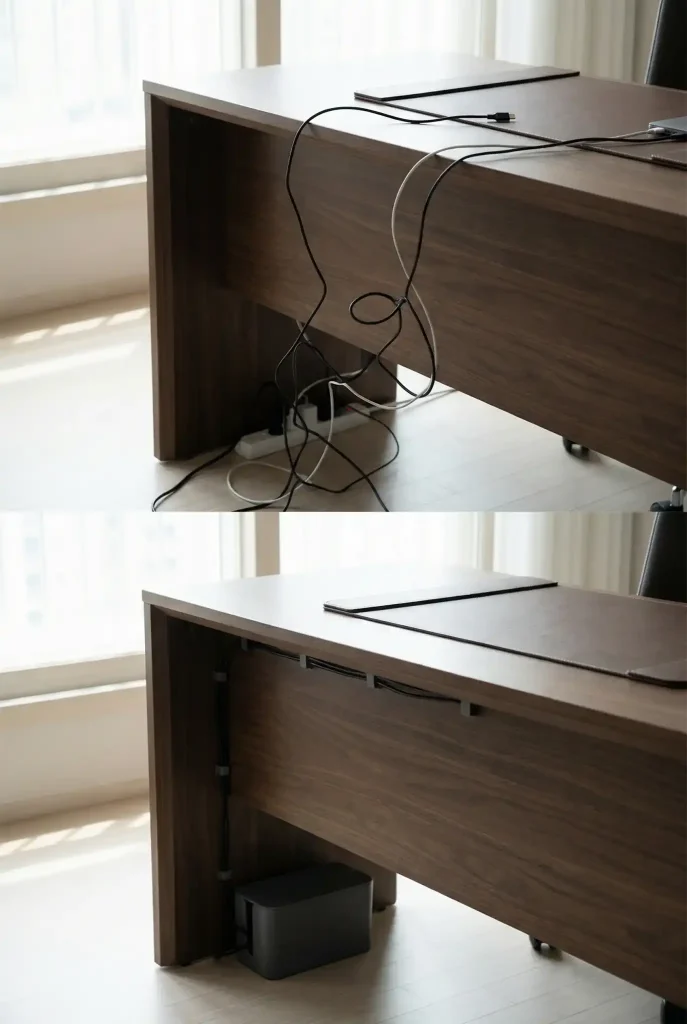
Nothing ruins a carefully styled desk faster than tangled cables. Simple cable management can make an immediate visual difference.
Try this setup:
- attach cords along the back edge of the desk
- place the power strip inside a cable-management box
- route cables toward one side of the desk
- label chargers so you can identify them quickly
Creating one dedicated cable zone is much better than allowing cords to cross the entire workspace. It’s one of the easiest desk organization tips for making a setup look cleaner.
Wall space helpers (pegboard/floating shelf/bulletin board)

When your desktop is small, use the wall instead of adding more items to the surface.
A pegboard is useful for small tools and supplies. A floating shelf can combine storage and display. A bulletin board is ideal when you need visual reminders or frequently reference paperwork.
Choose a wall organizer that matches your desk style so it looks intentional rather than purely functional.
Using vertical space is one of the smartest workspace organization ideas because it gives you additional storage without taking away valuable working room.
Hot-desk / hybrid option: a portable desk caddy (grab-and-go)
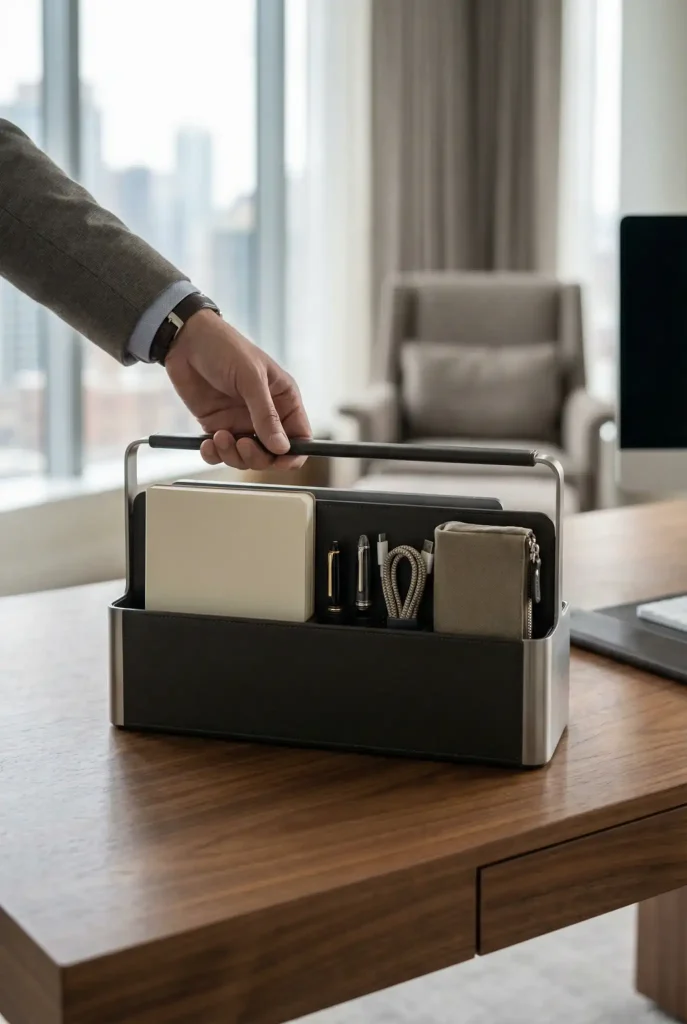
A portable desk caddy is especially useful if you move between different workstations or split your time between home and the office.
Choose one with compartments for:
- pens
- chargers
- notebooks
- small personal items
- other daily essentials
Keep the contents limited to things you genuinely use. Otherwise, the caddy can become a portable junk drawer.
The biggest advantage is consistency. You can quickly move your essentials from one workspace to another while keeping each desk relatively clear.
Plants & Nature That Survive Real Workdays
Plants can instantly make a workspace feel fresher and more welcoming. However, the best desk plants are the ones that match your available light and how much care you realistically want to provide.
Best low-maintenance desk plants (succulents/pothos-style options)
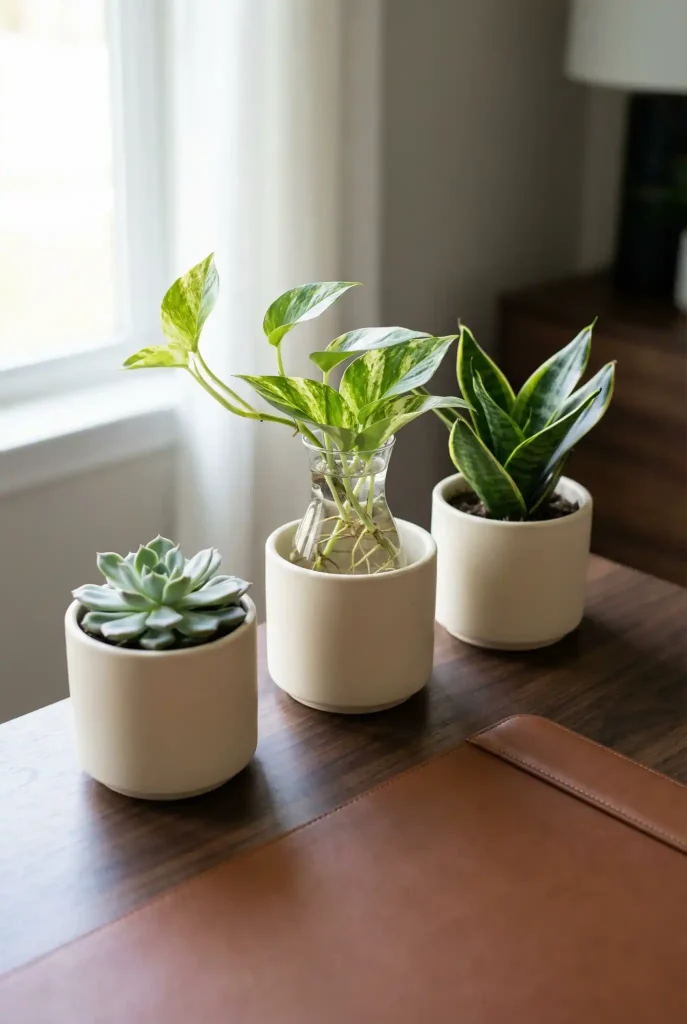
Low-maintenance varieties are generally the easiest choice for busy workspaces.
Consider:
- succulents: suitable for bright areas and relatively infrequent watering
- pothos-style plants: forgiving and attractive as trailing plants
- snake plants: useful for lower-light areas
- ZZ-type plants: low-maintenance and tolerant of less frequent watering
Use a small pot with a saucer or catch tray to protect your desk from moisture. You don’t need several plants to make an impact. One healthy plant can soften the entire workspace.
Faux plant tips (how to make them look real)
Faux plants are a great option if your workspace doesn’t receive enough natural light or you don’t want another thing to maintain.
Look for plants with varied leaf colors and a matte rather than overly glossy finish. Place the plant in a substantial ceramic or stone-look pot to make it feel more realistic.
You can also cover the visible base with moss or another decorative material. And remember to dust it occasionally. Even artificial plants look much better when they’re clean.
Flowers (when it’s worth it)
Flowers can provide an instant mood boost, especially during busy or stressful weeks. You don’t need a large bouquet to make an impact.
A small bud vase with a few stems can add color without taking up valuable work space. In a shared office, choose flowers with little or no noticeable fragrance.
For a home office, you can experiment with larger arrangements, but keep them away from the main working area so they don’t become an obstacle.
Lighting for Workspace (Productivity + Mood + Zoom-Friendly)
Lighting affects both the appearance and comfort of your workspace. Good lighting for workspace design should provide enough illumination for your tasks without creating screen glare.
Task lamp basics + bulb tone
Position your task lamp so it illuminates your work surface without shining directly into your eyes or reflecting off your monitor.
The color temperature also affects the atmosphere. Warm lighting can make a workspace feel cozy, while neutral lighting is often more suitable for detailed work and video calls.
An adjustable lamp gives you flexibility throughout the day. You can use brighter lighting when you need concentration and softer lighting later when you want a calmer environment.
Natural light placement + “window side” idea
Natural light is one of the best additions to any workspace. If possible, position your desk so the window is beside you rather than directly behind or in front of your monitor.
Side lighting can reduce screen glare and provide more flattering light during video calls. If the window is extremely bright, a sheer curtain can help soften it.
For a balanced arrangement, place your plant closer to the window and your task lamp on the opposite side. This creates visual balance while keeping both items useful.
Optional: LED strip/bias lighting (when it fits your style)
Soft LED or bias lighting behind a monitor can add depth and atmosphere, particularly when you work in the evening.
It works especially well with modern and sleek desk styles. Keep the lighting subtle rather than overly bright or distracting.
A gentle glow behind the monitor can reduce the harsh contrast between a bright screen and a dark room while giving the workspace a more finished appearance.
Mood Boosters That Aren’t Messy
Your desk should make you feel comfortable and focused, but mood-enhancing additions don’t need to create extra clutter.
Sound: white noise / focus playlist (office-safe volume)
Sound can influence concentration, particularly in a busy office. Headphones are usually the easiest way to create a personal sound environment without disturbing coworkers.
White noise, ambient sounds, and focus playlists with minimal lyrics can work well. Keep the volume low enough that you can still hear important conversations or someone trying to get your attention.
Scent swaps: candle alternatives for offices (diffuser rules)
Strong fragrances can be distracting in shared workplaces, so keep scent subtle.
Depending on office rules, alternatives to candles may include:
- lightly scented hand products
- a drawer sachet
- a scented drawer liner
- a small diffuser used at a very low level
Always consider coworkers who may be sensitive to fragrances. The goal is a barely noticeable sense of freshness rather than filling the entire office with scent.
Micro “joy items” that still look professional
A tiny personal item can make your workspace feel more enjoyable without making it look cluttered.
Good choices include:
- a simple paperweight
- a small framed quote
- a smooth decorative stone
- a miniature artwork
- a small sculptural object
Choose one or two meaningful pieces rather than creating a collection. A little personality goes a long way when the rest of the desk remains clean.
Comfort Upgrades That Look Stylish
A stylish desk isn’t very useful if sitting there makes you uncomfortable. Ergonomic improvements can also look polished when you choose simple materials and coordinated designs.
Wrist rest + cushion (pretty + supportive)
A wrist rest can provide support while still fitting your desk aesthetic. Look for neutral fabric, faux leather, wood, or another material that complements your desk mat.
A seat cushion can also improve comfort during long work sessions. Choose a simple design in a neutral shade so it blends into your workspace rather than looking out of place.
For everyday practicality, especially if you eat near your desk, choose materials that are easy to clean.
Monitor riser / laptop stand + keyboard tray (clean lines)
A monitor riser or laptop stand can improve screen height while freeing up valuable desk space.
Choose a stand that matches the rest of your setup:
- wood for a warm and natural look
- metal for a sleek appearance
- white, black, or neutral finishes for minimalist spaces
A keyboard tray can also help clear the main desktop. Make sure it feels stable and comfortable before committing to one.
Footrest/rug idea (WFH)
For a home office, a footrest can improve comfort while a small rug can visually define your workspace.
A low-pile rug works well beneath a desk because it allows the chair to move more easily. If your desk sits in a bedroom or living room, a rug can also make the workspace feel like an intentional part of the room.
Time + Focus Tools That Double as Decor
Useful productivity tools don’t have to look boring. When selected carefully, they can become part of your desk design.
Desk calendar ideas (minimal vs colorful)
A desk calendar can act as both a planning tool and a visual anchor.
For a calm workspace, choose a minimal calendar with neutral colors and plenty of white space. If you prefer more energy, select a colorful version and keep the surrounding accessories relatively simple.
Place it somewhere you can glance at quickly without blocking your monitor or workspace.
Magnetic/bulletin board reminders without visual chaos
A magnetic or bulletin board is useful when you need reminders where you can see them. The challenge is preventing the board from becoming another clutter zone.
Keep only current reminders visible. Create a small “this week” area and remove outdated notes regularly.
Matching magnets or pins can also make the board feel more cohesive. Add one attractive print if you want to bring in a little inspiring office decor, but keep the majority of the board functional.
“One notepad system” to keep the surface clear
If your desk is covered in sticky notes, creating another place for notes probably won’t solve the problem. A single notepad system is often much easier to maintain.
Choose one notebook or notepad for daily tasks and keep it in the same location. When information is written somewhere else, transfer it to the main system or discard it once it is no longer useful.
This keeps your workspace clearer and reduces the chance of losing important reminders.
Tiny “Unique” Touches (Pick 1–2)
Small details can make a desk feel distinctive without adding significant clutter. Choose only one or two so they actually stand out.
Digital background/screensaver refresh
Your computer screen is part of your workspace too. A simple background or screensaver can coordinate with your physical desk.
Try a calming photograph, simple pattern, or color palette that complements your accessories. It’s a tiny change that can make the whole setup feel more cohesive.
Keyboard skin/stickers or artisan detail (subtle!)
Add personality to items you already use instead of bringing more objects onto the desk.
A subtle keyboard skin, a few carefully chosen stickers, or one small artisan detail can make your setup feel customized.
Keep the design restrained, particularly if you work in a shared office. One small detail can have more impact than covering the entire keyboard.
Drawer liner/contact paper (hidden surprise)
A drawer liner is an easy way to add personality without affecting the visible workspace.
Choose a contact-paper pattern or color you enjoy and use it inside a drawer. Every time you open it, you get a small visual surprise while the desktop remains clean and professional.
Small mirror/reflective accent for tiny desks
A small mirror or reflective accessory can help a compact workspace feel brighter and more open.
A round tabletop mirror or reflective tray can add visual interest without taking up much space. A reflective tray can also serve as a practical catchall for small daily items.
Snack tin/jar (WFH or “in-drawer” version)
For a home office, a small snack container can be both practical and decorative. Choose a tin or jar that matches your desk style and use it for snacks that won’t create crumbs everywhere.
In a shared office, keep the container inside a drawer or cabinet so your workspace stays professional and uncluttered.
The Reset Routine (So It Stays Cute)
A well-decorated desk is easier to maintain when you have a simple reset routine. You don’t need to reorganize everything every day. A few consistent habits can prevent clutter from taking over.
10-minute end-of-day desk reset
A short reset at the end of your workday can make the next morning much easier.
Try these steps:
- Return loose items to their trays, drawers, or organizers.
- Throw away unnecessary trash and scraps.
- Wipe down the desktop or desk mat.
- Put away documents and supplies.
- Leave one notepad and one pen ready for the next day.
The purpose isn’t perfection. It’s creating a repeatable routine that keeps your office desk decorations visible instead of buried under work.
Weekly 5-minute refresh checklist
Once a week, take a few minutes to reset the small systems that tend to drift.
- Empty and reorganize your daily tray.
- File, recycle, or remove paper that has accumulated.
- Refill frequently used supplies such as pens and sticky notes.
- Check your cable area and remove anything unnecessary.
- Dust plants, lamps, and decorative pieces.
- Return every item to its designated place.
A desk doesn’t need to stay perfectly styled every minute of the day. It simply needs a system that makes it easy to become organized again. That’s the real secret behind a workspace that stays both pretty and practical.