Modern living rooms can look flawless in photos and still feel surprisingly cold, awkward, or unfinished in an actual home. The good news is that creating a beautiful modern living room isn’t about copying a perfect picture. It’s about making smart choices with your color palette, furniture scale, layout, textures, lighting, and decor.

Modern living rooms are one of my favorite design styles, but they’re also incredibly easy to get wrong.
Modern interiors look effortless online because everything appears clean, calm, and perfectly considered. Then you try to recreate the look in your own home and suddenly the room feels too empty, too cold, echoey, or strangely incomplete. It can feel like you decorated half the room and then got distracted by real life.
If that sounds familiar, you’re definitely not doing everything wrong. Modern design simply depends heavily on a few details that are easy to overlook: scale, layout, texture, and lighting.
And modern style isn’t limited to one exact formula. The most successful modern living rooms often combine elements from Scandinavian living room design, mid-century modern structure, contemporary simplicity, and even touches of modern farmhouse living room coziness or rustic texture.
This guide focuses on practical execution rather than simply showing pretty inspiration. The goal is to help you make real decisions about your living room so the finished space feels stylish, comfortable, functional, inviting, and calm.
Choosing a Modern Palette and Clean Lines
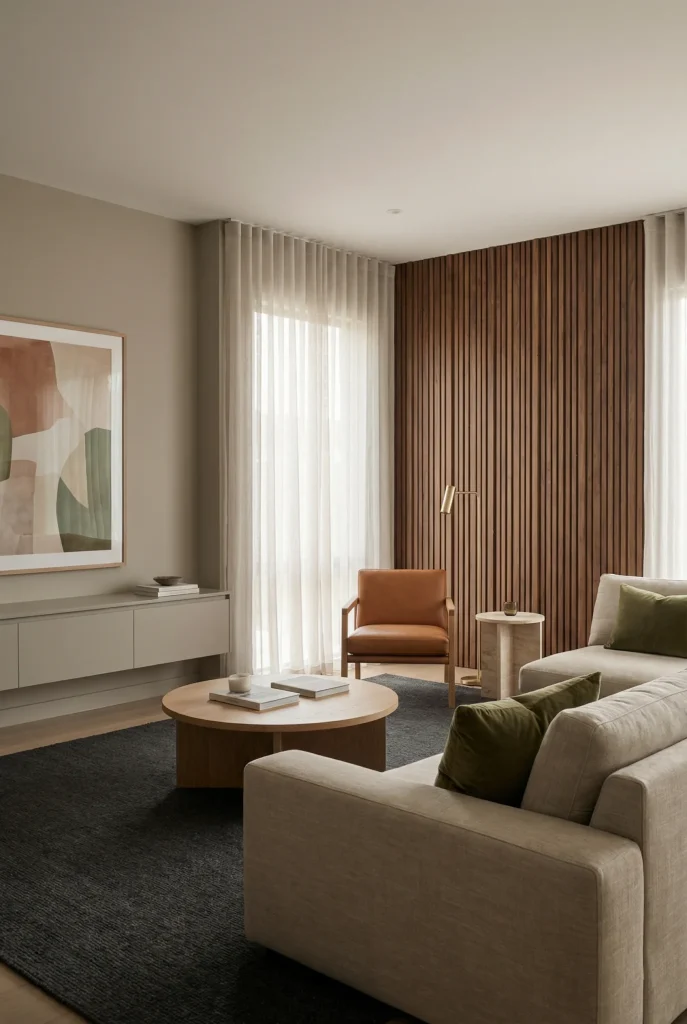
Modern rooms can quickly become cold when the color palette is overly cool, completely flat, or filled with shiny finishes. Adding more accessories usually isn’t the solution.
Instead, start with a palette that has warmth and visual depth, then combine it with clean silhouettes and softer finishes.
A simple modern palette formula is:
Base neutral + grounding element + one point of interest.
The base neutral usually covers the walls and larger upholstered pieces. The grounding element can be natural wood or a deeper color that prevents the room from feeling visually weightless. Your point of interest can be a muted shade, a stronger accent, or even a material that introduces the visual effect of color, such as warm leather or olive velvet.
Modern interiors also tend to work especially well with matte finishes.
Matte walls, honed stone, brushed metals, and other low-shine surfaces create a softer atmosphere. When every surface is glossy, a modern room can start to feel hard, reflective, and echoey rather than warm and comfortable.
Four Modern Color Schemes that Actually Work

Warm neutrals
Creamy whites, warm greige, gentle taupe, and pale oak are an easy combination for creating a bright living room that still feels cozy. This palette also works beautifully with Scandinavian living room design because it creates a soft, natural foundation without making the room feel heavy.
High-contrast black, white, and wood
Matte black details, warm white walls, and natural wood create a strong modern combination. The important part is texture. Add linen, wool, leather, woven materials, or other tactile finishes so the room doesn’t become too sharp or stark.
Muted earth tones
Clay, camel, olive, rust, and soft charcoal are excellent choices if you want a room that feels cozy while maintaining a modern aesthetic. This combination works particularly well in a modern urban living room where warmth is needed to balance cleaner architectural lines.
Airy coastal, not themed
Soft blue, sandy neutrals, and pale wood can create a relaxed beach-house feeling without turning the room into a collection of obvious coastal decorations. Keep the colors subtle, materials natural, and accessories restrained.
Tall Wall Decor that Fixes the “unfinished” Feeling

One of the biggest reasons a modern living room can look unfinished is that the wall decor is simply too small for the available space.
Tall wall decor can help establish scale and make the entire room feel more complete.
Consider:
- Oversized artwork that properly fills the wall
- Floor-to-ceiling curtains mounted high
- Vertical slat panels or understated wall paneling
- Tall shelving units styled with restraint instead of being completely filled
Even one undersized piece of artwork can make a large wall feel strangely empty. It’s the kind of detail you might not immediately identify, but you notice that something doesn’t look quite right.
My go-to picks right now (palette + walls)
- Linen-look curtain panels hung high ($40–$200 per panel). These soften modern lines and work especially well in airy and warm-neutral spaces.
- Matte black curtain rod ($40–$120). A strong choice for high-contrast palettes and modern farmhouse rooms.
- Oversized framed print or canvas ($120–$900, premium $1,000+). Excellent for tall walls and creating immediate visual scale.
- Vertical wood slat panel section ($150–$600 per section). Useful for adding warmth to contemporary and modern urban interiors.
Quick win: Install curtain rods close to the ceiling and choose panels long enough to lightly touch the floor. This simple adjustment can make the room appear taller and more intentional.
Modern Living Room Layout that Actually Functions
Layout is often overlooked because it doesn’t feel as exciting as choosing furniture or artwork. But it can determine whether the room actually works.
You can buy a beautiful sofa, a gorgeous rug, two accent chairs, and a stylish coffee table, only to discover that nothing fits comfortably and moving around the room feels like navigating an obstacle course.
A modern living room layout should feel open, relaxed, and easy to move through.
That doesn’t mean the room needs to be empty.
The real goal is ease of movement.
Sofa vs Sectional Placement

A sofa is particularly useful in a small living space or narrow room because it keeps the visual weight lighter and gives you more flexibility when rearranging furniture.
A living room sectional can be an excellent choice for an open-concept home because it naturally defines the living area and creates a comfortable place for people to gather.
One simple rule is worth remembering: if you have to turn sideways to walk through the room, either the furniture is too large or the placement needs to change.
Placement basics:
- Anchor the seating arrangement with a properly sized rug so the furniture feels connected.
- Keep the main walking route open, especially paths between the entry, kitchen, hallway, and other frequently used areas.
- If a sofa is floating in the room, place a slim console behind it to visually anchor the back of the sofa.
Where Accent Chairs Should Go
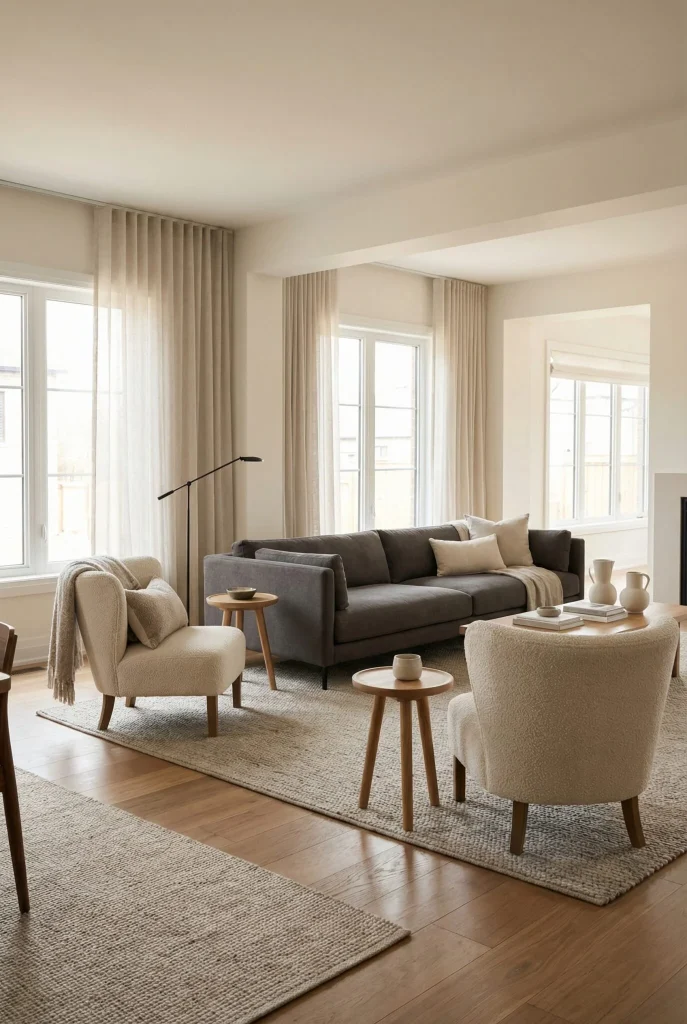
Living room accent chairs don’t need to be pushed into unused corners.
Instead, place them where they contribute to the seating arrangement.
- Position chairs across from the sofa or slightly angled toward it.
- Keep them close enough that conversation feels natural.
- Give each chair access to a side table or nearby lamp.
An accent chair becomes much more useful and inviting when there is both good lighting and a convenient place to set down a drink, book, or phone.
TV Distance Basics and Mounting Sanity

TV placement isn’t the most glamorous part of living room design, but it matters for comfort.
As general viewing-distance guidelines:
- 55-inch TV: approximately 7–8 feet away
- 65-inch TV: approximately 8–10 feet away
- Mount the television lower than you might initially think. If you’re constantly looking upward, it is probably too high.
If your television is already mounted above a fireplace and you dislike the height, you’re certainly not alone. A lower media console beneath it can help visually pull the television downward, even if the physical mounting position cannot immediately be changed.
Walking Paths
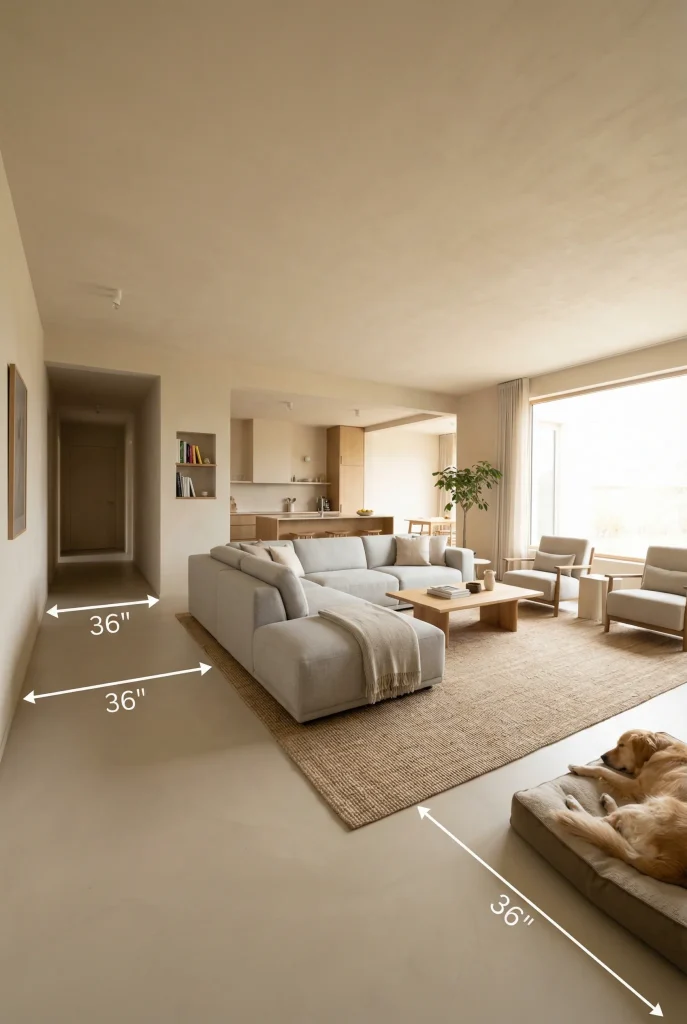
Try to maintain approximately 30–36 inches of clearance along major walking paths.
Modern rooms feel more peaceful when you can move through them without squeezing between furniture.
This is especially important if you have children or pets. Main walkways should remain open and predictable so everyone can move through the room comfortably.
Rug Sizing Rules (the fastest modern upgrade)

- 5×8: Works well in smaller living spaces, often centered around the coffee table with little or none of the main furniture sitting fully on the rug.
- 8×10: Suitable for many living rooms, with the front legs of the sofa and chairs positioned on the rug.
- 9×12: A strong choice for open-plan layouts or large rooms where you want the entire seating arrangement to feel connected.
Examples:
- Small apartment with a sofa and one chair: a 5×8 rug can work, although an 8×10 often creates a more finished appearance.
- Open-concept room with a sectional: a 9×12 can prevent the seating arrangement from looking like a tiny rug sitting alone in a much larger room.
Quick checklist by room shape
- If your room is narrow: Float the sofa if possible, use a round or oval coffee table, and choose chairs with slimmer proportions.
- If it’s open concept: Use a sectional or larger rug to establish the living zone. If the sofa floats, a console behind it can help define the area.
- If it’s square: Avoid making everything perfectly symmetrical. Offset chairs slightly or experiment with an asymmetrical lamp arrangement.
Quick win: Use painter’s tape to outline the footprints of a 5×8, 8×10, and 9×12 rug directly on your floor. It may look a little ridiculous, but it can save you from buying the wrong size.
Selecting Streamlined Furniture
Modern furniture doesn’t have to sacrifice comfort.
The goal is to choose pieces with clean shapes, appropriate proportions, and materials that contribute warmth and softness.
If you’re aiming for a clutter-free living room, your furniture should also provide practical function. Living room storage solutions and smart tables can be just as important as the sofa itself.
Related: How to Arrange Living Room Furniture with a TV: Optimal Placement and Layout Tips
Sofas vs Sectionals, Realistically
Choose a sofa when you value flexibility, lighter visual weight, and the ability to rearrange your room more easily.
Choose a sectional when the living room is primarily a gathering space and you want generous seating without having to add multiple separate chairs.
Modern silhouettes worth considering include:
- Simple track, sloped, or softly rounded arms
- Lower profiles or clean bases
- Intentional legs in wood or metal
- Sleek hidden bases for an even more streamlined appearance
Materials that Look Modern and Live Well
- Bouclé: Comfortable, textured, and sculptural. It can soften an otherwise minimalist room.
- Linen blends: Light, relaxed, and naturally casual. They can look especially attractive with a slightly rumpled finish.
- Leather: Timeless and durable, making it an excellent choice for mid-century modern living rooms.
- Wood + metal: Provides structure and contrast and works particularly well in contemporary spaces.
Price Ranges that Help You Shop Without Crying
- Budget: $500–$900
- Mid: $1,000–$2,000
- Premium: $2,500+
You don’t have to purchase every item at the same price level. Mixing different price tiers can be a much smarter approach.
If possible, prioritize spending more on the sofa because it is one of the most important and frequently used pieces. Side tables and smaller accessories can often be purchased for less.
My go-to picks right now (furniture)
- Performance fabric modular sectional ($1,200–$3,200). Useful for homes with children or pets, flexible in open-plan layouts, and designed to maintain a tidy appearance.
- Linen-blend sofa with clean arms ($900–$2,000). A good fit for small living spaces and light, airy interiors.
- Bouclé swivel chair ($250–$900). Great for introducing a soft, sculptural shape and creating cozy corners.
- Closed-front media console in wood or lacquer ($400–$1,800). Helps conceal cords, electronics, and everyday clutter.
- Honed-stone or concrete-look coffee table ($150–$600). Provides visual weight and contrast while grounding the seating area.
Quick win: Check the sofa depth and seat height before purchasing. A deep modern sofa can feel incredibly comfortable for some people but uncomfortable for others. There isn’t much middle ground once you get it wrong.
Styling With Minimal Decor and Bold Accents
Modern styling is about restraint, but restraint doesn’t mean an empty room.
It means choosing fewer things and giving each piece a purpose.
A modern living room should be functional before it becomes decorative. That approach is what helps the room stay attractive even when real life happens.
The Rule of Three
Groups of three often create a balanced visual arrangement.
Three objects on a table can feel more intentional. Three pillows across a sofa can look relaxed. Three different materials in a small vignette can create enough contrast without becoming cluttered.
Without some kind of editing, a coffee table can quickly turn into a collection of unrelated objects.
Texture Layering is How You Get Cozy Without Clutter
Texture is essential when you’re working with a minimalist or modern aesthetic.
Try combining:
- Soft: Throws, rugs, and pillows
- Hard: Stone, metal, and wood
- Organic: Plants, baskets, and natural materials
These different textures prevent a minimalist living room from feeling sterile while keeping the number of decorative objects under control.
Single Bold Accents
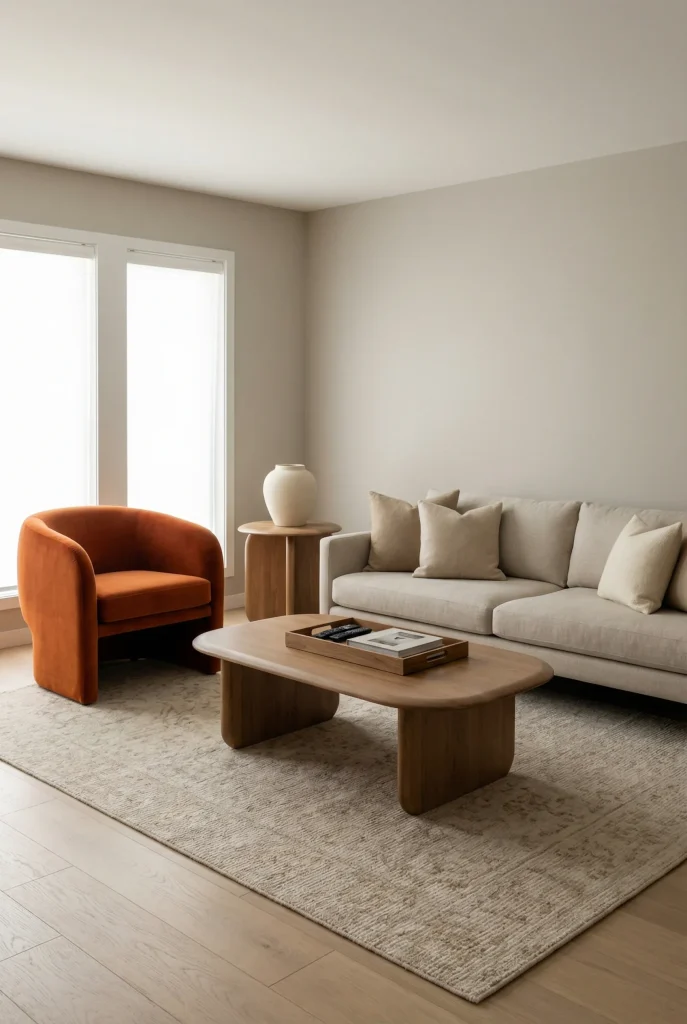
Instead of making every item in the room a statement, choose one strong accent for each zone.
That could be a rug, a piece of artwork, an accent chair, or another standout feature.
Then allow the remaining pieces to support it.
Modern rooms often look stylish because they aren’t competing for attention from every direction.
This is also where living room collections can be helpful. Coordinated pillows, complementary lamps, or matching decorative elements can make it easier to create a cohesive room when you don’t want to make hundreds of individual design decisions.
My go-to picks right now (styling + tables)
- Decorative living room tables with rounded edges ($120–$700). Helpful for narrow layouts and homes where softer edges are practical for children.
- Statement rug with subtle pattern ($250–$1,200). Grounds the seating area while keeping visual noise under control.
- Linen or wool pillow covers ($30–$120). Great for adding cozy layers to Scandinavian and modern farmhouse rooms.
- Oversized ceramic vessel ($60–$300). A single large object can replace a collection of small decorative pieces.
- Wood or stone tray ($25–$120). Keeps remotes and everyday items organized while still looking attractive.
Quick win: Completely clear your coffee table, then put only three things back. The difference can be immediate.
Common Modern Living Room Mistakes (and quick fixes)
Most modern living room problems aren’t caused by choosing the wrong decorative style. They’re usually caused by scale, furniture placement, poor lighting, or too much visual clutter.
Here are some of the most common issues:
- Too-small art: The wall feels empty. Replace it with one oversized piece or create a tight grouping that reads visually as one larger arrangement.
- Curtains hung low: Low curtain rods can make the ceiling appear shorter. Mount the rods closer to the ceiling and use longer panels.
- Rug too small: A small rug can make the furniture arrangement feel disconnected. When the room allows, move up to an 8×10 or 9×12.
- Cool bulbs: Cool lighting can make a modern room feel sterile almost immediately. Replace it with warm bulbs, ideally ones that are dimmable.
- Too many tiny decor items: Lots of small objects create visual noise. Remove several and replace them with fewer, larger pieces.
- Open shelving clutter: Real life can quickly overwhelm open shelves. Use baskets or closed storage to hide less attractive everyday items.
Quick wins for scannability:
- Raise curtain rods
- Use warm bulbs at 2700K–3000K
- Reduce surface decor by half
- Replace an undersized rug with a larger option
- Exchange multiple small decorative objects for one bold piece
Quick win: If you only have time to make one change this weekend, replace cool bulbs with warm ones and remove half of the small decorative objects. It can make a surprisingly noticeable difference.
Lighting that Enhances Modern Design
Lighting can completely change the mood of a room.
The same living room decor can feel warm and comfortable under layered lighting or cold and clinical under a single harsh ceiling fixture.
Modern living rooms need multiple sources of light. Relying only on overhead lighting usually leaves the room flat and uninviting.
And if your home still has one of those basic ceiling fixtures everyone jokingly calls a “boob light,” you’re not alone. You don’t necessarily have to replace it immediately. Adding layers of light can make a major improvement while you decide what to do next.
Three-layer lighting
- Ambient: General illumination for the entire room, often provided by ceiling fixtures.
- Task: Focused lighting near seating areas for reading and other activities.
- Accent: Table lamps and subtle secondary lighting that add depth and atmosphere.
Bulb temperature
Warm bulbs in the 2700K–3000K range are generally a good choice for creating a comfortable living room atmosphere.
Try to keep the bulb temperatures consistent throughout the room. Mixing noticeably different color temperatures can make the lighting feel disjointed.
My go-to picks right now (lighting)
- Sculptural floor lamp ($150–$400). Adds height and creates a cozy pool of light near seating.
- Table lamp with linen shade ($80–$250). Softens contemporary and minimalist rooms.
- Simple flush or semi-flush ceiling light ($200–$600). Works well with clean lines and lower ceilings.
- Warm LED bulbs 2700K–3000K ($20–$60 per set). An easy way to add warmth without changing the entire room.
- Plug-in dimmer ($15–$40). Useful for rentals and for quickly adjusting the mood.
Quick win: Make all the bulbs in the room the same warm temperature. Consistent lighting can make the entire space feel more cohesive and welcoming.
Modern Style Mini-Guides
Scandinavian living room
A Scandinavian living room focuses on brightness, simplicity, functionality, and comfort. Warm whites, pale woods, and soft textiles create the foundation.
Keep decorative objects limited, but make sure the room still feels tactile and comfortable. Linen curtains, wool rugs, natural materials, and simple furniture shapes can create a bright living room that remains warm rather than sterile.
Mid-century modern living room
A mid-century modern living room combines distinctive shapes with natural warmth.
Look for tapered legs, lower furniture profiles, walnut or other warm wood tones, and recognizable vintage-inspired silhouettes.
Leather works particularly well in this style, as do graphic rugs and simple sculptural lighting.
The overall effect can feel sophisticated and collected without appearing overly decorated.
Modern farmhouse living room
A modern farmhouse living room combines clean modern lines with comfortable, rustic warmth.
Start with a neutral palette, then introduce cozy textiles and natural wood textures. Rustic materials should be used selectively rather than turning the entire room into a themed farmhouse display.
Keep furniture silhouettes simple and let linen, wood, and other natural materials provide the warmth.
When balanced correctly, the result feels comfortable, practical, and welcoming while retaining the clarity of modern design.
Contemporary living room
A contemporary living room tends to feel sleek, current, and intentionally streamlined.
The palette can be very minimal or even monochromatic, which makes texture especially important.
Bold artwork, interesting lighting, and deliberate contrast can keep the room from feeling empty.
If you’re aiming for a modern urban living room aesthetic, this style is a strong direction. Just remember that edited surfaces and thoughtful proportions are what keep contemporary design looking sophisticated.
Beach house living room
A beach house living room should feel relaxed, light, and naturally comfortable.
Think pale wood, sandy neutrals, gentle blues, and breathable materials such as linen.
Keep the accessories practical and understated, allowing natural light to create much of the atmosphere.
The biggest trick is avoiding obvious themes. The goal is to create a room that feels calm and breezy rather than one that looks like it came directly from a nautical decor store.
Rustic living room
A rustic living room introduces warmth through natural materials such as wood, stone, and woven textures.
To keep the room feeling modern, balance those rustic elements with streamlined furniture, clean silhouettes, and a controlled color palette.
One substantial rustic feature can add beautiful character. Too many rustic elements competing with one another can make the room feel more like a themed cabin.
As with almost every modern design approach, balance is what makes the difference.