Mismatched nightstands can give a bedroom a stylish, collected, and thoughtfully designed appearance when they are chosen and arranged with a clear plan. Instead of making both sides of the bed look exactly the same, you can combine different shapes, materials, colors, and storage options while still creating a balanced look. The key is to connect the pieces through height, visual weight, finishes, or accessories so the differences feel intentional rather than accidental.
The 60-Second Check Before You Style Anything
Before adding lamps, trays, books, or decorative accessories, take a quick look at the basic proportions of your bed and nightstands. A few simple measurements can help you understand what is working and what needs to change before you spend time styling the surfaces. Starting with the furniture itself makes it much easier to create a balanced arrangement.
1) Measure your mattress height + your current nightstand height
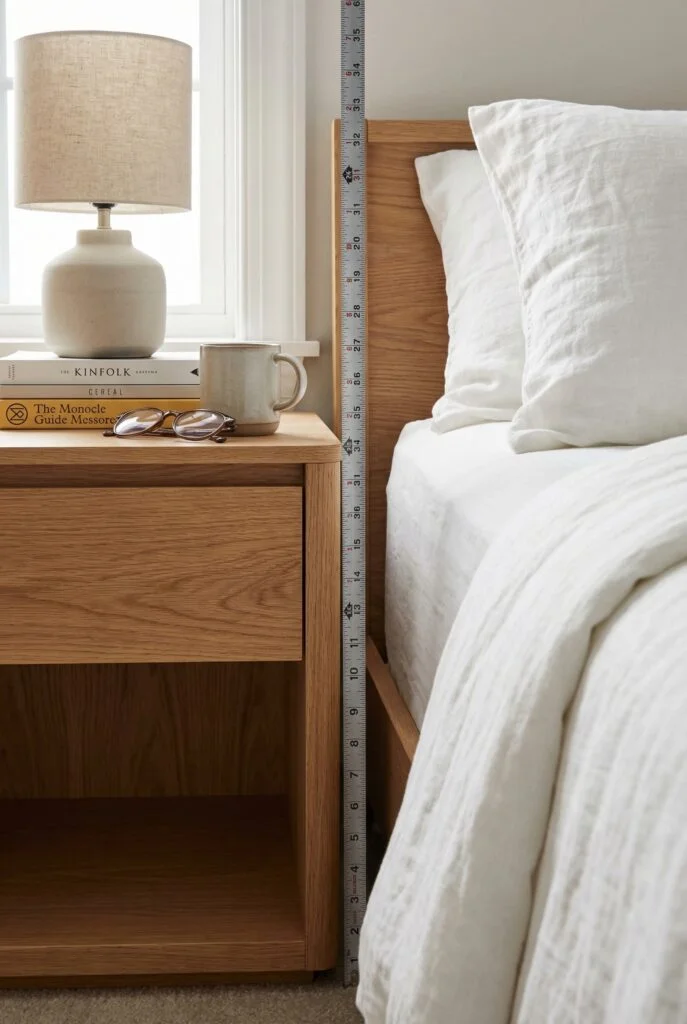
Measure from the floor to the top of your mattress with the bedding in place, then measure from the floor to the top of each nightstand. Ideally, the nightstand surface should be around the same height as the mattress or slightly lower, making everyday items easy to reach and keeping the overall arrangement comfortable. When the height is noticeably different, the entire setup can feel awkward even when the accessories look attractive, so getting the proportions right should come before decorating.
2) Identify your “problem side”
Most bedrooms have one side that is more difficult to work with because of a doorway, outlet, limited walking space, furniture placement, or another architectural feature. Instead of forcing both sides of the bed to look identical, recognize the limitations of each side and choose furniture that works with them. A smaller or narrower nightstand may be the best solution for a tight side, while the more spacious side can accommodate a larger piece with additional storage.
3) Decide your “height lane”

Choose how much difference you want between the heights of your two nightstands before you begin styling them. Keeping the surfaces within roughly four inches of one another creates a calm and cohesive appearance, while a larger height difference can create a more dramatic and intentionally asymmetrical look. The important thing is to make the difference feel deliberate rather than ending up with two pieces that are only slightly different without any visual reason.
The Non-Negotiables (The Rules That Make It Look Intentional)
Mismatched nightstands work best when a few basic design rules keep the different pieces connected. You do not need identical furniture, but you do need balance in areas such as height, visual weight, materials, storage, and accessories. These elements help the two sides of the bed feel like part of the same bedroom rather than two unrelated setups.
Rule 1 – Get the height right first (because nothing fixes bad height)
The height of each nightstand should be one of your first considerations because it affects both comfort and visual balance. A nightstand that sits around mattress height or slightly below is generally easier to use and creates a natural relationship with the bed. If one piece is several inches too low or too high, adding books, trays, or decorations may temporarily improve the appearance, but correcting the furniture height itself usually produces a much better result.
Rule 2 – Choose your “pairing method”

Different nightstands need at least one shared element to make them feel connected. Matching lamps are one of the easiest ways to create this relationship, but you can also repeat a metal finish, use similar shapes, choose related wood tones, or introduce accessories with a common color. The goal is to find a middle ground where the nightstands are clearly different but still look like they belong together.
Rule 3 – Balance visual weight (this is the part people miss)
Visual weight is just as important as physical size when styling mismatched nightstands. A large, dark, boxy nightstand can feel much heavier than a slim table with open legs, even if the two pieces are similar in height. If one side of the bed has a visually heavy piece, balance it with something lighter on the opposite side so the bed does not feel surrounded by bulky furniture.
Rule 4 – At least one side needs real storage

A bedroom nightstand needs to handle everyday items, not just look attractive in photographs. Chargers, glasses, books, personal items, and other small essentials can quickly make an open tabletop look cluttered, so having at least one nightstand with a drawer, cabinet, or shelf can make the room easier to maintain. Combining one storage-focused piece with a more decorative table can create a practical balance while still keeping the mismatched look.
How to Make Two Different Nightstands “Talk” (Without Matching)
The secret to combining different nightstands is not making them identical but giving them a few visual connections. Similar accessories, finishes, proportions, colors, or materials can help the eye move naturally from one side of the bed to the other. When those connections are used carefully, the room can feel layered and collected without becoming overly coordinated.
Pick One Unifying Element

Choose one feature that appears on both sides of the bed to create a subtle connection between the nightstands. Matching lamps are an easy choice, but a shared finish, similar shape, repeated color, or related material can work just as well. Keeping the connection simple is important because too many matching elements can make the furniture look like a traditional bedroom set instead of an intentionally mismatched arrangement.
Mix Materials (But Don’t Go Chaotic)

Combining different materials can add depth and personality to a bedroom when the choices remain visually compatible. Wood can work beautifully with metal, linen, stone, glass, or other natural textures, creating a layered appearance without requiring matching furniture. However, using too many unrelated finishes can make the room feel disorganized, so try to keep the materials connected through similar colors, tones, or shapes.
The Styling Formula (So Your Nightstands Don’t Become Clutter Traps)
Nightstands are practical pieces of furniture, so their surfaces need to support everyday routines as well as the overall bedroom design. A simple styling system can prevent small objects from spreading across the tabletop and make the area easier to keep organized. Focus on a few useful pieces rather than filling every available space with decorations.
The 3-Layer Stack (This Works Every Time)
A simple three-level arrangement can make a nightstand look complete without making it feel crowded. Start with a tall element such as a lamp, add something medium-sized such as books or a decorative box, and finish with a smaller item such as a tray or compact accessory. This combination creates visual height and variety while leaving enough open space for the things you actually need beside the bed.
Lamp Scale Rules (This Is Where Things Go Wrong Fast)
The lamp should be proportional to the size of the nightstand and should not overwhelm the surface. A lamp that is too small can make the arrangement look unfinished, while an oversized lamp can dominate the entire side of the bed. When the lamps are different, keeping their heights relatively close can help create balance and make the mismatched nightstands feel more connected.
Tray Strategy (aka: Stop the Small-Item Chaos)
A tray provides a dedicated place for small everyday items and helps prevent the nightstand from becoming cluttered. Instead of allowing glasses, jewelry, chargers, keys, or other small objects to spread across the surface, group them inside a tray so the arrangement stays visually controlled. A tray can also act as a decorative element while making the nightstand easier to tidy.
Three Real Bedroom Scenarios
Different bedroom layouts require different approaches to mismatched nightstands, so the best solution depends on the available space and practical needs. A small bedroom may require narrow furniture, while a spacious primary bedroom can handle larger pieces with stronger visual contrast. Awkward layouts also benefit from treating each side independently instead of forcing symmetry where it does not naturally work.
Small Bedroom (Tight Clearance)
In a small bedroom where there is little walking space around the bed, choose narrow and compact nightstands that provide useful storage without extending too far into the room. A taller, slimmer piece can work especially well on the tight side, while the opposite side can provide additional storage if more space is available. In this situation, functionality should come first because keeping the walkway clear is more important than creating perfectly symmetrical furniture.
Master Bedroom (More Space)
A spacious master bedroom provides more freedom to experiment with mismatched nightstands and stronger differences in size or style. One side can feature a larger and more substantial piece with plenty of storage, while the other can use a lighter table with a more decorative appearance. Matching elements such as lamps, accessories, colors, or similar heights can then bring the two sides together and create a balanced finished look.
Rental or Awkward Layout

Rental bedrooms and rooms with unusual layouts often have one side that simply cannot accommodate the same furniture as the other side. Rather than trying to make both sides identical, use a smaller or more practical piece where space is limited and let the opposite side provide more storage or decorative impact. One side can focus on function while the other emphasizes style, creating an asymmetrical arrangement that feels natural and works with the room instead of against it.