

When I say small bedroom decor ideas, I mean practical tricks that can make a tiny room feel more spacious, peaceful, and inviting. I’ll walk you through layout, lighting, storage, and styling ideas that solve everyday cramped-bedroom problems without requiring a renovation or a complete makeover.
You know that awkward sideways shuffle between the bed and dresser, carrying a laundry basket like a shield while trying not to bump your shins? That used to be part of my nightly routine.
My bedroom had all the usual problems: narrow walkways, a bed that technically fit but seemed to touch everything, an outlet in the most inconvenient corner, and random belongings covering every available surface. There was never a proper place for books, chargers, hand cream, the kids’ dinosaur, or my phone. Instead of feeling like a relaxing retreat, the room felt more like a storage unit with a pillow.
Center the bed on the best wall

Place the bed against the longest solid wall that isn’t crowded with doors or awkward openings. Centering it creates a natural focal point and keeps the main walkway clearer, helping the room feel more balanced and spacious. It’s also completely renter-friendly because you only need to rearrange the furniture—no drilling or permanent changes required.
Hang curtains high and wide

Hang the curtain rod a few inches below the ceiling and extend it beyond both sides of the window frame. This simple trick draws the eye upward and outward, making the window appear larger while giving the ceiling a little more visual height. You don’t need expensive curtains either; affordable rods paired with simple cotton or linen-look panels can create the same effect.
Use one big mirror instead of many small ones

Instead of covering your walls with several small mirrors, choose one large mirror that makes a stronger visual impact. Position it opposite or slightly diagonal to a window so it can reflect natural light throughout the room. A tall thrifted mirror can work beautifully too—just give the frame a fresh coat of paint if it needs an update.
Pick a rug that tucks under the bed

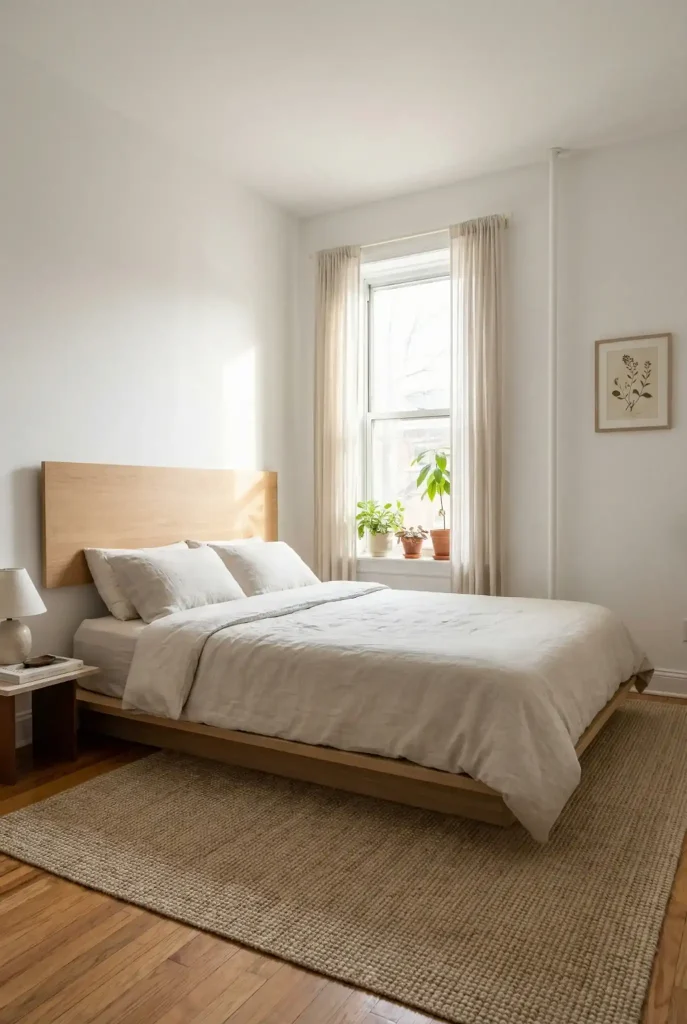
Choose a rug large enough for at least the front two-thirds of the bed to sit on it. Having a generous amount of rug visible around the bed helps visually connect the furniture and can make the floor feel more expansive. If a large rug isn’t in your budget, try a medium-sized rug underneath the bed and keep the remaining floor space clear.
Match nightstand height to the mattress
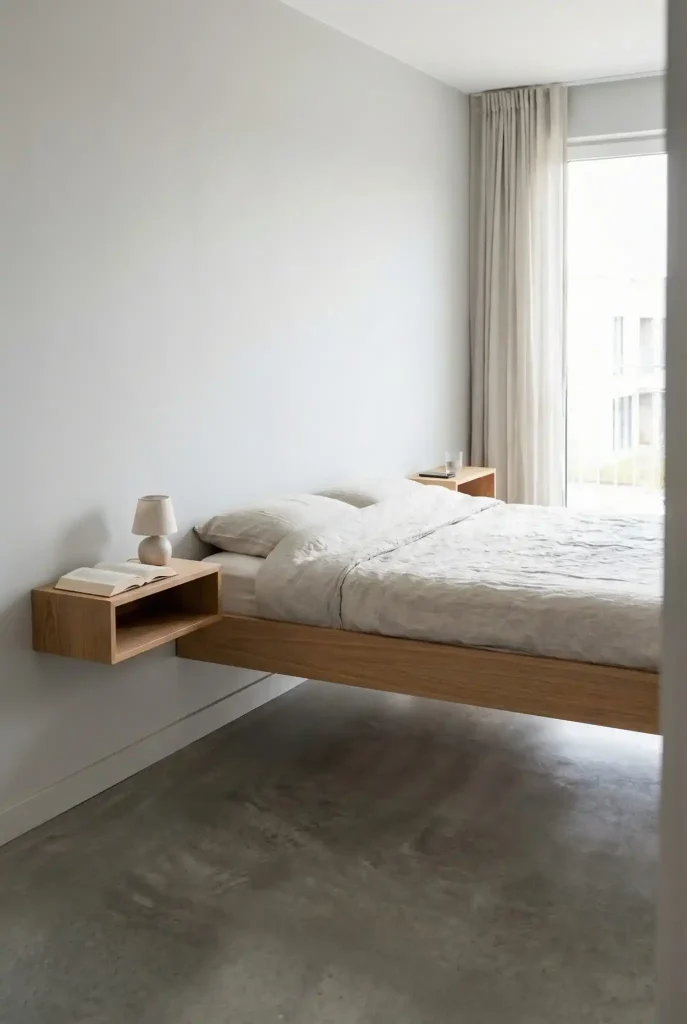
Aim for nightstands that sit close to the height of your mattress. Keeping these surfaces at a similar level creates a cleaner sight line around the bed and prevents the furniture from making the room feel visually uneven. If a traditional nightstand takes up too much space or costs too much, try a sturdy stool topped with a small tray.
Try wall mounted or floating nightstands
A floating shelf or shallow wall-mounted box can work as a simple bedside table without taking up valuable floor space. Leaving the area underneath open makes the bedroom feel lighter and easier to move around. If you’re renting and cannot drill into the wall, look for properly rated removable mounting systems that can safely support the items you plan to store.
Use plug in wall sconces instead of table lamps
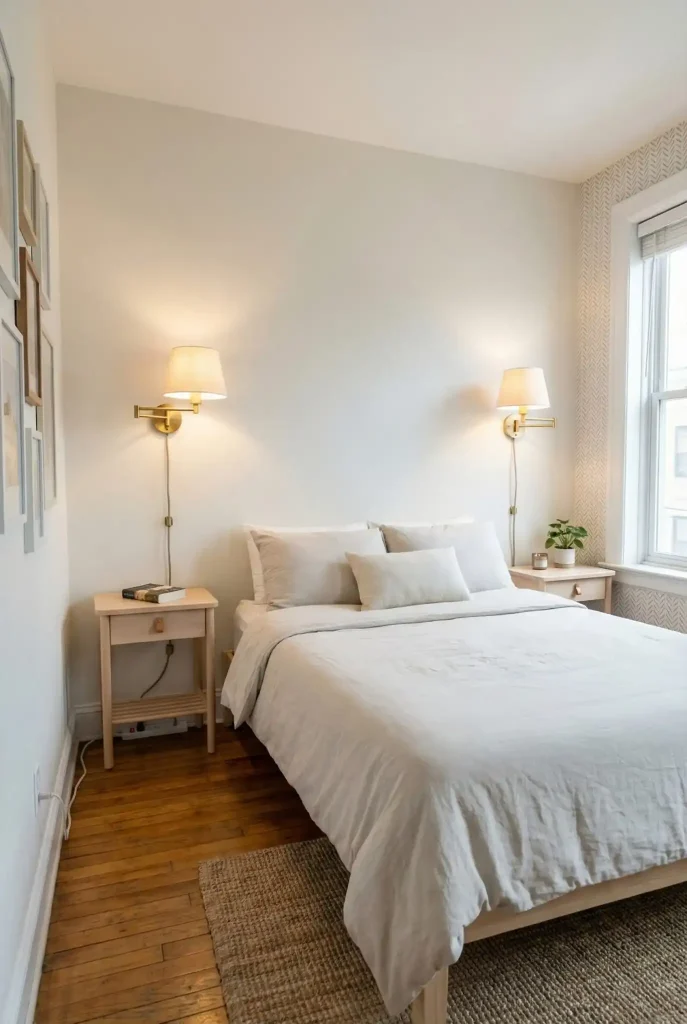
Replace bulky table lamps with plug-in wall sconces positioned beside or slightly above the bed. This frees up your nightstand for essentials while adding useful ambient or reading light. Keep the cords neat and close to the wall for a cleaner appearance. Since plug-in options don’t require hardwiring, they can also be a practical choice for renters.
Choose a low profile headboard

A low-profile headboard keeps more of the wall and ceiling visible, helping the bedroom feel less crowded. It still gives the bed a finished, grounded appearance without creating a large visual block. For an inexpensive alternative, try a wall-mounted cushion, a simple fabric panel, or even a painted rectangle behind the bed.
Go nearly monochrome with walls and trim

Using the same color, or very similar shades, on your walls and trim can make a small bedroom feel more cohesive. The edges of the room become less noticeable, allowing your eye to focus on the furniture, natural light, and overall shape of the space. Soft neutrals are an easy choice, especially if you’re renting and need to work with an existing light-colored palette.
Limit patterns to one or two big players
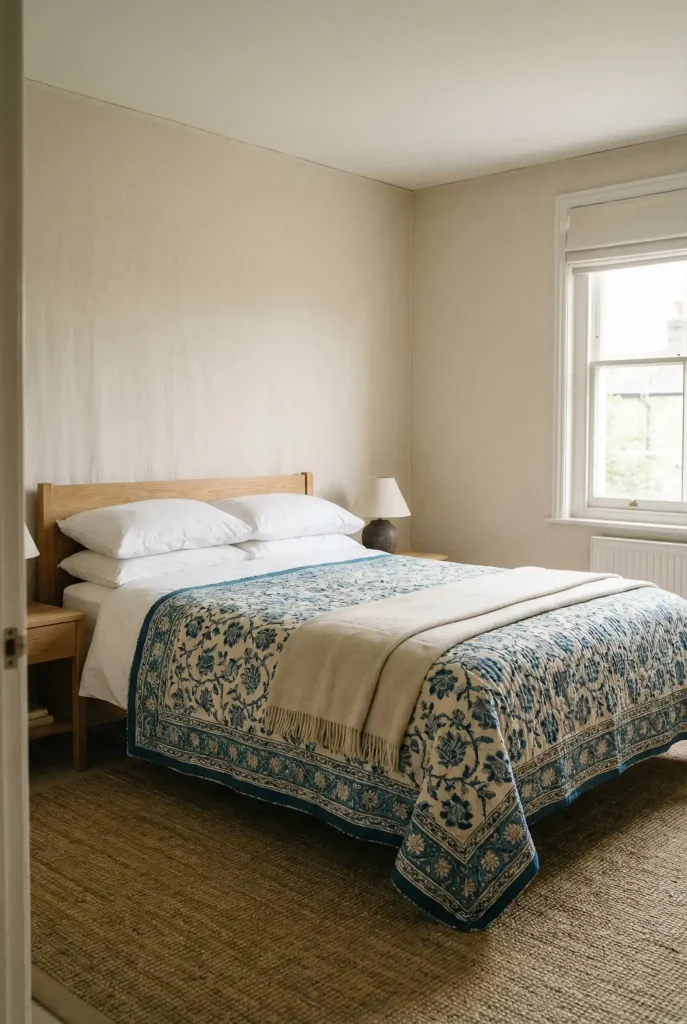
Choose one or two areas for noticeable patterns and keep the rest of the room relatively calm. For example, let a patterned quilt stand out while using a simple rug and solid-colored pillows. Too many competing prints can make a small bedroom feel busy, while larger, quieter areas give your eyes somewhere to rest. You can also swap patterned pillow covers for solid ones without replacing the inserts.
Run a hook rail along one short wall

Install a row of hooks along one short wall to give robes, bags, hats, and other grab-and-go items a designated home. Keeping these everyday essentials off chairs, the bed, and the floor can make the room look instantly tidier while opening up more visible floor space. If you can’t install a permanent rail, arrange removable hooks in a straight line for a similar effect.
Add one leafy plant at eye level
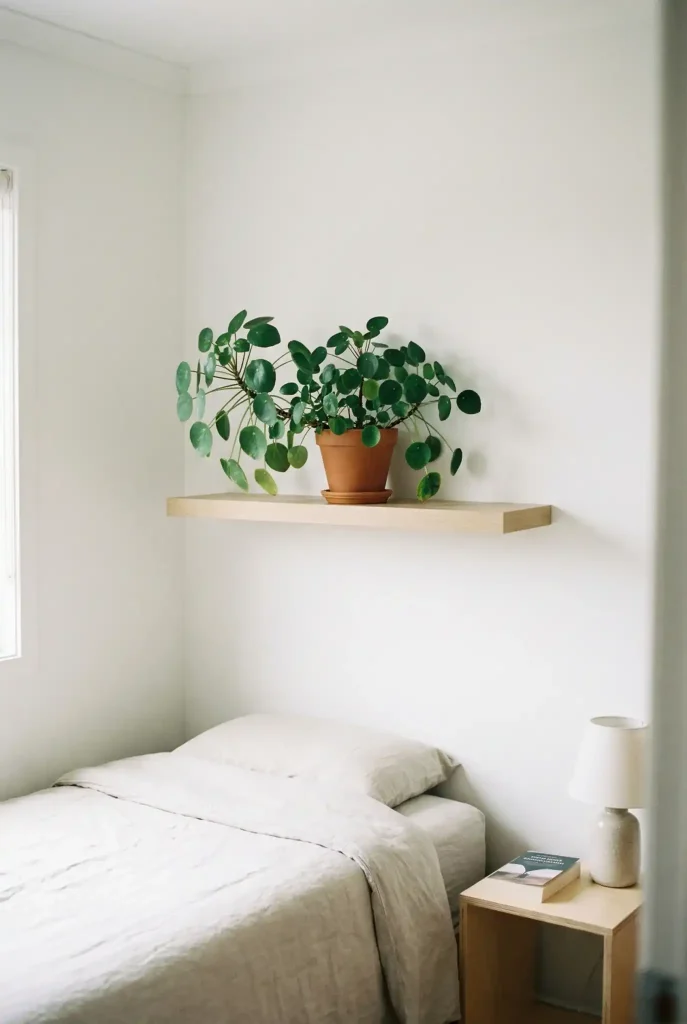
A single medium-sized plant on a dresser, floating shelf, or small stand can add personality without overwhelming a compact bedroom. The greenery softens the straight lines of the furniture and gives the room a fresher, more relaxed feel. If your bedroom doesn’t get much natural light, choose a hardy low-light option such as pothos or a snake plant.
Create a mini vanity and desk combo

Make one narrow table or console do double duty as both a vanity and a small workspace. Combining these functions saves floor space and means you don’t need separate pieces of furniture for getting ready and working. Add a compact mirror and lamp, then choose a chair or stool that slides completely underneath the table when it’s not being used.
Group art instead of scattering it

Rather than placing small pieces of artwork across every available wall, bring them together into one compact gallery arrangement. A small collection above a dresser or beside the bed creates a defined focal point while leaving the rest of the walls visually calmer. For an affordable setup, use printable artwork with simple frames that complement each other.
Keep bedding mostly solid and layered
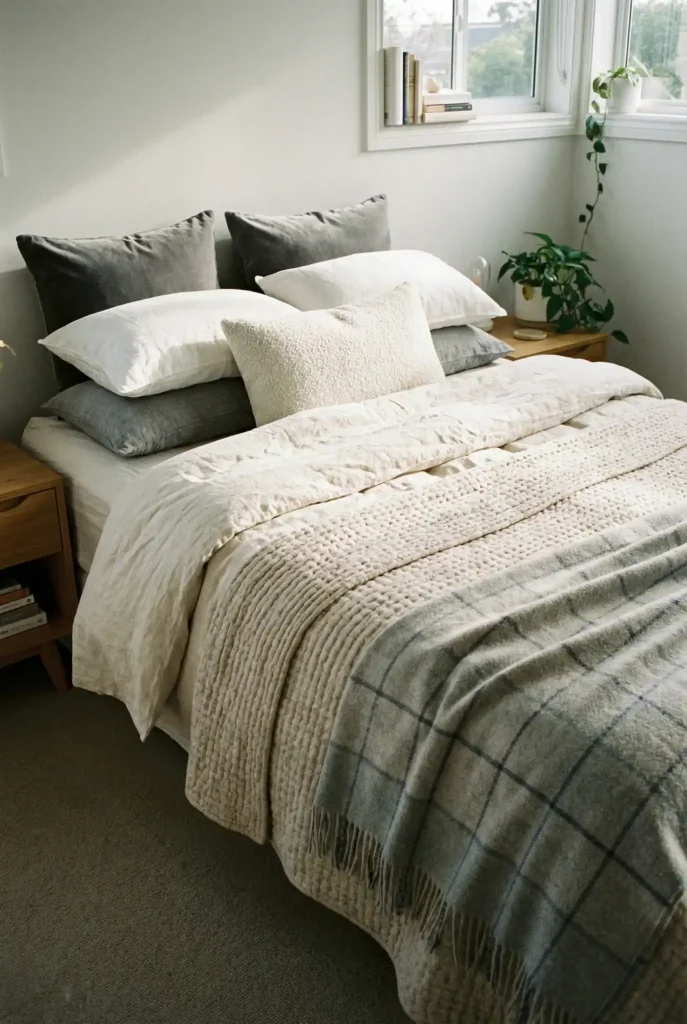
Choose solid-colored or lightly textured bedding and use layers to bring warmth and depth to the room. A cozy throw, quilt, and a few pillows can make the bed feel inviting without creating too much visual noise. If you want a little pattern, let one pillow or small accent piece provide it while keeping the rest of the bedding simple.
Measurements cheat sheet for tiny bedrooms
You don’t need to measure every corner obsessively, but having a few basic measurements in mind can make planning a small bedroom much easier. These are the quick guidelines I like to use before moving furniture or buying anything new.
- Aim for at least 60 cm of walking space along the sides of the bed where possible.
- Leave around 75–90 cm of clearance at the foot of the bed if it faces a wall, dresser, or other furniture.
- Keep the nightstand surface roughly level with the mattress, ideally within about 5 cm.
- Hang curtains around 10–20 cm above the window frame, or closer to the ceiling if the room allows.
- Extend the curtain rod about 10–20 cm beyond each side of the window to make it appear wider.
- For a double or queen bed, choose a rug that extends at least 45–60 cm beyond the sides and foot of the bed.
- Leave roughly 5–7 cm between the headboard and artwork positioned above it.
These measurements aren’t strict rules. A few centimeters here or there won’t ruin your layout, especially in an unusually small room. Think of them as helpful starting points that can save you from buying furniture or rugs that don’t quite fit.