

If you’ve ever wondered what colors are used in boho decor, the answer is simpler than it may seem. Boho interiors usually combine warm neutrals, earthy shades, natural greens, muted blues, and soft accent colors to create a relaxed and collected atmosphere. The goal isn’t to find a perfect color formula but to choose shades that feel comfortable together and complement natural materials, layered textiles, and cozy lighting.
Boho decor is flexible and personal, so there is plenty of room to experiment. Instead of worrying about strict design rules, think about creating a space that feels warm, lived-in, and slightly eclectic. Soft colors, natural textures, wood, woven materials, and thoughtfully chosen accents can work together to create that signature bohemian feeling without making the room look overwhelming.

Boho Colors at a Glance (So You Don’t Overthink It)
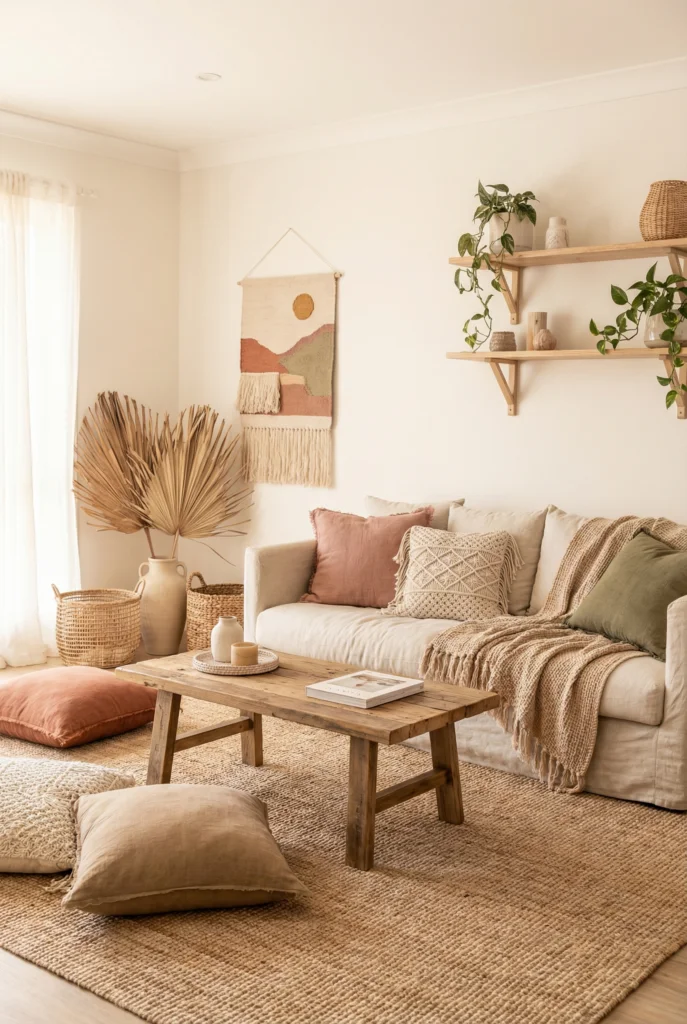
Boho colors are generally warm, earthy, relaxed, and slightly softened rather than bright or overly glossy. Common choices include warm white, cream, oatmeal, sand, beige, terracotta, clay, caramel, cinnamon, tobacco brown, sage, olive, eucalyptus, forest green, dusty denim, indigo, slate blue, rust, mustard, and dusty blush. Deeper shades such as charcoal, matte black, burgundy, and deep teal can also work well when used in moderation. A simple approach is to start with a warm neutral foundation, add two or three muted colors, and bring in wood and natural textures to complete the look.
Quick “Pick Your Boho Mood” Palettes
For a light and airy boho look, combine warm white, sand, sage, and small brass details; for a cozy earthy style, try cream, terracotta, olive, and walnut wood; and for a moodier space, pair warm beige with indigo, rust, and small touches of charcoal. When selecting colors, pay attention to their undertones and avoid shades that feel extremely icy, neon, or glossy because softer, slightly weathered colors tend to blend more naturally with boho decor.
Earth Tones and Neutrals Are the Backbone (Even When It Looks Colorful)

Earth tones and warm neutrals create the foundation that keeps a colorful boho room feeling calm and balanced. Shades such as clay, sand, terracotta, warm beige, creamy white, caramel, and natural brown can be used on walls, furniture, rugs, and larger pieces to provide a grounded background. These colors allow stronger accents and patterns to stand out without making the space feel chaotic, while materials such as wood, jute, linen, and woven fibers add even more warmth and character.
Boho Color Palette Recipes (With Where Each Color Goes)
Creating a boho palette becomes easier when you decide where each color will appear instead of randomly adding different shades throughout the room. You can use warm white or beige on the walls, camel or tan on larger furniture, earthy patterns on rugs, and stronger shades such as terracotta, olive, rust, indigo, mustard, or deep teal through pillows, throws, artwork, pottery, and other accessories. The key is to choose one dominant neutral, two supporting colors, and repeat those supporting colors several times so the room feels connected without looking overly coordinated.
Warm Neutral + Terracotta + Olive

A warm neutral, terracotta, and olive combination creates an earthy and inviting boho atmosphere. Use warm white or light beige on the walls, camel or caramel on large furniture, and a cream rug with subtle terracotta or brown details. Bring in terracotta pottery, olive pillows, and small touches of rust, then finish the space with medium or warm wood and aged metal finishes. Avoid using too much orange or making every item match exactly, because variety helps the palette feel natural.
Cream + Rust + Indigo

Cream, rust, and indigo create a richer boho palette with a vintage-inspired feeling. Keep the walls soft and creamy, use warm neutral furniture, and introduce a rug with faded indigo and red tones. Rust pillows, indigo artwork, and a deep blue throw can provide the accent colors, while walnut or darker wood adds warmth. Choose softened indigo instead of an extremely bright navy so the room remains relaxed rather than taking on a nautical appearance.
Sand + Sage + Mustard

Sand, sage, and muted mustard work beautifully for a soft and cheerful boho room. Use sand or warm beige as the foundation, choose light neutral furniture, and add a natural-fiber rug or a subtle pattern. Sage pillows and muted mustard throws can provide gentle color without becoming overwhelming, while light or medium wood and brushed brass add warmth. Keep the mustard slightly dusty rather than bright yellow and choose a softened sage instead of a very cool green.
Warm White + Camel + Deep Teal
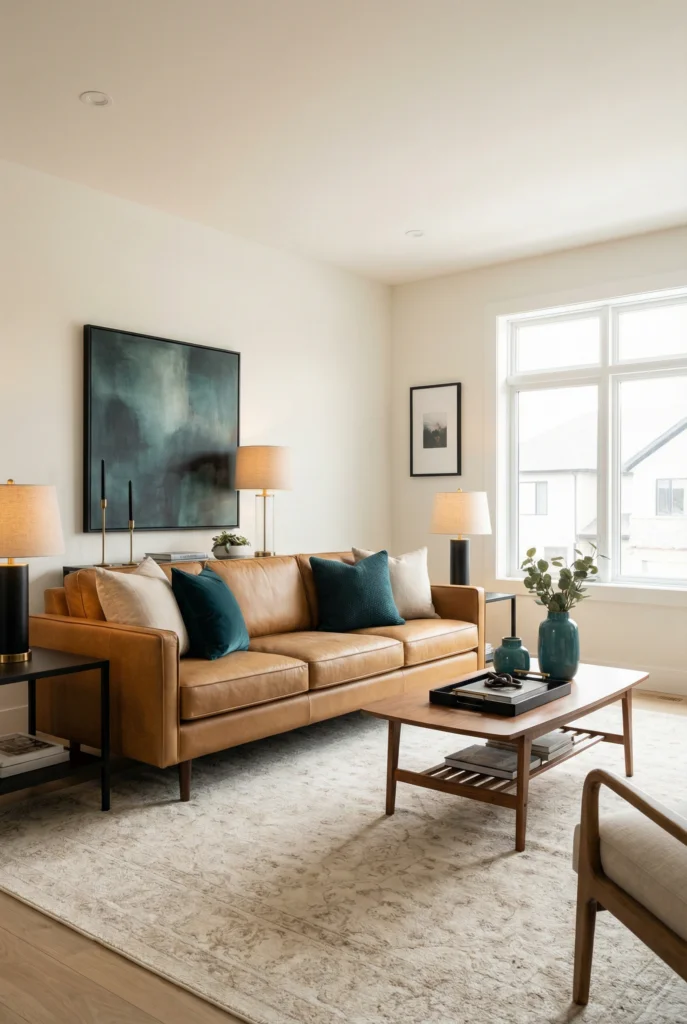
Warm white, camel, and deep teal create a cozy palette with a little more contrast. Use warm white on the walls, camel-colored furniture as the main feature, and a neutral rug with a subtle pattern. Deep teal can appear through pillows, artwork, ceramics, or other smaller accessories, while warm wood and small touches of matte black or brass provide additional depth. Keeping teal limited to a few carefully selected pieces helps the room stay comfortable rather than overly dramatic.
Cream + Blush + Walnut + Brass

Cream, dusty blush, walnut, and brass create a softer and slightly romantic version of boho style. Start with cream walls and neutral furniture, then add blush through pillows, throws, artwork, or other textiles. Walnut furniture and warm brass lighting or frames help prevent the blush from looking too sweet or overly feminine. Choosing a muted, earthy blush instead of a bright pink keeps the overall palette sophisticated and relaxed.
Warm Beige + Emerald + Vintage Reds

Warm beige paired with softened emerald and vintage reds can create a rich, collected boho look. Use warm beige as the backdrop and keep larger furniture pieces neutral or lightly textured. A vintage-inspired rug with faded reds and greens can connect the palette, while softened emerald pillows and burgundy or rust accents add depth. Medium wood and antique brass finishes help balance the stronger colors and keep the room feeling warm.
Off-White + Charcoal + Earthy Browns

Off-white, charcoal, and earthy brown create a more understated boho palette with plenty of contrast. Choose a warm off-white rather than a stark white for the walls, then use earthy brown or warm neutral furniture and a brown-toned or vintage-style rug. Charcoal can appear in small amounts through artwork, pillows, or accessories, while warm wood keeps the room from feeling too modern or harsh. Avoid using black and charcoal everywhere because boho style benefits from softer transitions.