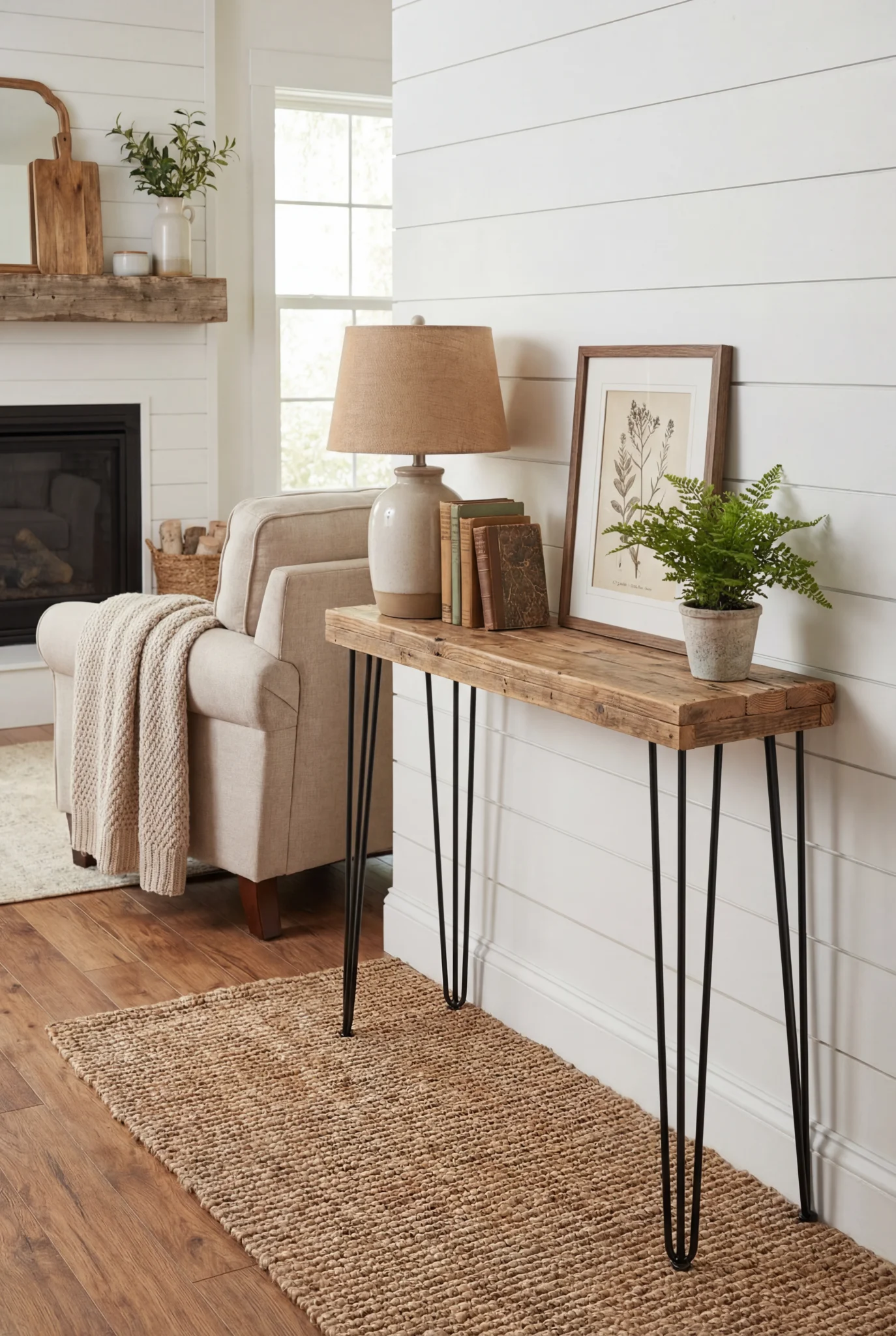
If you’re looking for farmhouse decor ideas for living room spaces that feel cozy, practical, and genuinely livable, you’re in the right place. These DIY projects and simple decorating adjustments can make your space feel warmer and more inviting without requiring you to buy an entirely new room of furniture.
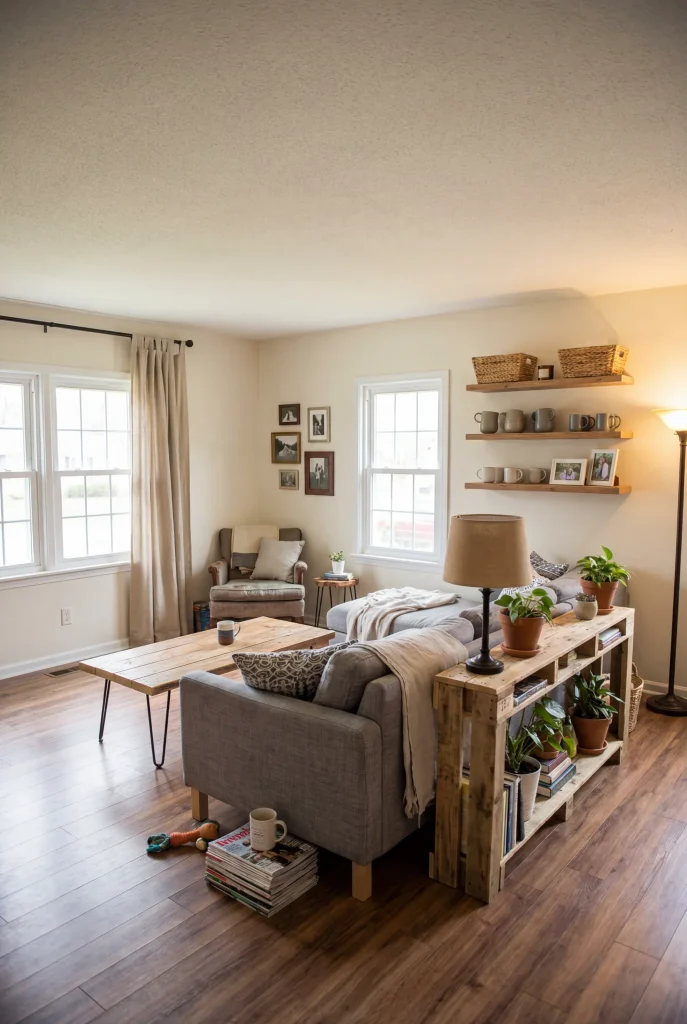
You know that feeling when your living room works perfectly well, but it doesn’t really feel like a place where you want to relax at the end of the day? That was exactly my situation. The room wasn’t unattractive, but it felt somewhat empty, cold, and unfinished, almost like we had moved in and then stopped decorating.
I wanted the warm atmosphere of a cozy living room that felt lived-in and functional, but I didn’t want to spend a fortune replacing everything. Instead, I wanted to create that feeling through DIY projects and thoughtful decorating choices.
So yes, the official phrase is farmhouse decor ideas for living room, but now we can focus on practical ideas that actually make sense for everyday life.
This guide is what I would recommend if you told me you wanted a cozy farmhouse living room, had a drill and a budget, and also had a dog that considered throw pillows part of its daily entertainment.
Quick-Start (If You Only Do One Thing Today): swap one lampshade, add one large basket, and introduce one warm wood element, such as a shelf. Your room can feel noticeably softer by the end of the day.
That is farmhouse comfort in one of the simplest and least complicated ways.
Table of Contents show
Jump To A Project (Pick One And Start)
If you want living room ideas that you can realistically complete, there are several directions to choose from.
Upcycled Wood Projects: Pallet console table, Barn door TV stand, Wine crate bookcase, Old door coffee table
Handmade Wall Decor: Reclaimed wood sign, Thrifted frame gallery wall, Peel-and-stick shiplap wall, Barnwood picture frames
Rustic Mantel And Shelving Accents: Faux beam mantel, Floating shelves, Pipe shelving, Window frame mirror
Supplies Quick Checklist
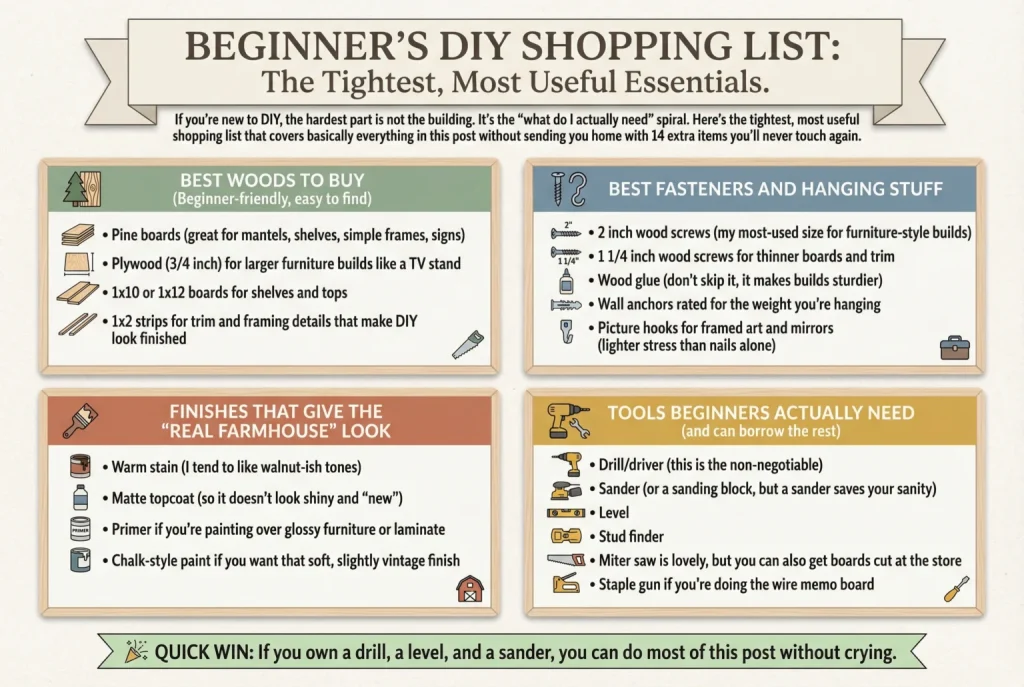
If you have a drill, a level, and a sander, you can complete most of these projects without needing a huge collection of tools. A sanding block can also work if you don’t own a sander.
You’ll want a tape measure and pencil, a stud finder or someone confident enough to help locate studs, a drill with driver bits, and a level. Keep sandpaper in several grits, such as eighty, one hundred twenty, and two hundred twenty, along with wood glue and wood screws. Two-inch screws are a useful general option.
For finishing, have a paint brush, foam roller, protective rags, stain or paint, and a simple matte topcoat. Wall anchors should always be rated appropriately for your specific wall type and the weight of whatever you are hanging. A drop cloth is also useful, even if you are tempted to use an old sheet instead.
Quick Safety Note: Anything heavy, including mirrors and shelves, should be secured to studs whenever possible. When studs are unavailable, choose anchors that are properly rated for the weight. This is not the time to rely on hope and vibes.
Shopping List By Project Type (So You Don’t Panic-Buy Random Stuff At 7:18 p.m.)
Before You Start: Pick Your Farmhouse Lane (So Your Room Doesn’t Become A Pinterest Fight)
Farmhouse style isn’t limited to one specific appearance.
That is one reason decorating can become confusing. Without a clear direction, a room can quickly become a mixture of cozy pieces, trendy accessories, and random distressed decorations that don’t really work together.
Choose your preferred farmhouse direction before starting. Once you have a style in mind, every DIY and decorating decision becomes easier. Your farmhouse design starts to feel much more intentional.
Modern farmhouse: Think warm neutrals, black metal accents, cleaner lines, and fewer decorative details.
Vintage farmhouse: Use thrifted wood, softer colors, visible patina, and pieces that feel collected over time.
Shabby chic: Painted furniture, light distressing, florals, and romantic details create a softer atmosphere.
Industrial farmhouse: Combine reclaimed wood with darker metals, pipe shelving, and stronger contrast.
A simple approach is to choose one main direction and then allow one small wild-card piece. This keeps the room interesting without making it feel chaotic.
Related: Farmhouse Home Office Ideas for Work-From-Home Life
2026 Farmhouse Trends I’m Seeing (And Yes, They’re Actually More Livable)
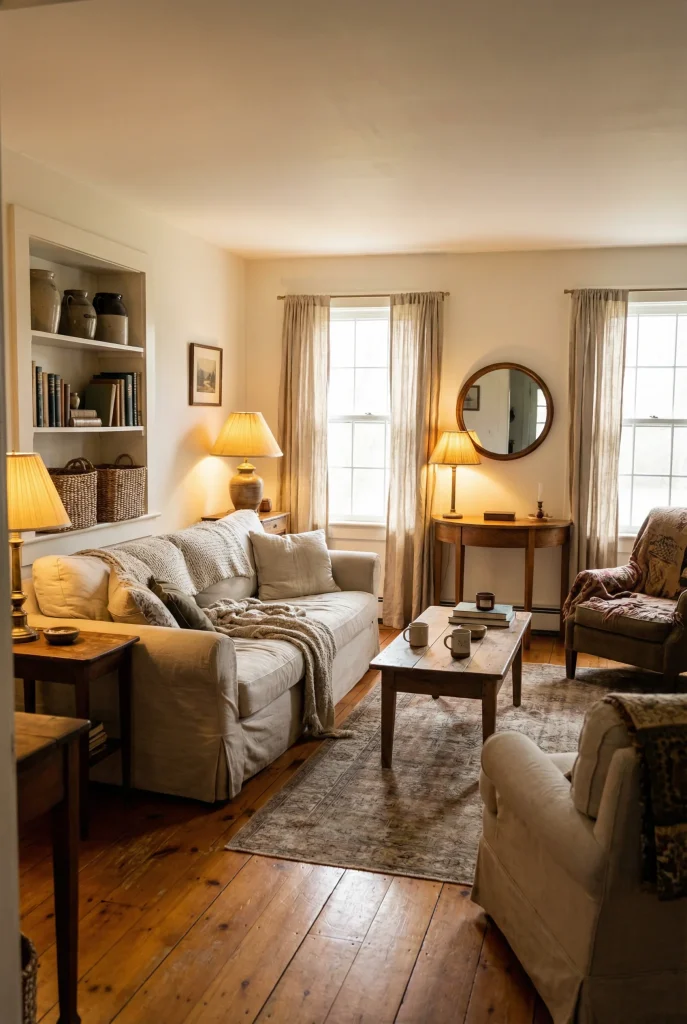
Farmhouse decorating is becoming softer and more mature. Warm whites are replacing extremely bright whites, while natural wood continues to be popular in tones that feel more honey-warm and less orange.
Instead of filling walls with lots of word signs, many spaces are focusing more on texture. Baskets, chunky ceramics, linen, and worn wood can create interest without overwhelming the room.
Farmhouse lighting is also moving toward vintage-inspired pieces, including shaded lamps and traditional sconces that create a warm glow instead of harsh brightness.
Organic shapes are becoming more common as well. Rounded mirrors and slightly curved decorative pieces help prevent farmhouse interiors from feeling overly square or rigid.
Another important direction is sustainability and reuse. Repurposing and thrifting can add personality while giving older materials a second life.
The Room Foundation (Do This Before You Build Anything)
Even the most attractive DIY shelf can look out of place if the rest of the room lacks balance. A rug that is too small, curtains that are hung too close to the window, or a room lit only by a ceiling fixture can make the entire space feel less comfortable.
Start with a simple foundation.
Wall color: Warm white, soft greige, or muted sage can create an inviting backdrop.
Rug rule: Choose a rug that is larger than you initially think you need. Ideally, at least the front legs of the seating should sit on the rug.
Curtain rule: Hang curtains higher and wider. A useful guideline is around four to six inches above the trim and six to ten inches beyond the window on each side.
Lighting layers: Combine overhead lighting with lamps and at least one additional warm glow source.
This is where farmhouse color schemes and textiles can do much of the work. When the foundation is right, even simple DIY projects can look more polished.
Quick win: Replace one lampshade. It is one of the easiest ways to create a cozy atmosphere without making major changes.
Renter-Friendly No-Holes Fixes That Still Look Farmhouse
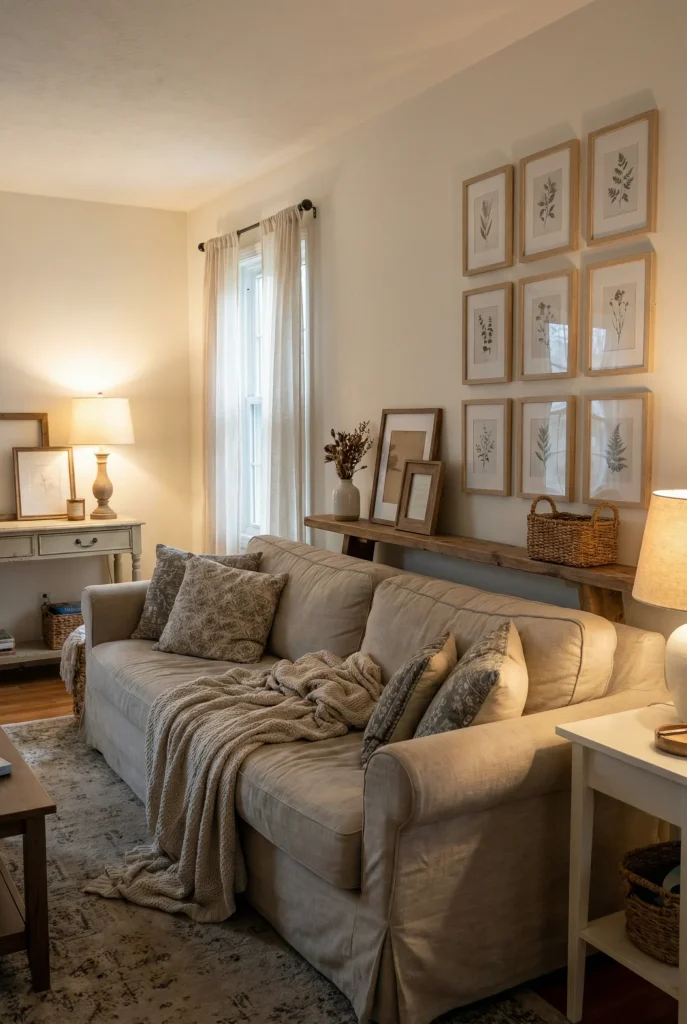
Renters can still create a beautiful farmhouse atmosphere without drilling holes or worrying about repairing walls later.
A leaning picture ledge can rest on a console or behind the sofa. Layer frames, a small vase, and a basket along the ledge for an easy farmhouse arrangement.
A Command-strip frame grid can work well with lightweight frames. Keeping the frames the same size creates a cleaner appearance, and cleaning the wall beforehand helps the strips adhere properly.
A sofa throw hack is another easy option. Drape a large, soft throw casually over the sofa for an inviting look while also adding texture and comfort.
Choose one of these ideas and complete it today. Even a small adjustment can make the room feel more finished.
Common Farmhouse Mistakes (AKA How Rooms End Up Looking Like A Craft Aisle)
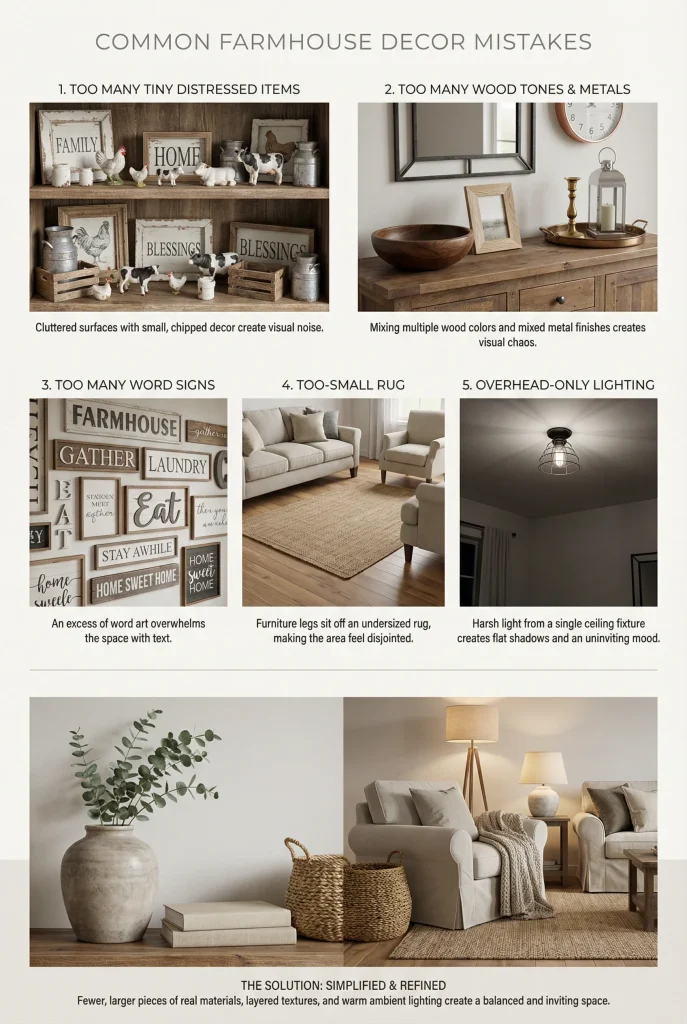
Farmhouse decorating can quickly become overwhelming when every accessory is distressed, rustic, or covered in decorative wording.
Too many small distressed pieces can make the room feel more like a craft store than a comfortable home.
Combining several wood tones and multiple metal finishes can create unnecessary visual noise.
Using too many word signs can make the walls feel crowded and overly themed.
A rug that is too small can make the furniture appear disconnected instead of creating a unified seating area.
Relying only on overhead lighting can also make the room feel harsh rather than cozy.
If you want farmhouse charm without making the space feel kitschy, simplify the room. Choose larger pieces, reduce unnecessary accessories, and focus on texture.
Try removing several small objects and replacing them with one larger item made from a natural or substantial material.
Upcycled Wood Projects
Wood is one of the strongest foundations of farmhouse style. It brings warmth, texture, and visual weight into the room. It can also be forgiving because small imperfections often add character rather than making the piece look flawed.
If you want an easy route toward rustic farmhouse decor, upcycled wood projects are an excellent place to begin.
Narrow Pallet Console Table (Small Space Hero)
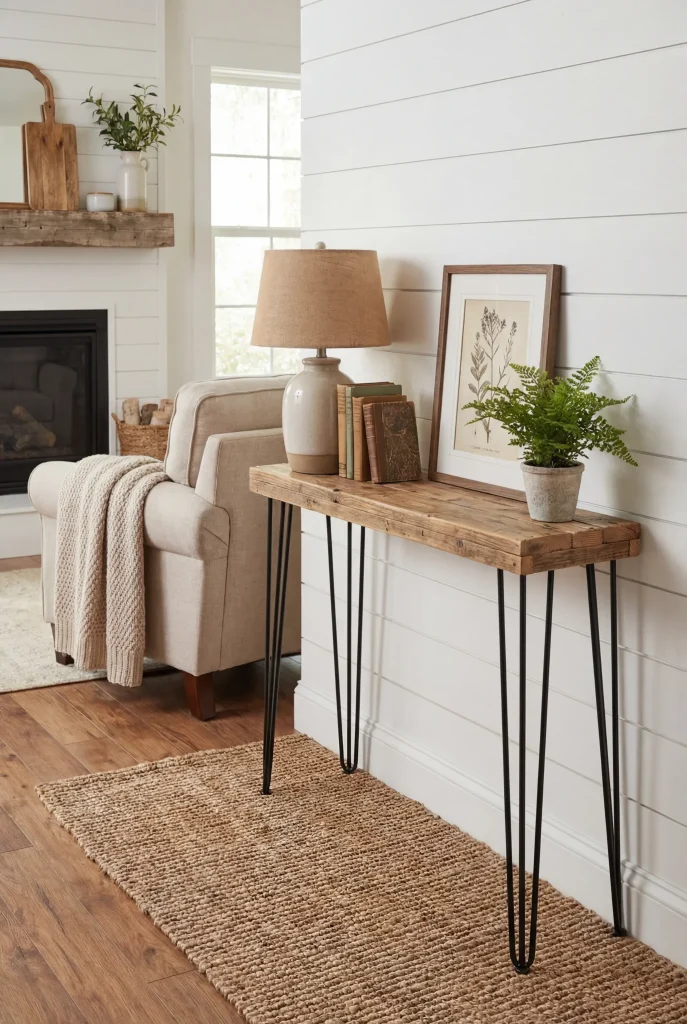
This is my favorite starter build because it solves a practical problem. A console table gives you a place for keys, remotes, a lamp, and all those small objects that somehow end up scattered around the house.
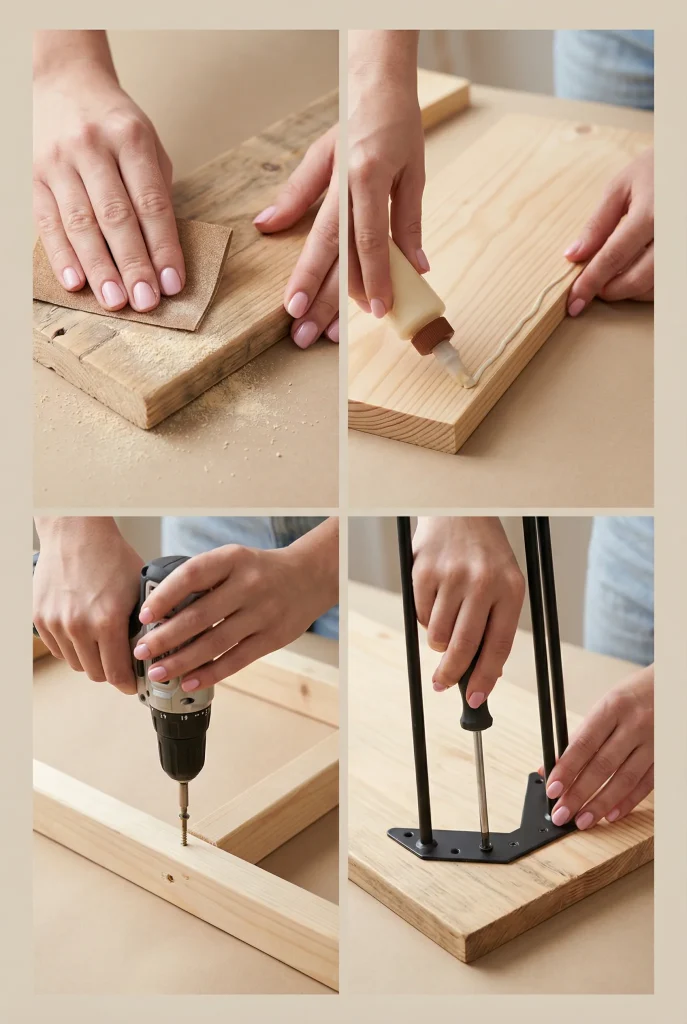
Cost: $20 to $80
Time: Two to four hours
Skill: Beginner
Best For: Behind a sofa, an entry-style wall, clutter control, and additional farmhouse organization
Materials:
Pallet boards or one-by boards, two-by-fours for the frame, screws, glue, sandpaper, and optional hairpin legs.
How I Do It:
Start by sanding with eighty-grit paper, followed by one hundred twenty and then two hundred twenty. Build a simple rectangular frame and attach the boards across the top. Add the legs, which can also be made from two-by-two pieces. Finish the table with stain or paint and then seal it.
Style Tip: A warm stain with a matte topcoat creates an aged appearance without making the furniture look dirty. It gives you that reclaimed wood decor feeling while keeping the piece practical.
Quick win: Place a thrifted lamp on top and a basket underneath to create an instant organized zone.
Barn Door TV Stand (Makes The TV Wall Feel Calmer)
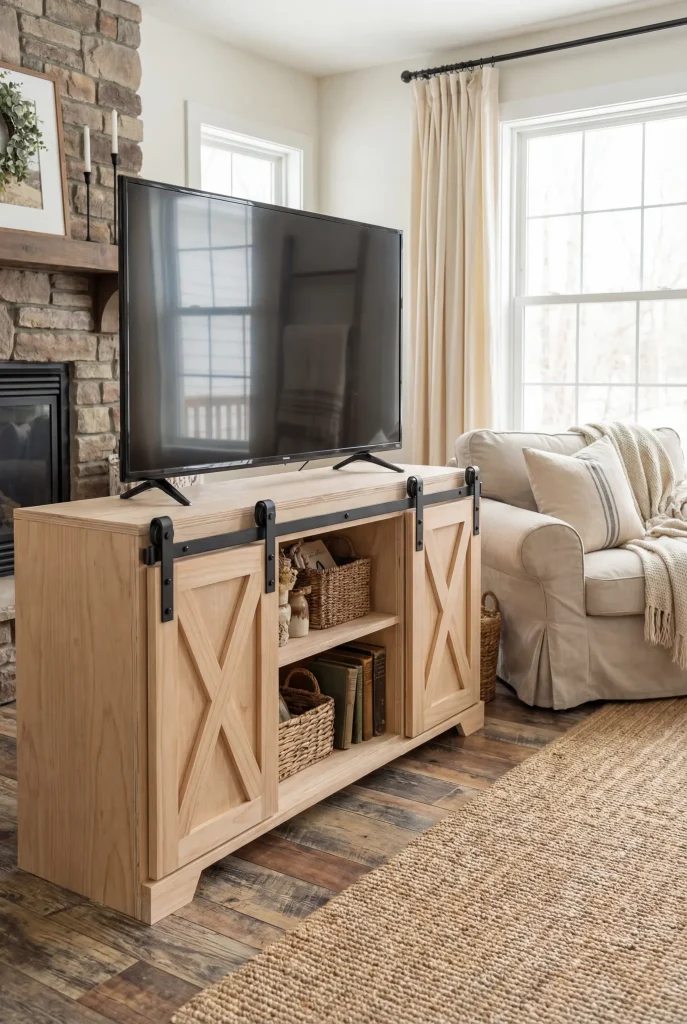
Cost: $120 to $250
Time: Weekend
Skill: Intermediate
Best For: Hiding cables, grounding the room, and adding farmhouse accents that are genuinely useful
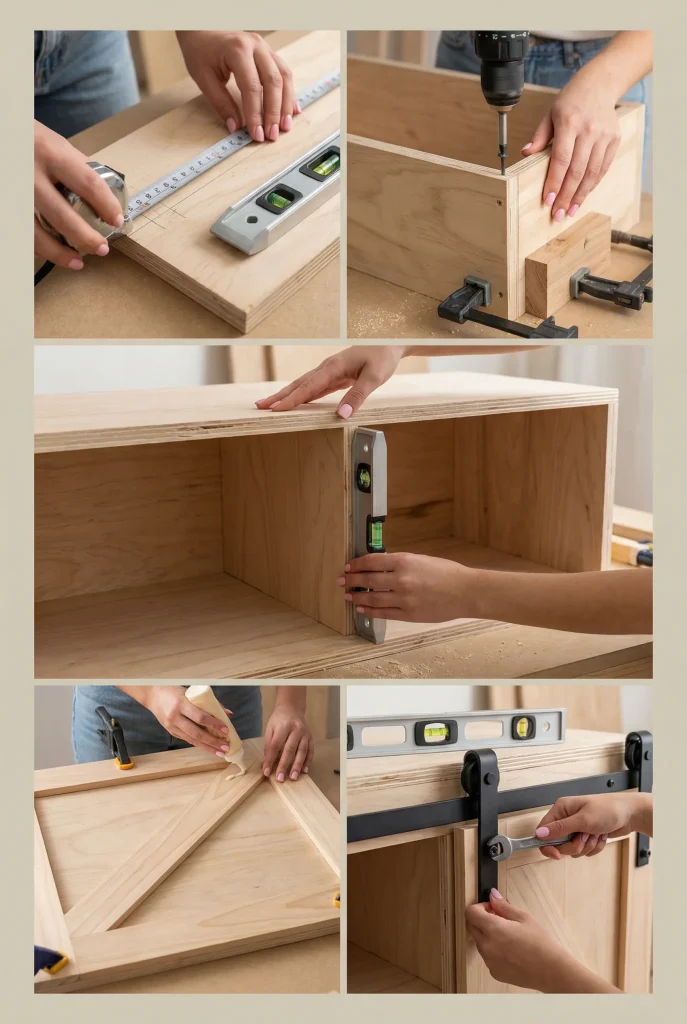
A substantial wood TV stand can soften the appearance of the television wall while adding storage and making the entire area feel more intentional.
Materials:
Three-quarter-inch plywood, one-by-three trim, barn door hardware, a drill, a saw, and a level.
How I Do It:
Build a basic box and add a center divider. Create two simple doors, with a Z-brace being one of the easiest designs. Install the barn door hardware carefully and make sure everything is level before securing it.
Style Tip: Matte black hardware provides an easy connection to modern farmhouse style without making the design feel overly themed.
Quick win: Hide the cables. Even partially concealing visible cables can make the TV area look significantly more finished.
Wine Crate Bookcase (Storage That Looks Collected)
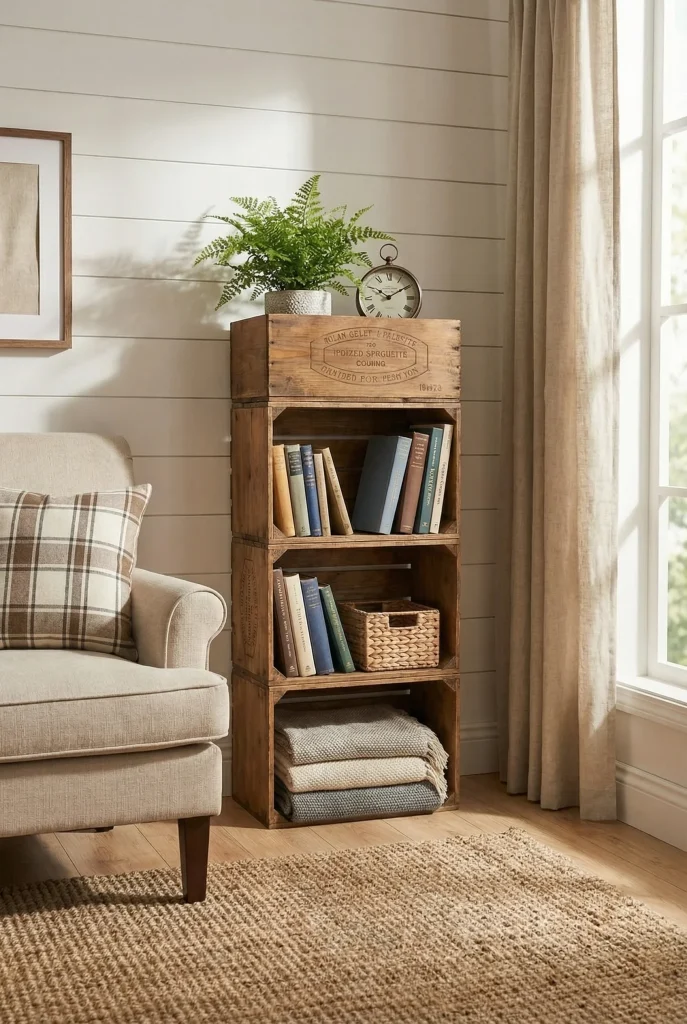
Cost: $60 to $180
Time: Two to four hours
Skill: Beginner
Best For: Small rooms, toy clutter, immediate storage needs, and creating additional farmhouse seating nearby without making the room feel crowded
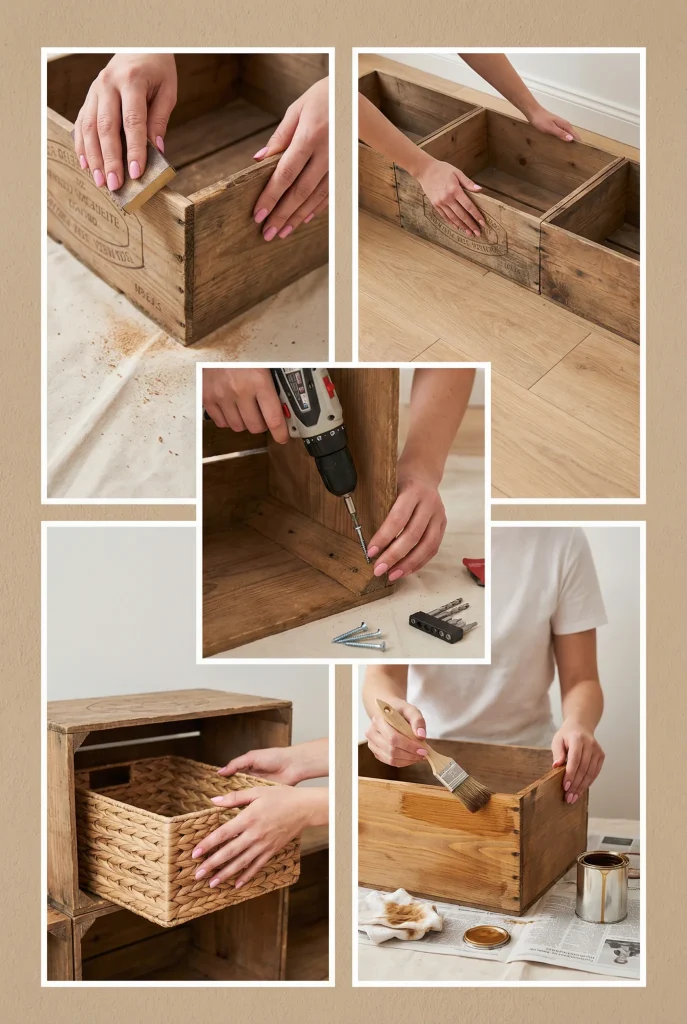
Wine crates can provide instant storage with a built-in appearance. Arrange them low and wide so the finished piece feels like furniture rather than a tall stack that could become unstable while vacuuming.
Materials:
Six to ten crates, screws, a drill, sandpaper, paint or stain with a topcoat, and optional baskets.
How I Do It:
Sand the edges first. Plan the complete arrangement on the floor before attaching anything. Secure the crates through the inside corners, add baskets where needed, and finish by sealing the wood.
Style Tip: Stick with one finish. Choosing a single paint or stain keeps the finished piece cohesive.
Quick win: Use baskets along the bottom row to hide clutter immediately.
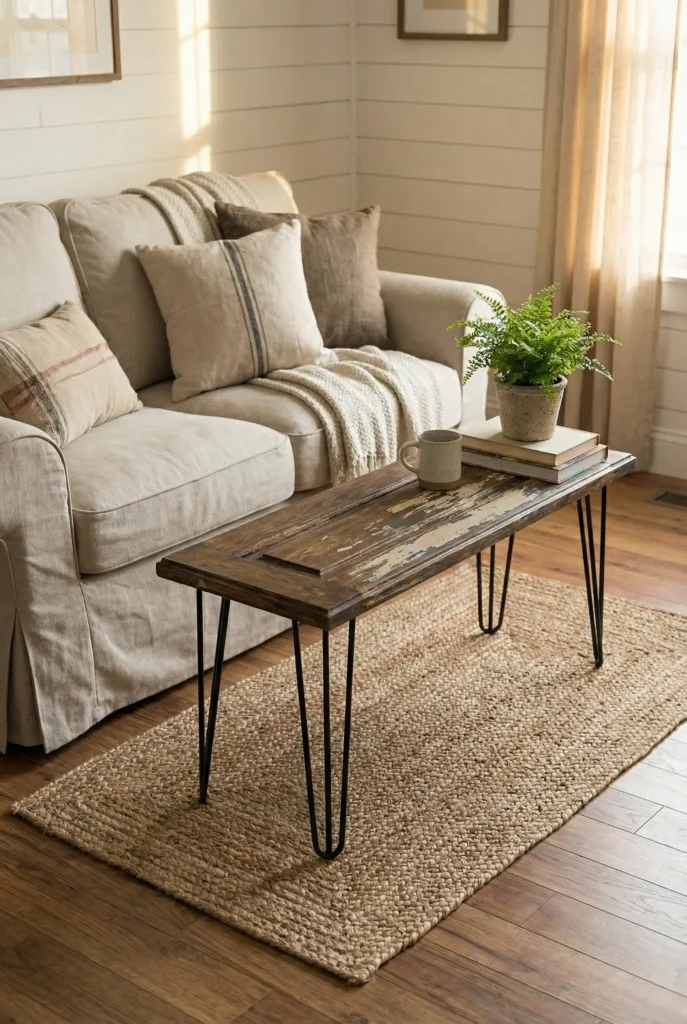
Old Door Coffee Table With Hairpin Legs (Compliment Magnet)
Cost: $60 to $140
Time: Two to four hours plus drying time
Skill: Beginner
Best For: A large cozy focal point and an instant cozy farmhouse atmosphere
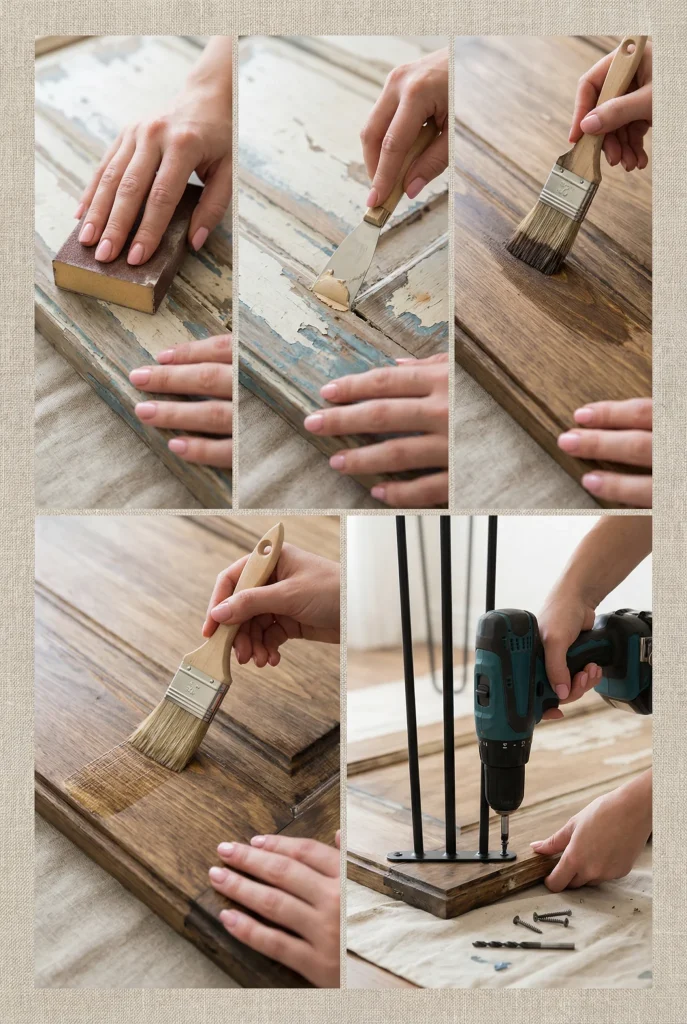
An old door already has plenty of character. Adding hairpin legs can turn it into a statement coffee table that looks like a unique found piece.
Materials:
An old door or panel, hairpin legs, wood filler, stain or paint, and a durable topcoat.
How I Do It:
Clean the door and sand it lightly. Fill any deep holes if necessary, then apply stain or paint. Protect the surface with a durable topcoat and attach the hairpin legs securely.
Style Tip: If the finished piece looks too rustic, sand it again lightly. Softer edges make the table look intentional rather than as though it was simply brought in from a barn.
Quick win: Add a tray to the tabletop so the surface feels styled instead of cluttered.
Handmade Wall Decor
Wall decor is often what makes a room feel personal rather than simply furnished. Farmhouse walls usually work best when there is one strong focal point supported by smaller pieces. Scale is important.
This is also a great place to introduce country style decor without making the room feel overly themed.
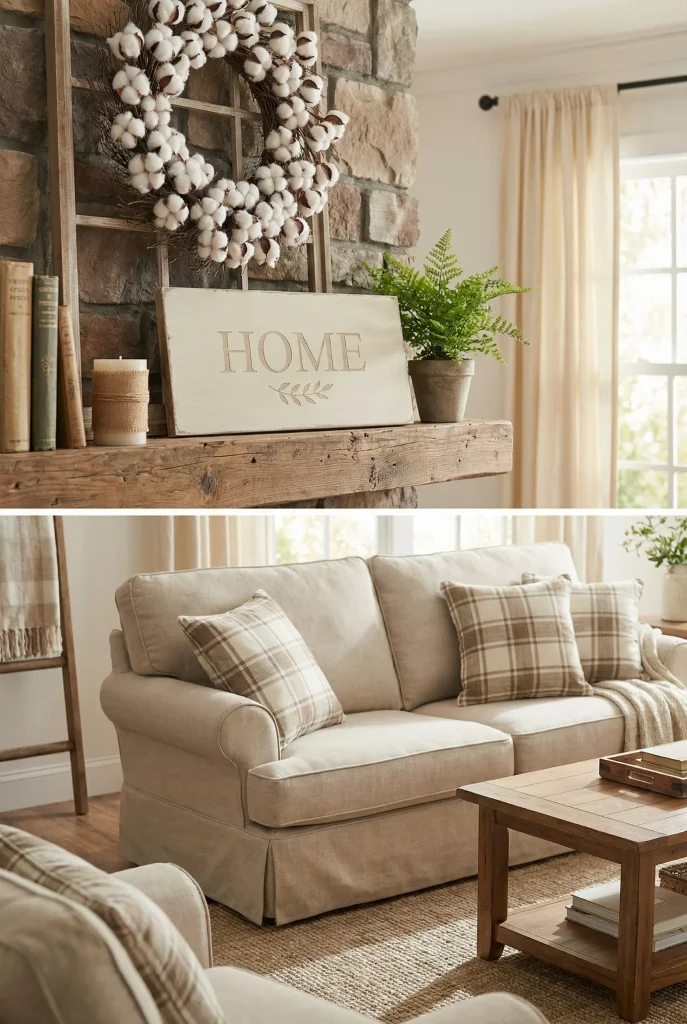
Reclaimed Wood Sign (Warm, Not Cheesy)
Cost: $10 to $35
Time: One to two hours
Skill: Beginner
Best For: Filling an empty wall area without adding clutter and introducing decorative accents with meaning
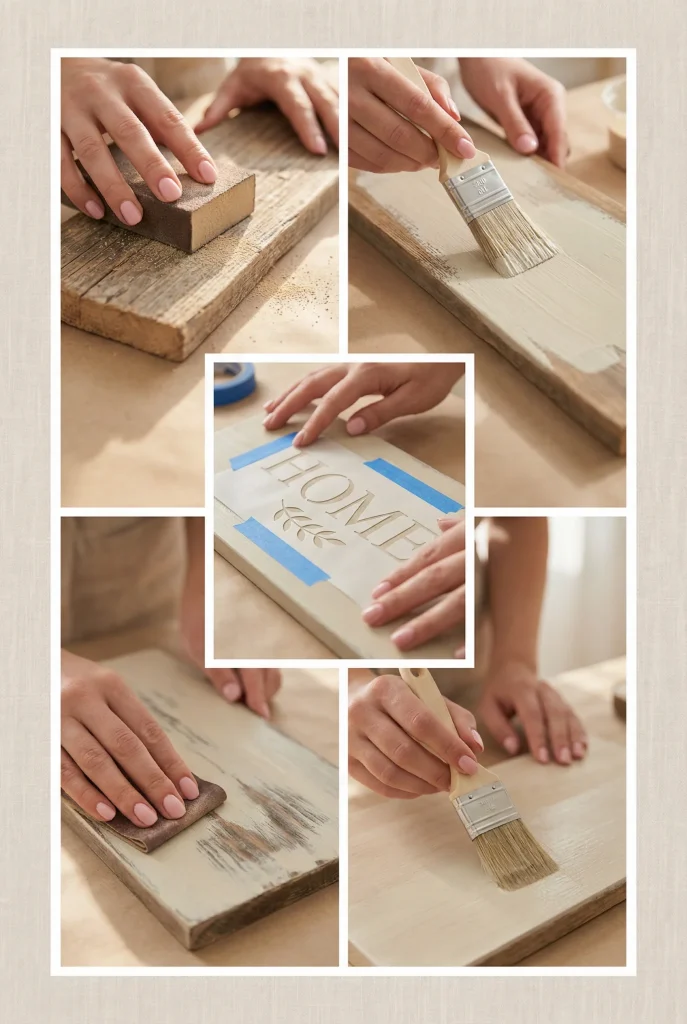
Keep the design simple rather than relying on large slogans. A single word, number, subtle stripe, or personal detail can be enough.
Materials:
Scrap wood, paint, a stencil or tape, and hanging hardware.
How I Do It:
Sand the wood, apply the base coat, create the design with a stencil or tape, add light distressing if desired, and finish with a matte sealant.
Style Tip: One sign can feel charming. Filling the room with signs can make it feel more like a theme park.
Quick win: Hang the sign slightly lower than you might normally expect. A lower placement can create a cozier appearance.
Thrifted Frame Gallery Wall (Collected, Not Chaotic)
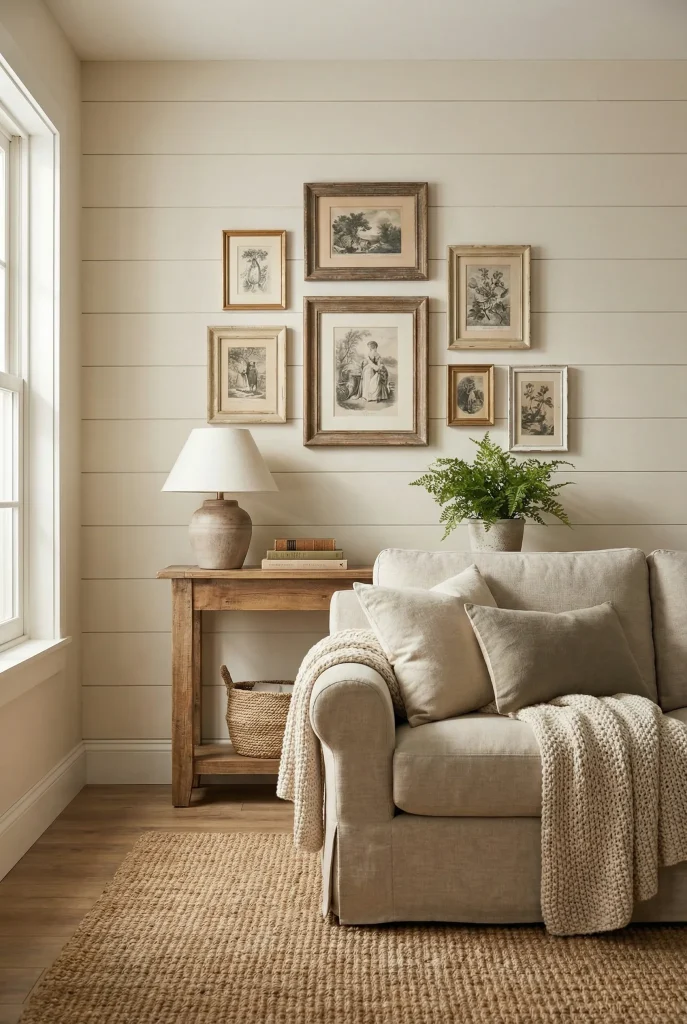
Cost: $25 to $90
Time: Two to three hours
Skill: Beginner
Best For: Making the room feel lived-in and adding farmhouse accessories that can be changed seasonally
One useful rule is to make either the frames coordinate or the artwork coordinate. This creates visual consistency without requiring every piece to match.
Materials:
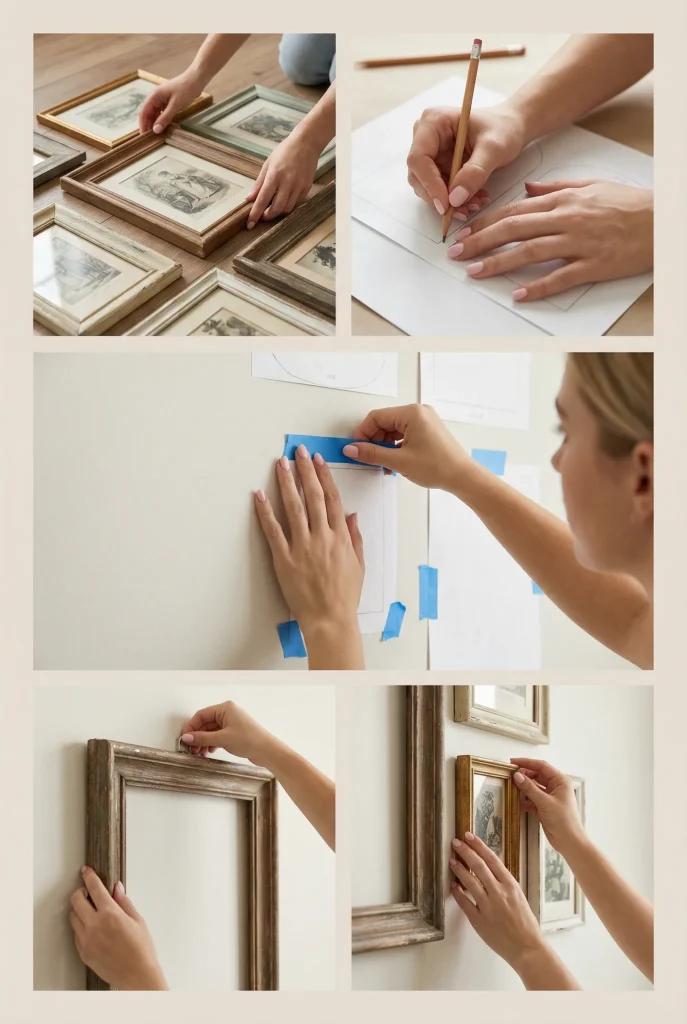
Six to twelve thrifted frames, paper templates, hooks or strips, and art prints or photographs.
How I Do It:
Arrange the frames on the floor first. Trace each frame to create paper templates, then tape those templates to the wall. Hang the largest frame first and use the remaining pieces to fill the surrounding spaces.
Style Tip: One unusual frame can add personality. Keeping it to one prevents the arrangement from becoming visually chaotic.
Quick win: Print photographs in black and white to create instant cohesion.
Peel-And-Stick Shiplap Accent Wall (Renter-Friendly Wow)
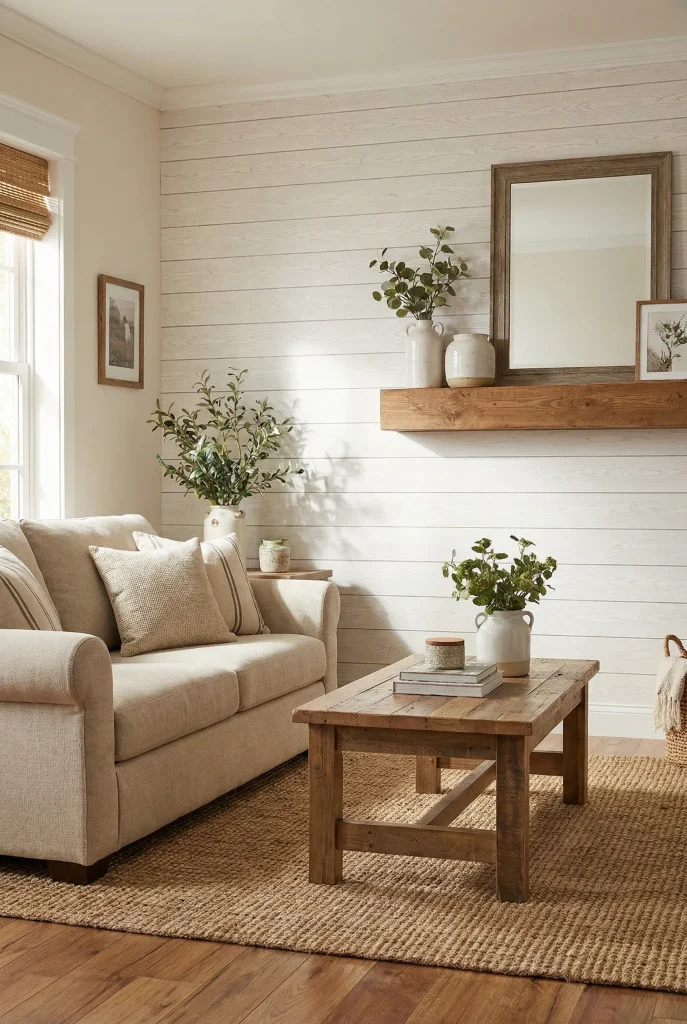
Cost: $30 to $120
Time: Two to four hours
Skill: Beginner
Best For: A TV wall or space behind the sofa and creating a more elegant farmhouse appearance
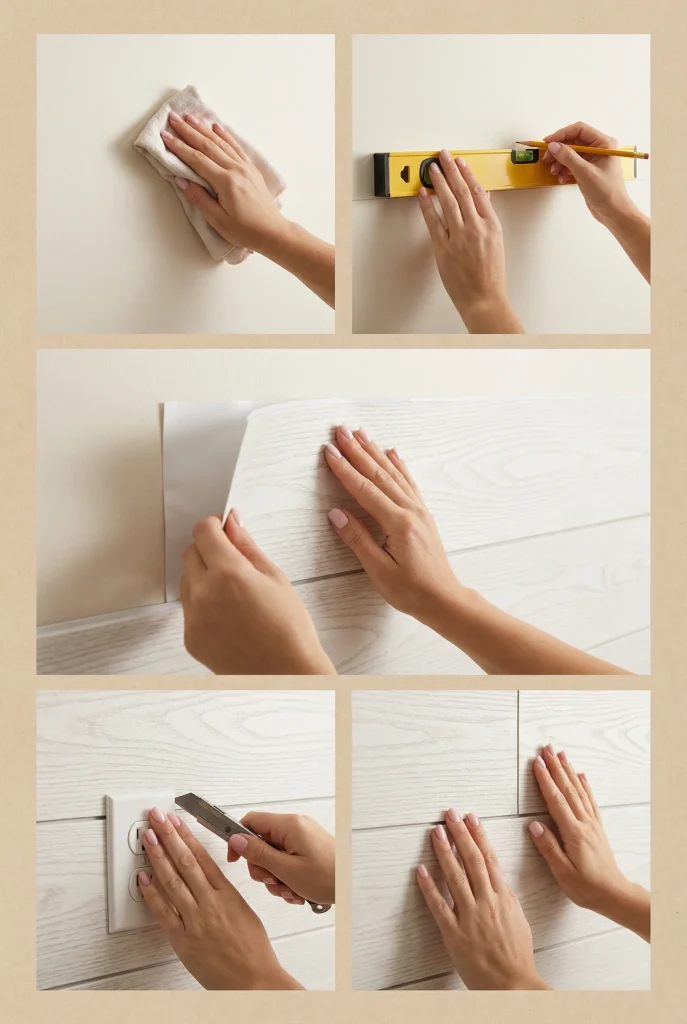
A shiplap accent wall introduces texture and subtle shadow lines, which can immediately reinforce the farmhouse character of a room.
Materials:
Peel-and-stick panels, a level, tape, a utility knife, and optional paint.
How I Do It:
Clean the wall thoroughly and mark a level starting line. Apply the panels slowly, trim the edges as necessary, and touch up the corners.
Style Tip: Warmer white shades generally create a cozier appearance than extremely cool whites.
Quick win: You do not need to cover every wall. One accent wall can completely change the atmosphere.
Barnwood Picture Frames (Makes Anything Look Elevated)
Cost: $10 to $40
Time: One to two hours
Skill: Beginner
Best For: Creating farmhouse wall art that feels personal
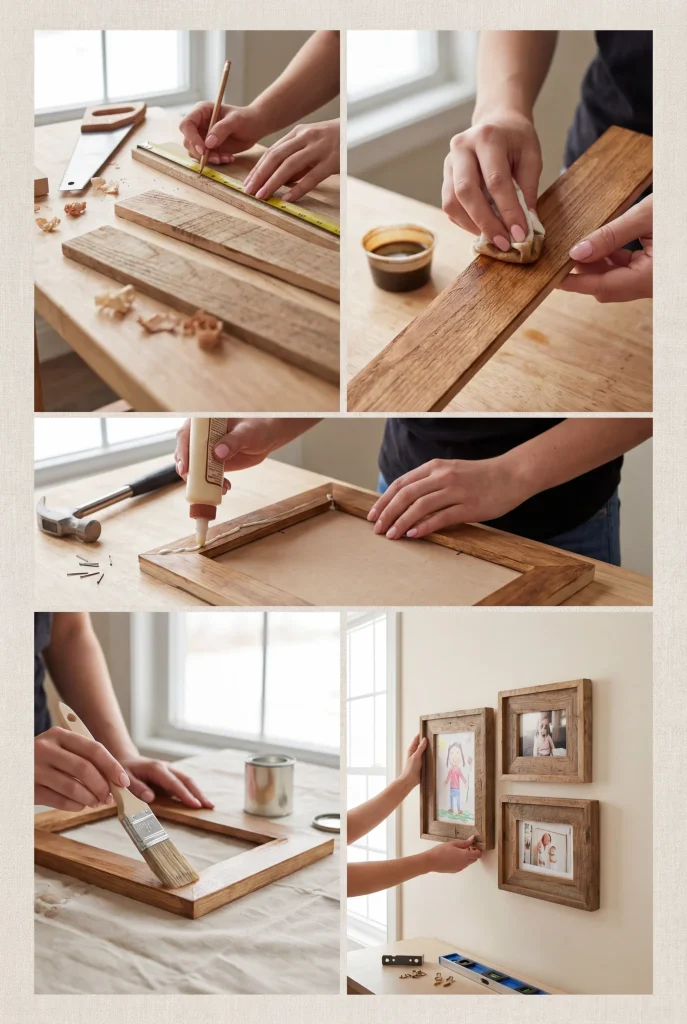
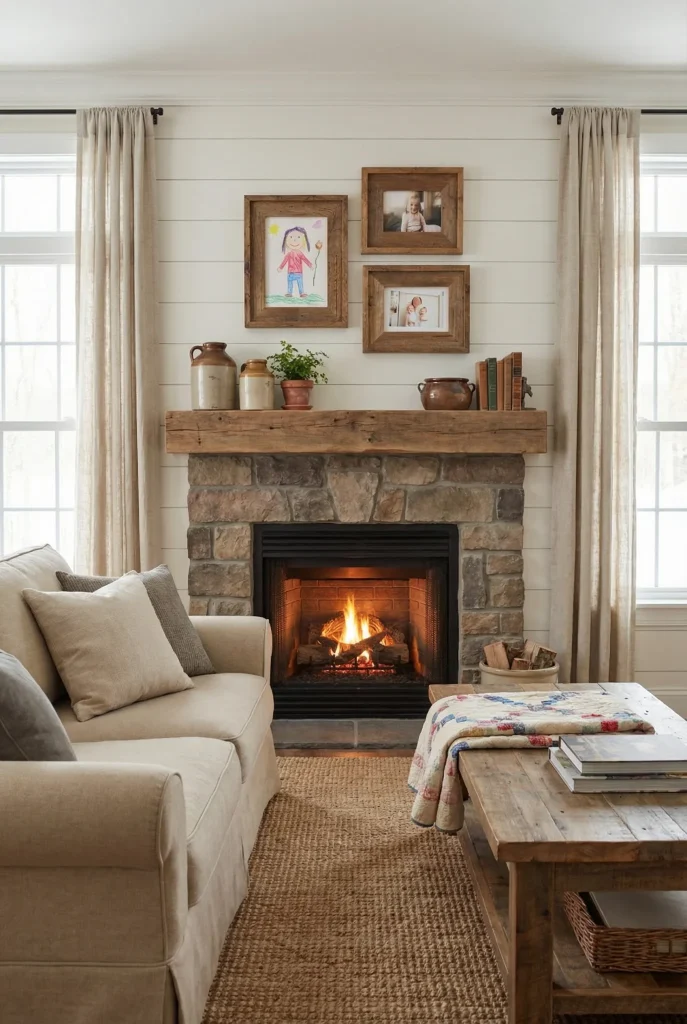
Chunky wood frames can add warmth and character even when the artwork or photograph itself is simple.
Materials:
Thin wood strips, basic frames or backing, glue, nails, stain, and hanging hardware.
How I Do It:
Cut the strips to size and stain them before assembly. Glue and nail them into place, seal the finished frames, and hang them together as a cluster.
Style Tip: Mix frame sizes while keeping the wood tone consistent. This consistency helps create antique farmhouse character without making the wall appear messy.
Quick win: Frame a child’s drawing or another personal piece. It creates farmhouse character while making the room feel like your own.
Rustic Mantel And Shelving Accents
Shelves and mantels add vertical interest and help create a layered appearance. When shelves provide storage, baskets are extremely useful. When they are mainly decorative, leaving some negative space keeps the arrangement calm and balanced.
This is where rustic home decor can combine beautifully with function.
Faux Beam Mantel (Instant Focal Point)
Cost: $60 to $160
Time: Weekend
Skill: Intermediate
Best For: Anchoring a wall, creating a cozy styling ledge, and increasing farmhouse warmth
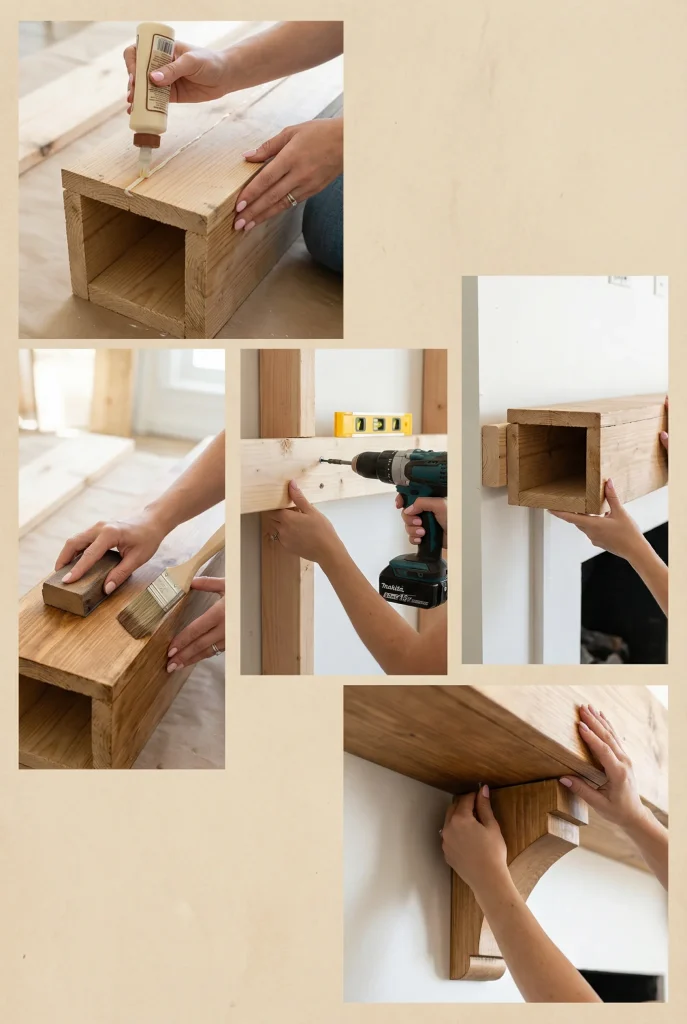
Materials:
One-by-ten or two-by-twelve boards, a two-by-four ledger board, screws, glue, stain or paint, and optional corbels.
How I Do It:
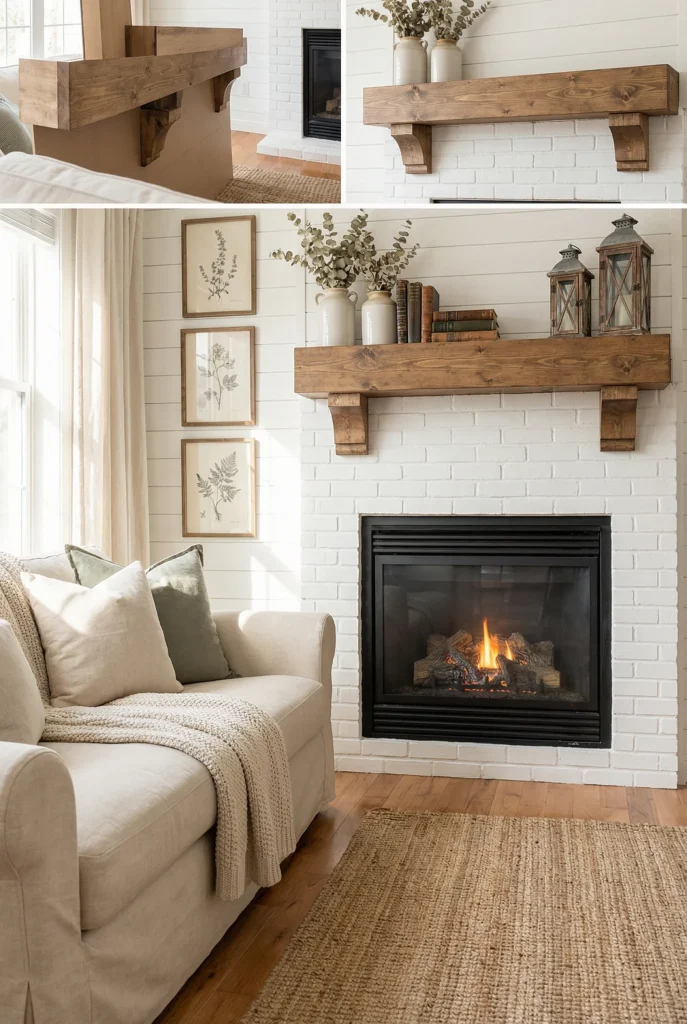
Create a three-sided beam and finish the wood before installation. Mount the ledger securely into studs, slide the finished beam over the ledger, and secure it in place.
Style Tip: Warm wood combined with simple styling creates a timeless appearance. That is rustic charm in its simplest form.
Quick win: Style the mantel with one tall item, one low item, and one unusual item for an easy balanced arrangement.
Floating Shelves That Don’t Sag
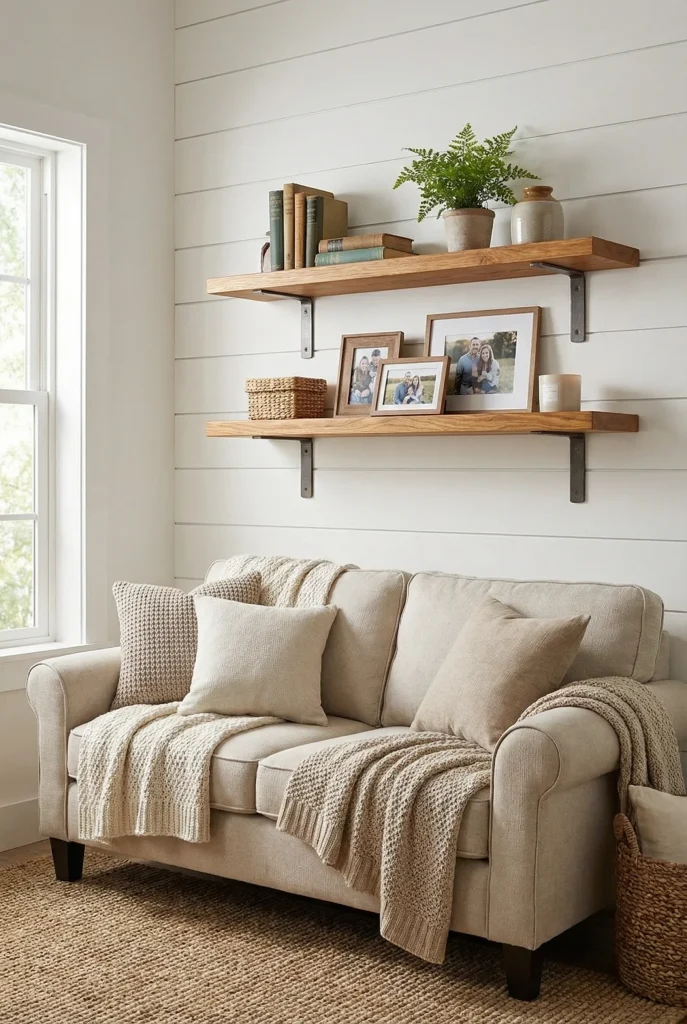
Cost: $40 to $140
Time: Two to three hours
Skill: Beginner to Intermediate
Best For: Small rooms, vertical storage, and decorative displays
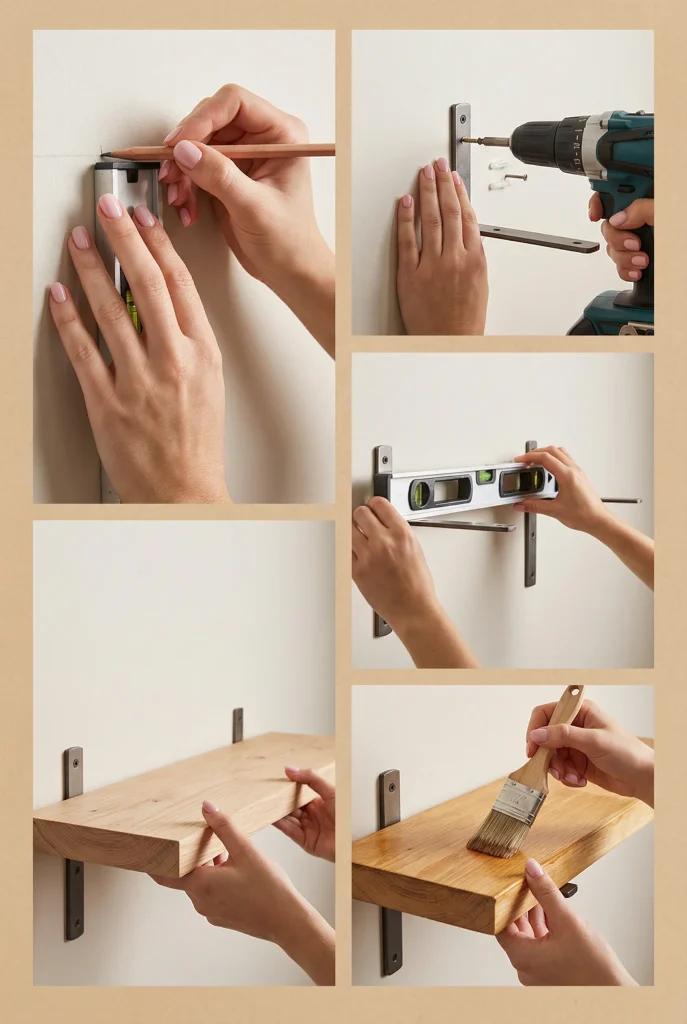
Materials:
One-by-ten boards, brackets, a drill, a level, screws, anchors, and stain or paint.
How I Do It:
Locate and mark the studs first. Install the brackets carefully and make sure they are level. Attach the boards securely and finish them with stain or paint as desired.
Style Tip: One basket on each shelf can hide everyday clutter while still looking intentional.
Quick win: Place a lamp close to the shelves. The combination of shelves and warm lighting can instantly make the space feel cozier.
Pipe Shelving (Industrial Farmhouse Contrast)
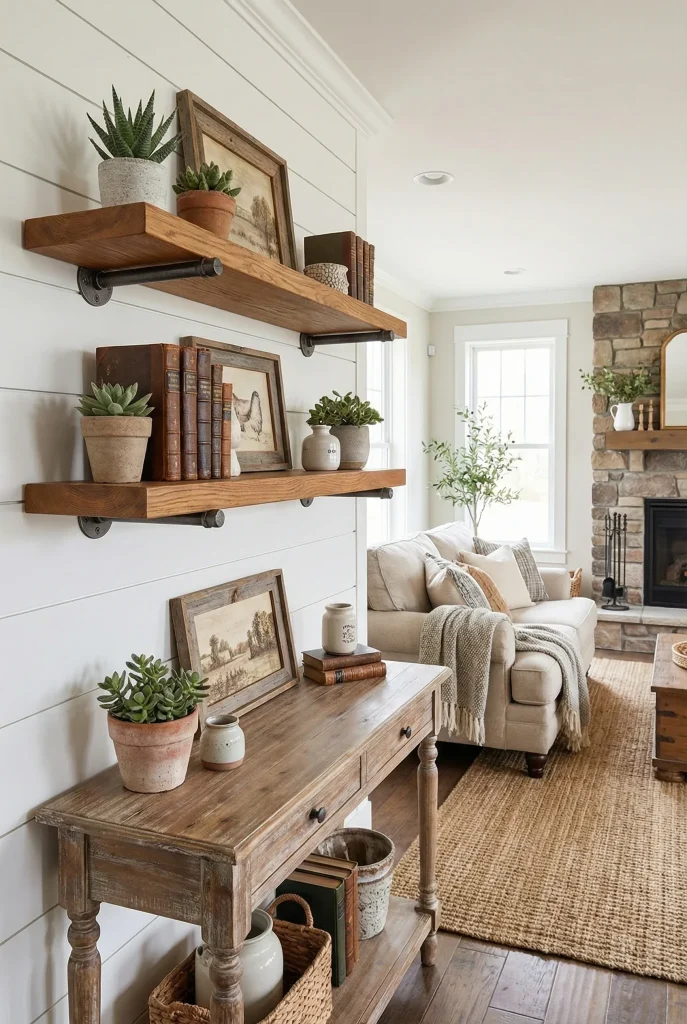
Cost: $60 to $150
Time: Two to four hours
Skill: Intermediate
Best For: A reading nook, bar nook, or adding contrast to the room
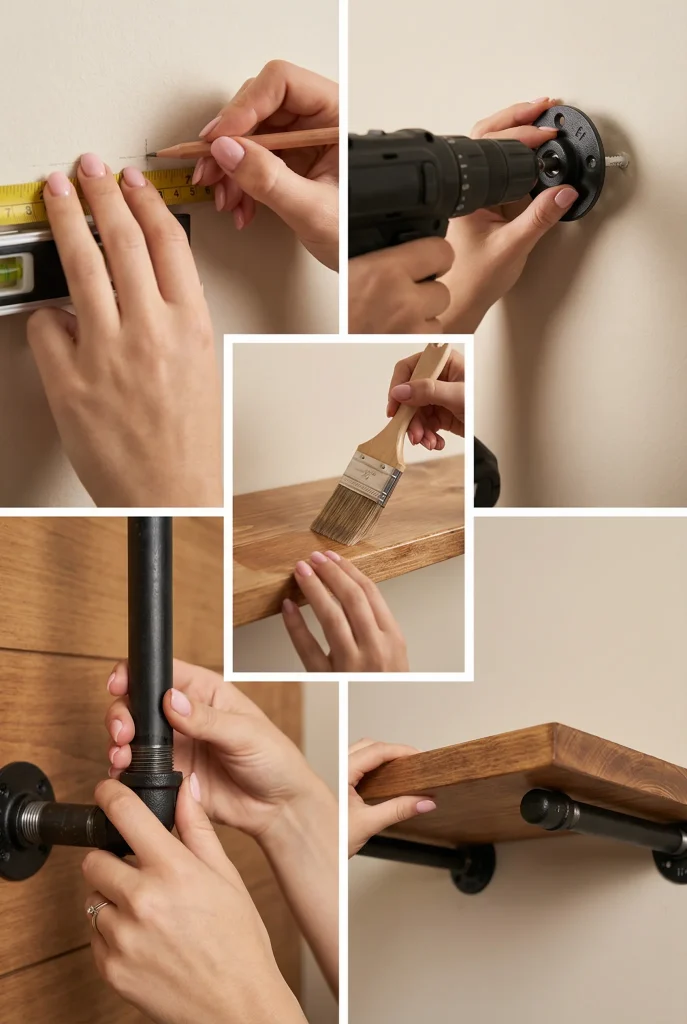
Materials:
Black pipe pieces, flanges, wood boards, anchors, screws, and finish.
How I Do It:
Plan the spacing before installation. Mount the flanges securely, assemble the pipe structure, add the wood boards, and seal the finished materials.
Style Tip: Let the shelving structure itself make the statement. Keep the decorative items simple so the design doesn’t become visually crowded.
Quick win: Add one plant and one stack of books, then stop. Sometimes a little restraint is exactly what makes farmhouse shelving work.