
That brick wall in your garden does not have to look stern, empty, or unfinished. With some greenery, thoughtful lighting, and a few practical additions, you can turn it into a warm and inviting backdrop that feels like part of the garden.
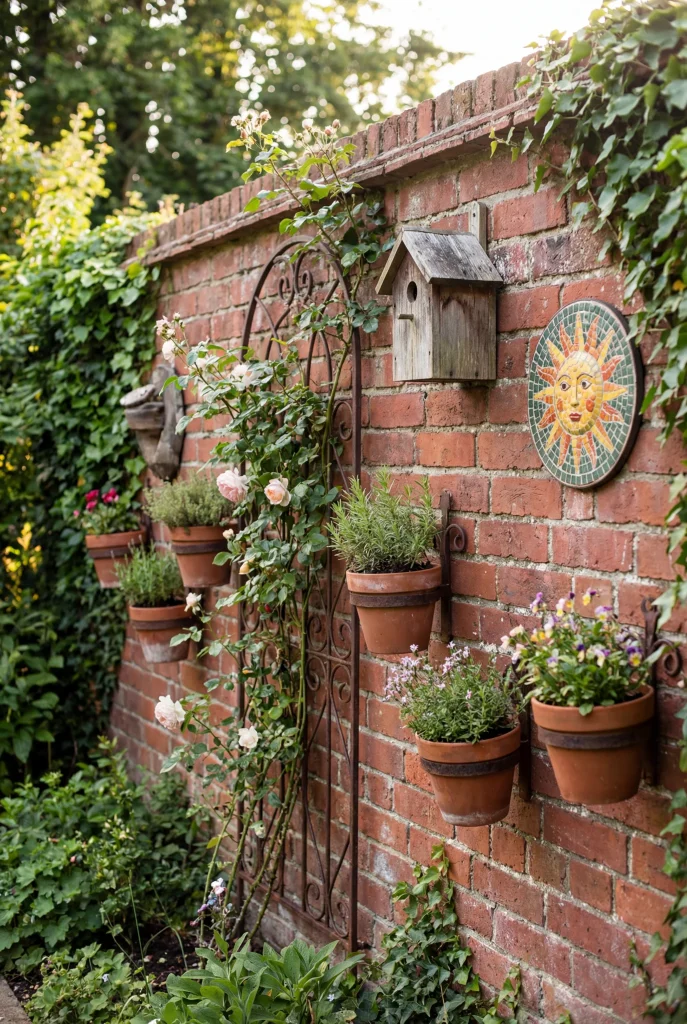
If your garden brick wall looks perfectly fine in theory but feels boring, harsh, or strangely unfinished in person, you are not alone. Brick can easily become a large, flat surface once the plants lose their leaves, furniture gets pushed aside, and strong sunlight highlights every joint and mark.
Garden brick walls often feel boring or harsh because they create one large, uninterrupted area of the same color and texture. Your eyes simply move across the surface without finding anything interesting to focus on.
The good news is that you usually do not need an expensive renovation. A few decorative layers can completely change the look. Add greenery, introduce lighting for the evening, and choose one strong focal point so the wall feels more like a backdrop than a boundary.
You can make the wall feel intentional with simple ideas that work with your available sunlight, budget, and comfort level when it comes to drilling or mounting things.
This guide covers vertical garden ideas, outdoor lighting, subtle projection, safe brick wall decorations, and simple paint treatments that can give your garden a fresh appearance without committing to a major makeover.
Quick Start Box
If your wall gets full sun: Choose a trellis with a climbing rose or jasmine and add a couple of uplights.
If your wall is shaded: Try wall planters with ferns or heuchera and combine them with warm string lights.
If you rent or cannot drill: Use a freestanding grid with hanging pots and solar lights.
If you want a quick dramatic change: Add two uplights and one large outdoor wall art piece.
Decision Table
| Goal | Best idea | Cost | Difficulty | Time |
|---|---|---|---|---|
| Soften a harsh wall | Trellis with a vine | $40 to $150 | Easy to medium | A weekend |
| Create nighttime glow | Uplights | $30 to $150 | Easy | One to two hours |
| Avoid drilling | Brick clips or freestanding panel | $20 to $120 | Easy | About one hour |
| Create a major makeover | Limewash or paint | $60 to $200 | Medium | Weekend plus |
If you are wondering how to decorate a brick wall in the garden without making it look crowded, start with one clear direction. Choose one main idea, make it work well, and then add a supporting layer.
Before You Decorate
Clean the wall before adding anything. Dry brick can hold a surprising amount of dust, which can interfere with mounting systems and adhesives.
If the surface is dirty, wash it with plain water and a stiff brush, then allow it to dry completely. Remove loose or flaky material before installing anything.
If you notice white powdery patches, brush them away and give the wall time to dry. These areas can indicate moisture moving through the masonry.
Decide where your mounting points will go before buying decorations. Mortar joints can often be useful mounting locations, depending on the weight and type of fixture.
If you plan to use adhesive, test it on a small hidden area first and give it time to see how well it holds. For planters, think about drainage before installation so excess water does not create stains or moisture problems.
Why Brick Walls Feel Harsh, and How to Soften Them Fast
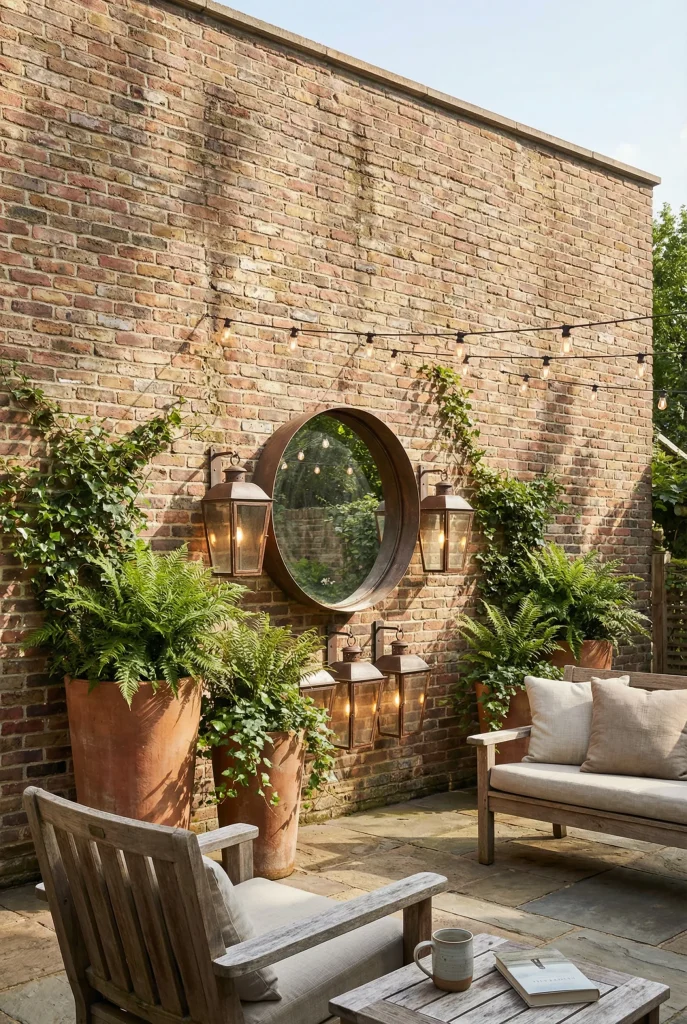
Brick can feel harsh because it combines one large texture, one dominant color, and a broad uninterrupted surface. Every stain, joint, and color variation becomes noticeable.
Strong sunlight can make the wall feel intense, while heavy shade can make it appear empty and flat.
The quickest solution is layering. Combine greenery, something that changes the atmosphere after dark, and one focal element that looks intentional. This keeps the space feeling like outdoor decor rather than a construction project.
Before buying anything, stand in the spot where you actually spend time in the garden. Think about where you drink coffee, sit with guests, use the grill, or simply relax.
If the wall feels too noticeable from that position, place your main decorative feature there. Let the other elements support it rather than competing for attention.
Taking a before photo can also help. It gives you something to compare with once the makeover is complete.
Vertical Garden Options that Make Brick Feel Alive (and not fussy)
Vertical greenery is effective because it breaks up the flat appearance of brick and adds natural movement. Even when flowers are not blooming, leaves and vines can make the wall feel softer and more layered.
It is also a practical choice for smaller patios because plants can grow upward without taking up much floor space.
Plants by Sun vs Shade
Full sun: Climbing roses can create a romantic garden feel with plenty of visual impact.
Full sun: Jasmine or star jasmine adds greenery along with a pleasant fragrance.
Full sun: Trailing lantana provides cheerful color and can handle sunny conditions.
Full sun: Ivy geraniums are useful for creating classic trailing displays.
Full sun: Succulents can work well in wall pockets when drainage is excellent.
Shade: Ferns are an easy way to bring softness and texture to a darker wall.
Shade: Heuchera offers attractive foliage and subtle color.
Shade: Hostas can create a lush appearance where conditions are suitable.
Shade: Coleus provides colorful foliage and a more dramatic look.
Shade: Creeping jenny or lamium can create a forgiving trailing effect.
Wall-Mounted Planters
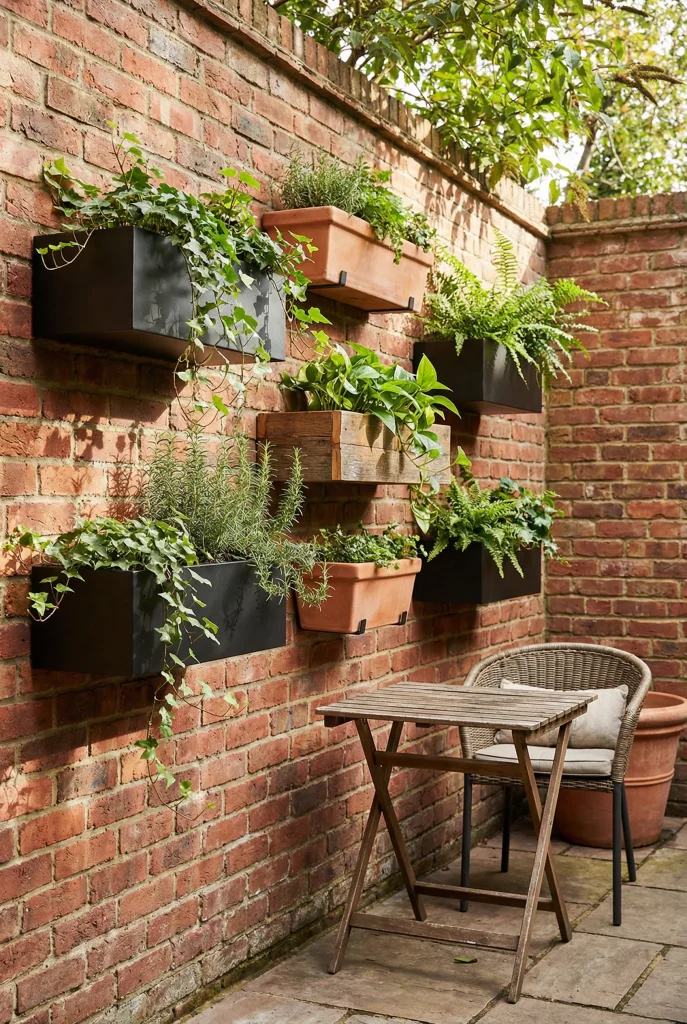
Wall-mounted planters are containers or pockets attached to a surface and filled with herbs, trailing plants, flowers, or greenery. Their shape can make the garden look modern, rustic, or cottage-inspired.
They are especially useful when you want to add depth without taking up valuable floor space.
What it looks like: Staggered planters filled with greenery that spills downward.
Best use case: Small patios and narrow gardens where floor space is limited.
Maintenance level: Medium because smaller containers can dry out quickly.
Typical US price range: Individual planters may cost around $15 to $60, while larger sets can range from $60 to $180.
Practical tip: Drainage is essential. Without drainage, roots can remain too wet and water can leave marks on the brick.
For basic supplies, large home improvement retailers are convenient options. If you want more decorative styles, online marketplaces offer a wider range of shapes and finishes.
Trellis Plus Climbing Plants
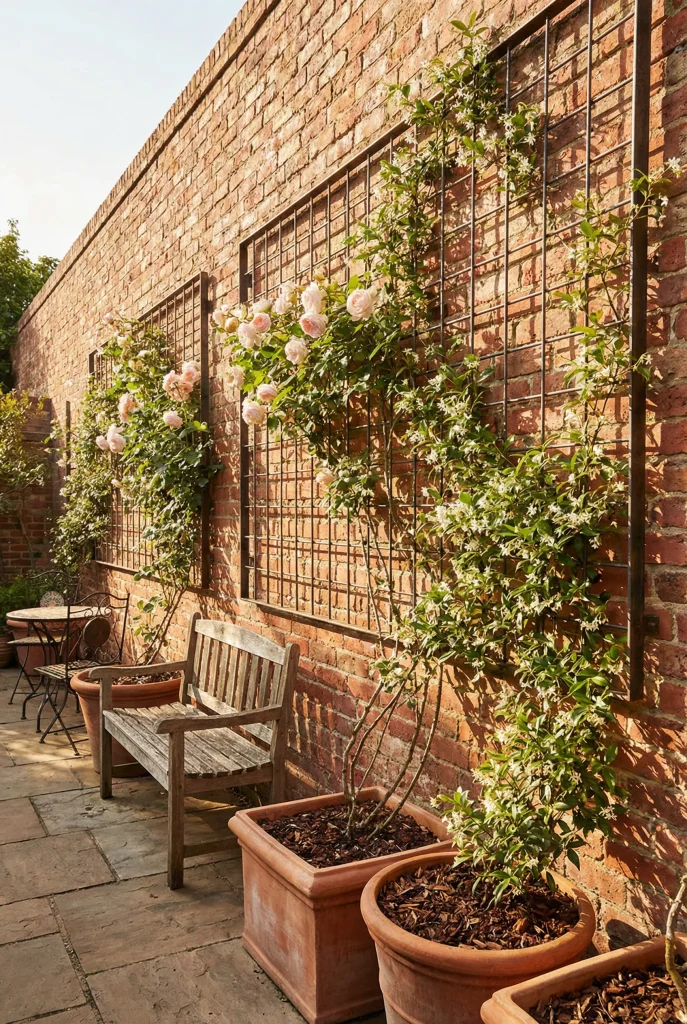
A trellis combined with climbing plants is one of the classic ways to soften a brick wall. It adds height, movement, changing shadows, and layers of foliage.
What it looks like: A grid or lattice covered gradually with climbing greenery.
Best use case: Sunny walls, larger surfaces, and gardens where you want a romantic or natural appearance.
Maintenance level: Low to high depending on the plant and how much pruning it needs.
Typical price range: Basic trellises may cost around $25 to $120, while larger premium metal versions can cost more.
Plant cost typical: Starter climbing roses or jasmine plants commonly fall within the $20 to $50 range.
Practical tip: Avoid mounting the trellis directly against the wall. Leaving an air gap helps the masonry dry and gives the plant room to grow.
Mini guide: How to install a trellis with an air gap
Choose a trellis large enough to cover a meaningful portion of the area you want to soften. Hold it in position and mark the mounting points before drilling.
Leave a small gap between the trellis and the wall. Spacers, washers, or suitable blocks can help create this separation.
When appropriate for the structure and weight, use mortar joints as mounting points rather than drilling directly into the brick face. Choose masonry screws or anchors designed for the load.
Once mounted, gently test the trellis to make sure it feels secure. Train the plant loosely and continue guiding it during the first growing season.
Water the plant at its base rather than repeatedly soaking the wall.
Take a step back before drilling permanently. A few extra seconds of checking the alignment can save you from discovering that the trellis is crooked later.
Modular Living Wall Systems
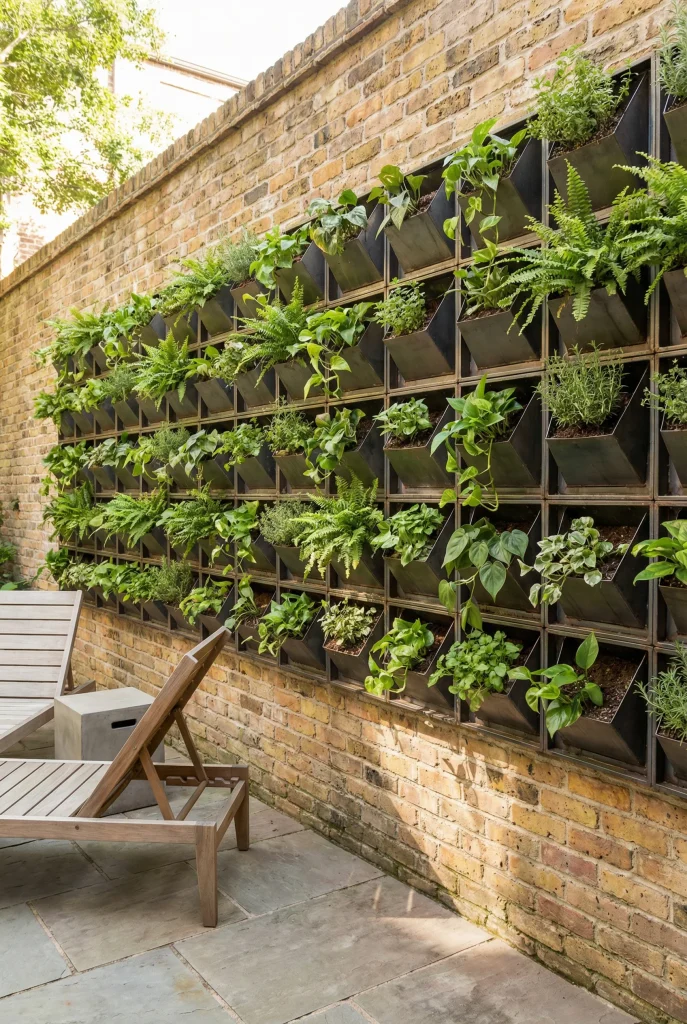
Modular living wall systems are useful when you want a cleaner, more modern green feature. They can also make it easier to replace or rearrange plants over time.
Start with hardy, easy-care plants because small planting pockets can dry out quickly. A simple setup can cost around $80 to $250, while larger premium systems may cost more.
Faux Greenery (yes, it’s okay sometimes)

Faux greenery can make sense for rental properties, frequently traveled homes, extremely sunny locations, or anyone who knows regular watering is not going to happen.
Choose UV-rated products when they will remain outdoors. Start with one panel and leave it outside for a while before investing in a complete wall.
Basic panels can cost around $40 to $120, while higher-quality UV-resistant options may cost more.
Lighting and Projection that Makes Brick Look Expensive at Night
Lighting can completely change the appearance of brick because it highlights its natural texture.
During the day, you see the brick’s color and pattern. At night, carefully placed lighting can reveal depth and make the wall look much more intentional.
Placement is often more important than the exact fixture. You can softly wash the wall with light or highlight its texture with a more dramatic angle.
String or Café Lights

String lights can be installed from the house toward the wall, between poles, or across a seating area.
They create a relaxed atmosphere that encourages people to stay outside longer. They also soften the visual impact of the brick rather than emphasizing every texture.
They can usually be powered by an outdoor outlet or solar energy. Basic options often range from $25 to $120, with premium sets costing more.
For shaded walls, warm string lights paired with greenery can create an especially welcoming effect.
Wall Sconces
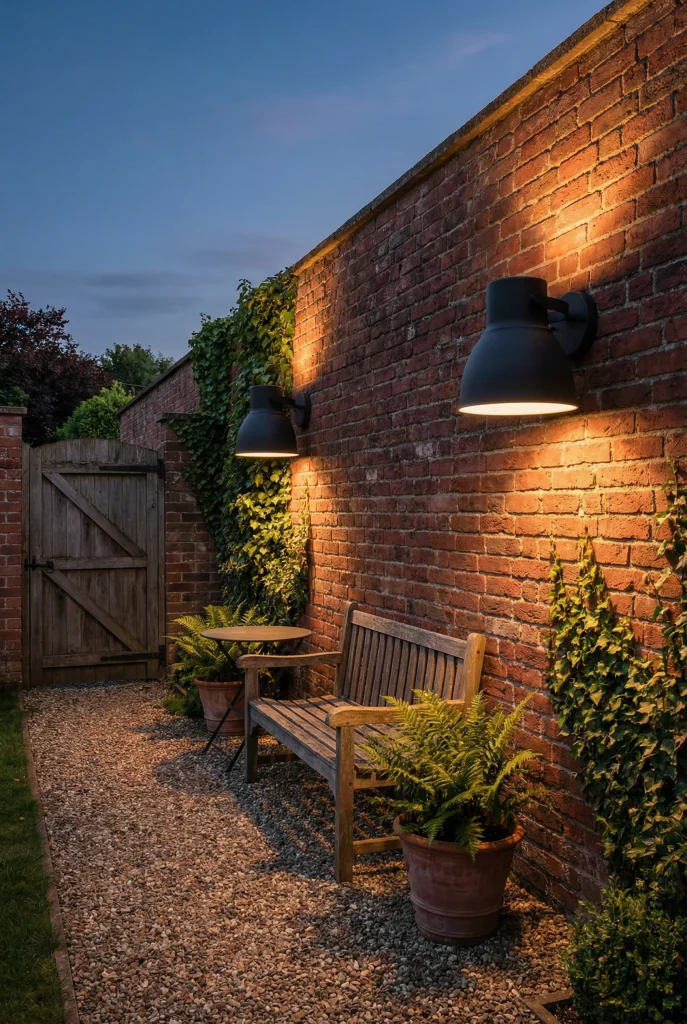
Wall sconces work well when you want a more architectural appearance. They can look especially effective around doors, gates, seating areas, or entrances.
Place them where they illuminate people and nearby surfaces instead of simply pointing light toward the highest part of the wall.
Ground Uplights (featured)

If you want one lighting upgrade with a strong visual effect, uplights are a great choice. They can make an ordinary brick surface look much more designed after dark.
Place them near the base of the wall and adjust their distance and angle until the texture looks attractive without creating uncomfortable glare.
Two fixtures can be enough to start. Add additional lights only when the wall is long enough to need more coverage.
Warm white lighting usually creates a cozy atmosphere, while neutral light can give the garden a cleaner modern appearance.
Keep wires protected and positioned safely, or choose solar fixtures when appropriate. Solar panels need enough direct sunlight during the day to work effectively at night.
Test the lights after dark and adjust the angles gradually. The goal is to reveal the texture without making the garden feel like a stadium.
Solar Lights
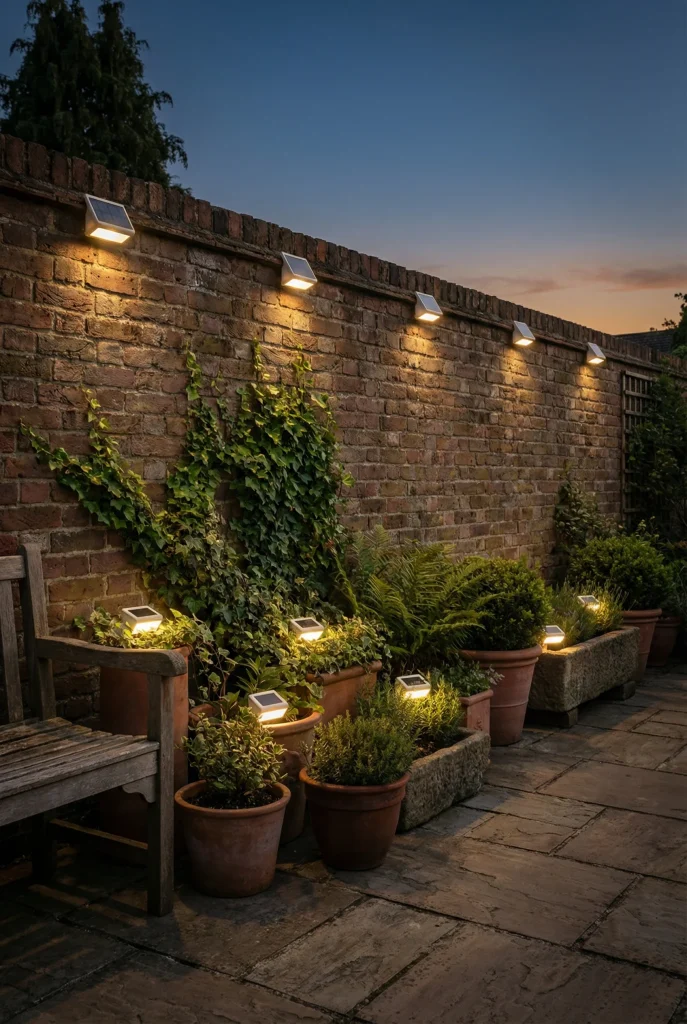
Solar lights are convenient when you want accent lighting without running electrical wiring. They work especially well around planters, pathways, or along the upper edge of a garden wall.
The main consideration is the solar panel. Even when the wall itself is shaded, the panel still needs sufficient sunlight during the day.
Basic solar lights may cost around $15 to $60, while brighter premium options can cost more.
Subtle Projection Patterns
Projection can add movement and personality to an otherwise flat wall. A subtle pattern resembling tree branches or soft shadows can create a whimsical evening effect.
Keep the design restrained. The goal is to create atmosphere rather than turn the garden into a light show.
Basic outdoor projectors may cost around $25 to $100, with premium options costing more.
Wall-Mounted Decor Pieces
Brick is different from drywall, so outdoor decorations need a suitable mounting method.
If you want decorative pieces to remain secure through wind and changing weather, consider both the weight of the item and the type of mounting hardware being used.
Outdoor metal art

Outdoor-rated or powder-coated metal art can provide a strong focal point while remaining relatively lightweight.
Use suitable screws, anchors, or compatible brick clips based on the specific product and wall. Avoid unsecured pieces in very windy areas.
Basic metal wall art often falls around the $40 to $200 range, while larger premium pieces can cost more.
Ceramic or mosaic tile inlays
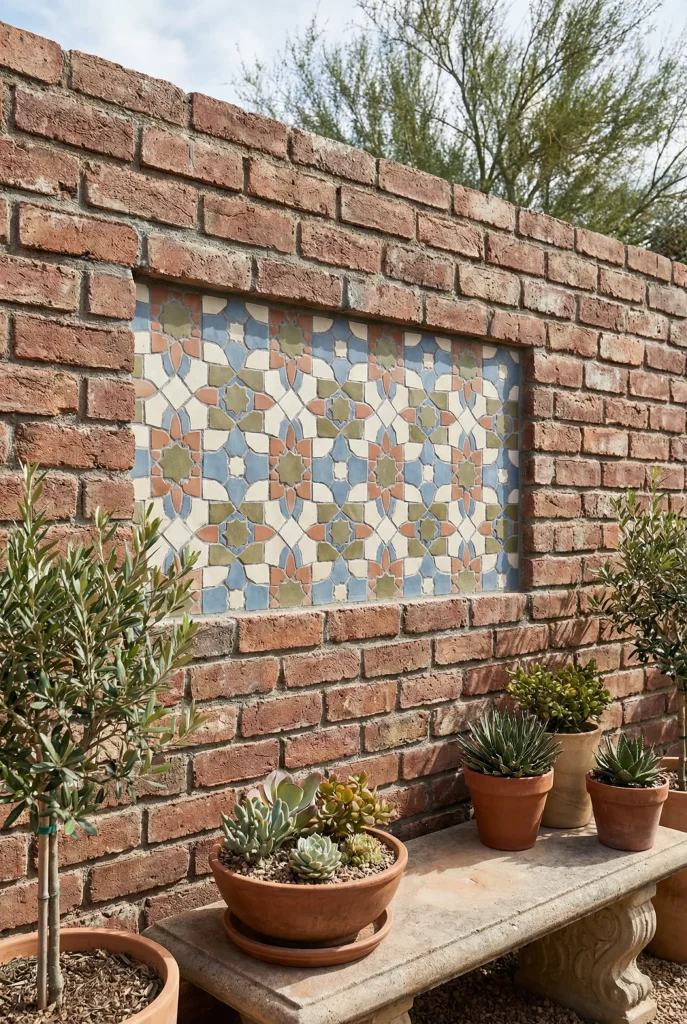
Outdoor-rated ceramic or mosaic tile can introduce color and pattern to a brick wall.
Because these materials can become relatively heavy, proper installation is important. Exterior-rated masonry products and suitable grout should be used.
They are less suitable for walls with ongoing moisture problems or areas exposed to harsh freeze-thaw conditions without proper preparation.
Mirrors and reflective elements
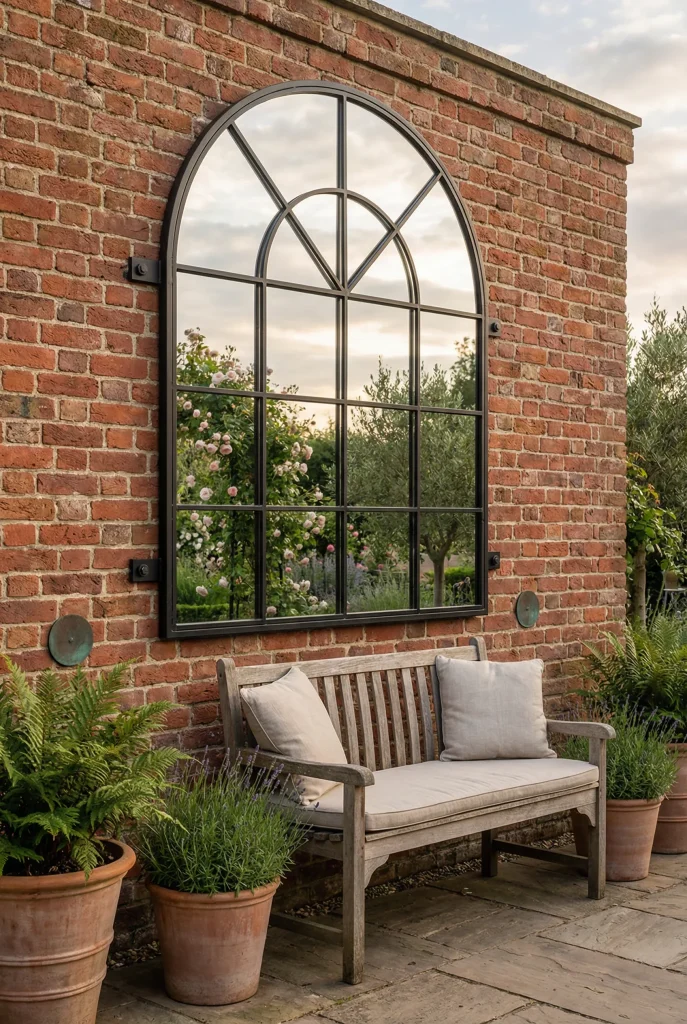
Outdoor-rated mirrors can make a garden feel larger and brighter while adding another layer of visual interest.
Choose products designed for outdoor conditions and secure them mechanically rather than relying only on adhesive.
Be careful with direct sunlight and positioning so the reflection does not create glare or highlight unwanted clutter.
Shelves and recessed niches
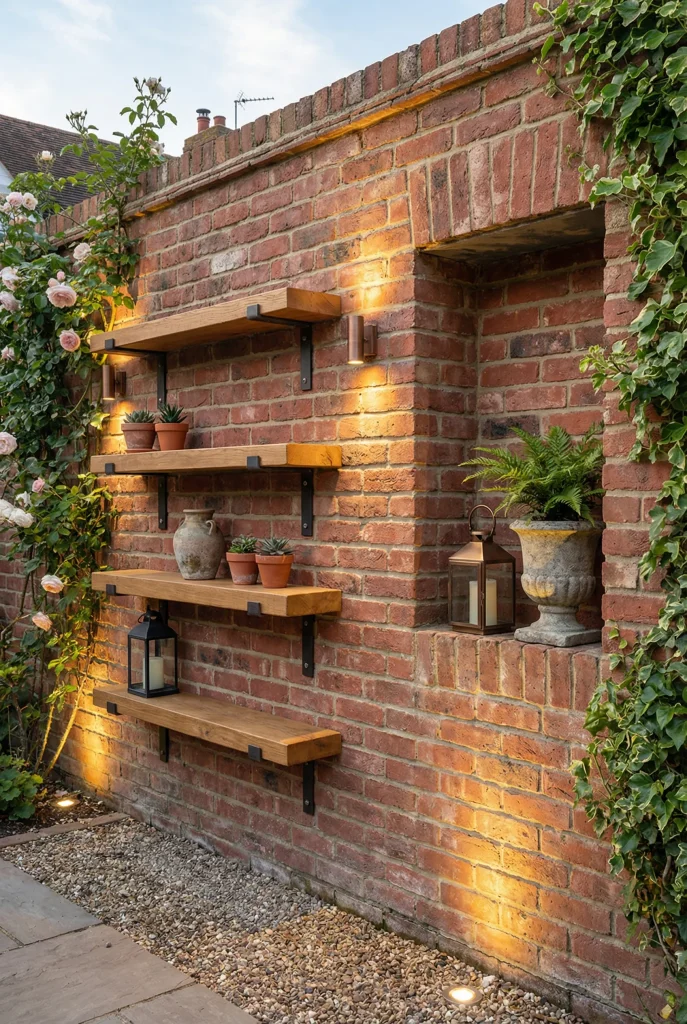
Outdoor shelves and niches can turn a brick wall into a display area for plants, lanterns, or decorative objects.
Exterior-rated wood or metal should be properly sealed and securely attached. Heavier shelves require appropriate anchors and mounting hardware.
Avoid installing them in areas where water constantly collects unless the construction and materials are designed for those conditions.
Built-in seating nooks
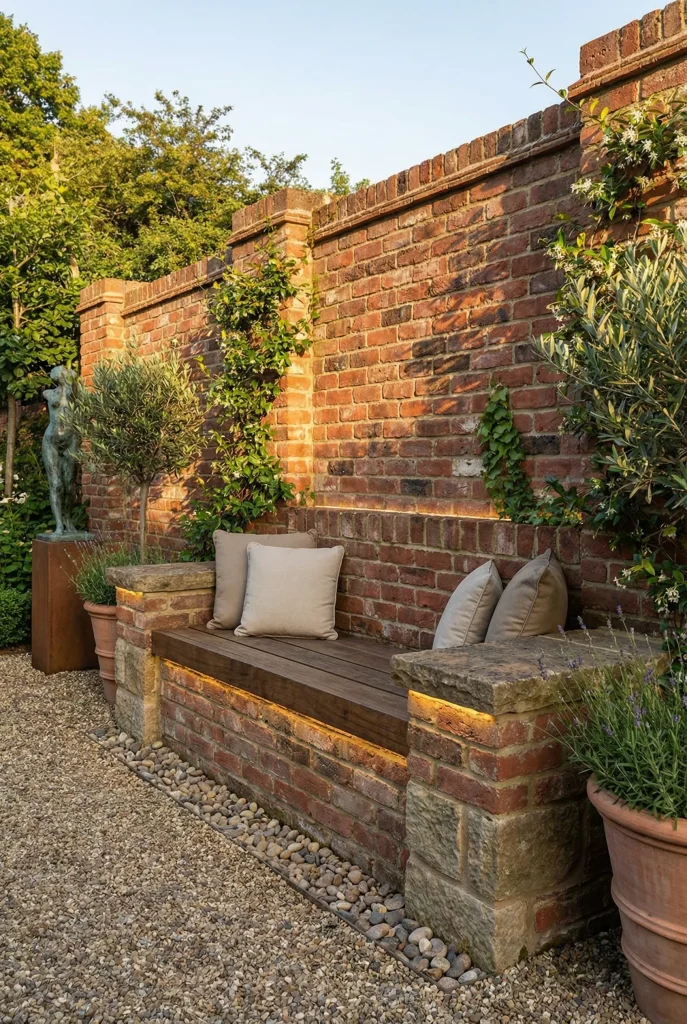
A built-in seating nook can turn an unused wall into a functional garden destination.
It requires more planning and construction than simple decor, but the result can combine seating with the existing brick architecture.
Pay close attention to drainage and moisture because seating built too close to a damp wall can create long-term problems.
Wall water features

A wall water feature can become a dramatic focal point and add the sound of moving water to the garden.
These installations are heavier than ordinary decorations because of the structure and water involved. Secure brackets, suitable anchors, drainage, electrical planning, and winter preparation may all be necessary.
They are best suited to gardens where you have a clear plan for power, maintenance, drainage, and seasonal protection.
Brick plus wood
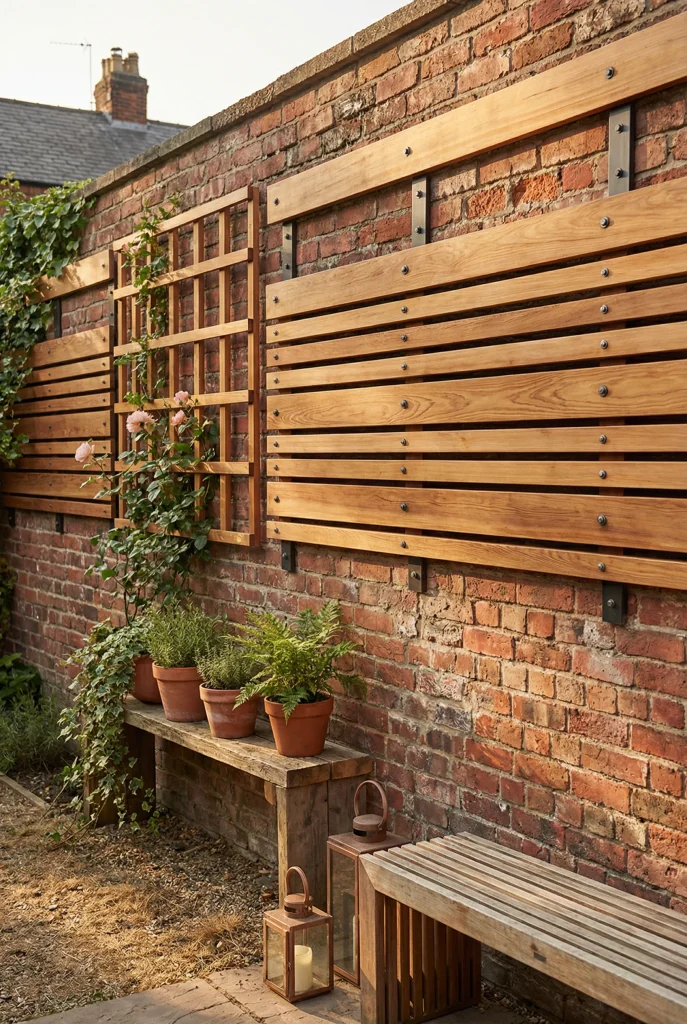
Wood can warm up the appearance of brick and create a more natural, rustic combination.
Use exterior-rated wood and protect it with a suitable finish. Secure the pieces properly and pay attention to moisture in areas that remain wet.
This approach can work well for shelves, panels, decorative frames, or small architectural features.
Brick plus stone

Stone can give a brick wall a substantial, timeless appearance. Because stone is heavy, installation needs to be approached more like a masonry project than simple wall decoration.
Proper mortar, structural support, and moisture considerations are important, particularly for larger installations.
Brick plus metal

Metal adds a clean, modern contrast to traditional brick. Outdoor-rated finishes can help the material withstand changing weather.
Medium-weight metal pieces can work well for decorative panels, geometric artwork, plant supports, or architectural accents. Make sure the mounting system matches the weight of the item and the condition of the wall.