
First, I Zone the Open Space Before Buying Anything Decorative

Open-plan spaces offer plenty of freedom, but without some structure, they can easily feel incomplete. In a loft, thoughtful zoning creates comfort and gives the room a sense of purpose. It is also one of the most important foundations of successful loft interior design.
Start with practical questions rather than decoration. Where will you sit in the evening? Where should the TV go? Which areas naturally become walkways? Where will keys, bags, and everyday items end up?
Once those questions are answered, define each area using a few practical design elements.
Rugs are a great starting point. In an industrial loft, a rug can work almost like a soft visual wall while adding warmth underfoot. Choose a living room rug large enough for the furniture to sit comfortably within its boundaries. For many lofts, a 9×12 or 10×14 rug works well.
For a durable option, low-pile and flatweave rugs are particularly practical over concrete floors. Depending on the material and quality, a larger rug can often cost around $200 to $600.
Next comes the sofa. Scale matters because small furniture can look lost inside a large loft. In an industrial living room, a sofa around 90–110 inches wide can help anchor the space and make the seating area feel intentional.
Soft dividers can then establish boundaries without blocking natural light. Try open shelving, a wide console, a bookcase behind the sofa, or even a grouping of large plants. These elements make loft apartment styling feel more structured while preserving the openness that makes lofts appealing.
Lighting should also be considered at this stage. A pendant above the dining area and lamps around the seating zone help visually separate different parts of the room while creating a warmer atmosphere.
A Simple Layout Example

For a long, rectangular loft, placing the living area near the windows can take advantage of natural light.
The dining area can sit between the living room and kitchen, creating a natural transition between the two spaces.
A console behind the sofa can provide a convenient drop zone for keys and everyday items, keeping clutter away from the dining table.
One important rule is to avoid automatically pushing every piece of furniture against the walls.
Although this can make a loft appear larger, it can also leave the center feeling empty and disconnected. Bringing furniture slightly into the room often creates better-defined zones and a more comfortable layout.
In many lofts, the real problem is not the decor—it is a layout that does not properly support everyday life.
Next, Decide How to Handle Brick and Concrete

This is where an industrial space can either maintain its beautiful raw character or start to feel unnecessarily cold.
Exposed brick walls can add texture and personality, especially when natural light highlights the surface. Concrete can also look sculptural and intentional, so there is no need to cover every hard surface.
However, certain areas may benefit from softening. Limewash is an excellent option for brick because it tones down the visual weight while allowing the original texture to remain visible. Warm paint on nearby drywall can also help balance exposed brick and concrete.
Do not underestimate textiles. Curtains can introduce softness and warmth, even when they are relatively simple. Upholstered furniture helps reduce the echo created by hard surfaces, while textile wall hangings can add warmth without overwhelming the architecture.
When an industrial loft feels too harsh, the issue is usually not that there is too much industrial character. More often, there are simply not enough soft and warm elements to balance it.
Pick Your Industrial Design Direction

The word “industrial” can describe many different styles. Choosing a primary direction makes decorating decisions much easier.
Modern industrial style is usually clean and restrained. It relies on fewer vintage pieces, simple silhouettes, and a palette built around black, white, and warm wood.
It works naturally with contemporary loft design and can pair beautifully with minimalist furniture, provided the furniture is large enough for the scale of the room.
Vintage industrial elements introduce aged finishes, factory-inspired furniture, patinated metals, and salvaged pieces. This approach can make a loft feel collected and full of character, but too many themed pieces can make the room feel more like a showroom.
Industrial and cozy style keeps the exposed architecture but introduces more warmth through wood, textiles, plants, and softer colors. The result still feels like urban industrial design, but it is much more comfortable for everyday living.
You do not have to choose just one style. Most successful lofts combine elements from all three. The key is deciding which direction will dominate so that every new purchase supports the overall look.
Choose Furniture With Scale in Mind
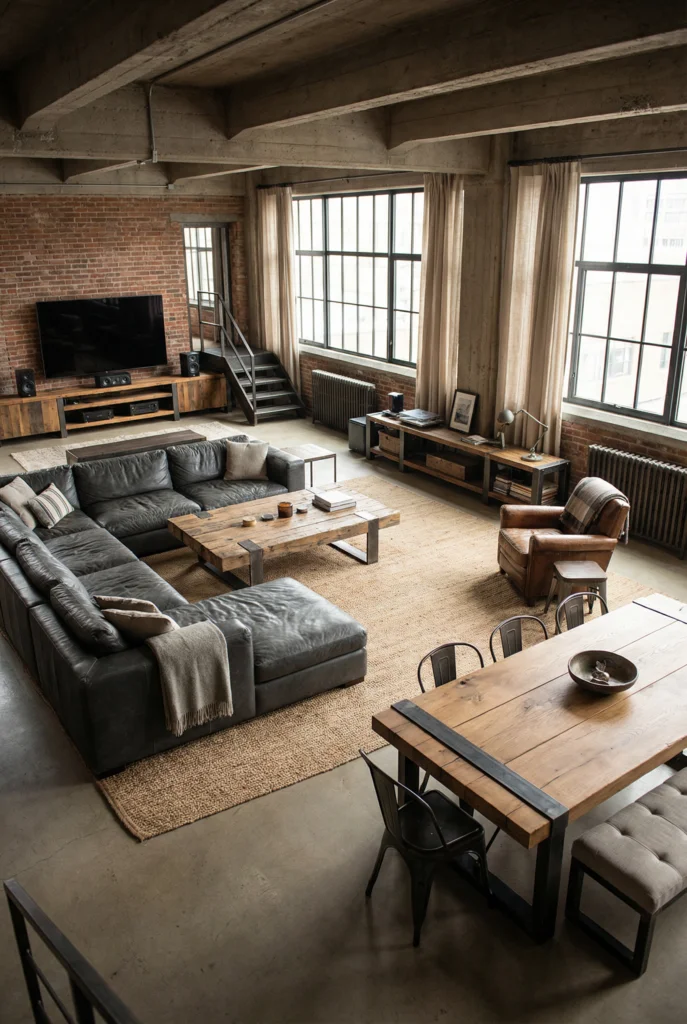
Industrial lofts can make average-sized furniture appear surprisingly small. A piece that looks substantial in a traditional room may seem temporary in a large open space.
Oversized anchor pieces can solve this problem. Consider a generous sectional, a substantial wood dining table, or a wide media console that visually grounds the room.
Material selection is just as important. Aged wood, blackened steel, leather, linen, and wool naturally complement industrial chic interiors while maintaining a sophisticated appearance.
However, too many hard materials can make the space feel cold. Warm wood is especially effective against concrete, while upholstered furniture and soft textiles add comfort.
Multi-purpose pieces are also valuable in lofts. Multi functional furniture such as storage benches, ottomans with concealed compartments, and consoles that can double as workspaces allow the room to serve several purposes without becoming overcrowded.
If you prefer a slightly warmer atmosphere, modern rustic decor can blend naturally into an industrial loft. A warm wood table, comfortable leather chair, or textured rug can soften the overall look without losing the industrial character.
Layer the Lighting Properly

Lighting is one of the biggest challenges in an industrial space. Depending entirely on a single ceiling fixture often leaves the room feeling flat and overly cold after dark.
The solution is layered lighting. Combine pendant lights over the dining table with floor lamps near seating, table lamps on consoles, and wall sconces wherever practical. These different sources create depth and make each zone feel more inviting.
As a general guideline, aim for three to five light sources in each major living area beyond the main overhead fixture. A combination of floor, table, and accent lighting usually creates a much more comfortable atmosphere.
Bulb temperature also makes a noticeable difference. Warm bulbs around 2700K–3000K can soften concrete and exposed brick, while cooler lighting can make hard surfaces appear even more severe.
Once the lighting is layered properly, the loft becomes calmer and more welcoming. That is when the industrial aesthetic begins to feel like a home rather than simply a design concept.
Materials and Finishes That Work Well

Some materials consistently perform well in loft environments because they balance the architecture while remaining practical.
For concrete floors, consider low-pile rugs, wool blends, or durable performance fibers.
For metals, matte black and blackened finishes usually work better than highly polished surfaces. A small amount of brass can provide warmth and contrast.
For wood, warmer finishes such as oak and walnut tend to complement concrete more effectively than cool gray-washed woods.
Textiles such as linen curtains, wool rugs, chunky knits, and occasional boucle pieces can soften the harder architectural elements without taking away from the industrial character.
A simple way to keep the finishes cohesive is to choose one primary metal, such as matte black or gunmetal, and repeat it throughout the room two or three times.
Then introduce one accent metal, such as aged brass, sparingly. Too many shiny metal finishes can make an industrial loft feel more like a commercial restaurant than a comfortable home.
This balance is the secret to creating cozy loft decor while keeping industrial style accents intentional and cohesive.
Finally, Let Comfort Bring Everything Together
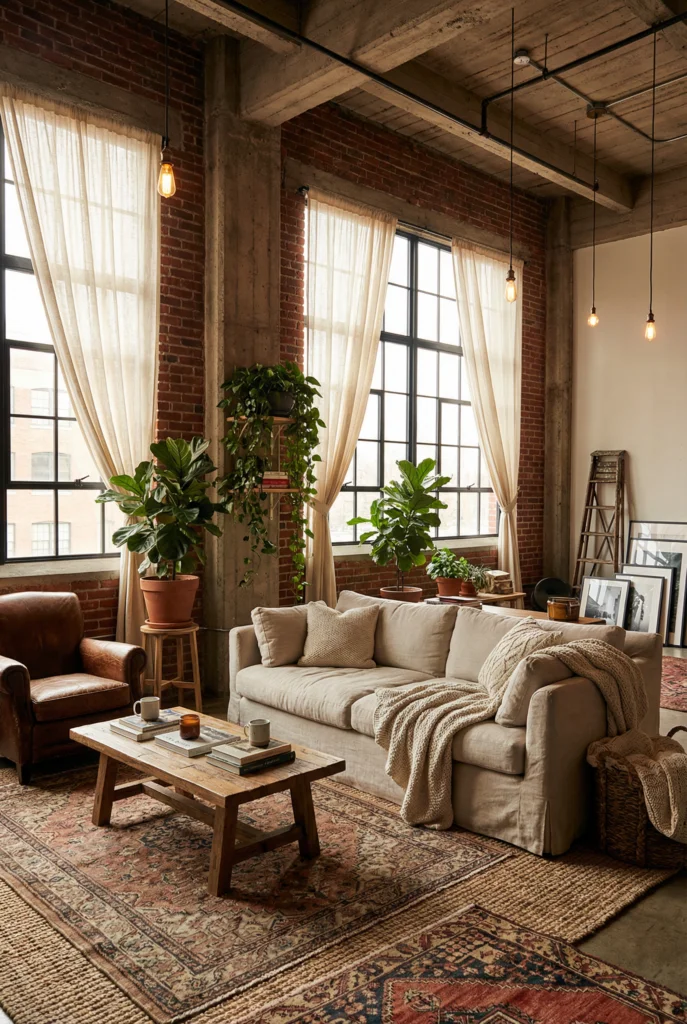
Comfort is often treated as the final decorative layer, but it is actually what makes an industrial loft feel livable.
Use rugs to soften hard flooring, curtains to frame windows, and plants to bring natural life into the room. Add textured throws and pillows that make the seating area feel inviting rather than purely decorative.
Mix materials thoughtfully: leather with wool, wood with linen, blackened steel with warm oak. These combinations create contrast while preventing the room from becoming too cold or overly coordinated.
The best industrial lofts do not hide their architecture. Instead, they balance concrete, brick, metal, and open space with warmth, texture, practical furniture, and comfortable lighting. The result is a home that feels spacious and distinctive while still being genuinely easy to live in.