


The first pantry moth you notice is usually not the only one. Spotting a moth flying around your kitchen often means eggs, larvae, or cocoons are already hiding somewhere in your dry food or pantry shelves. Simply swatting the adults or putting out a trap may give you a short break, but it will not solve the source of the infestation.
The good news is that pantry moths can be eliminated. You need to remove contaminated food, clean the entire pantry carefully, use pheromone traps to monitor the remaining adults, and then store dry goods properly so the problem does not return.
The Short Answer
To get rid of pantry moths, empty the entire pantry and inspect every item. Throw away infested food and any questionable products in open or easily penetrated packaging. Vacuum shelves, corners, cracks, seams, peg holes, and other hidden areas, then empty the vacuum outside immediately. Wash the pantry with warm, soapy water and clean all containers, baskets, and storage accessories.
After cleaning, place pantry moth pheromone traps inside to catch remaining adult males and monitor whether the infestation is still active. Keep the pantry as empty as possible until moth activity stops. When you restock, transfer vulnerable foods such as flour, rice, oats, pasta, nuts, seeds, pet food, and dried fruit into airtight glass or sturdy plastic containers. Freezing newly purchased dry goods for a few days can also help kill eggs that may have come home inside the packaging.
What Are Pantry Moths?
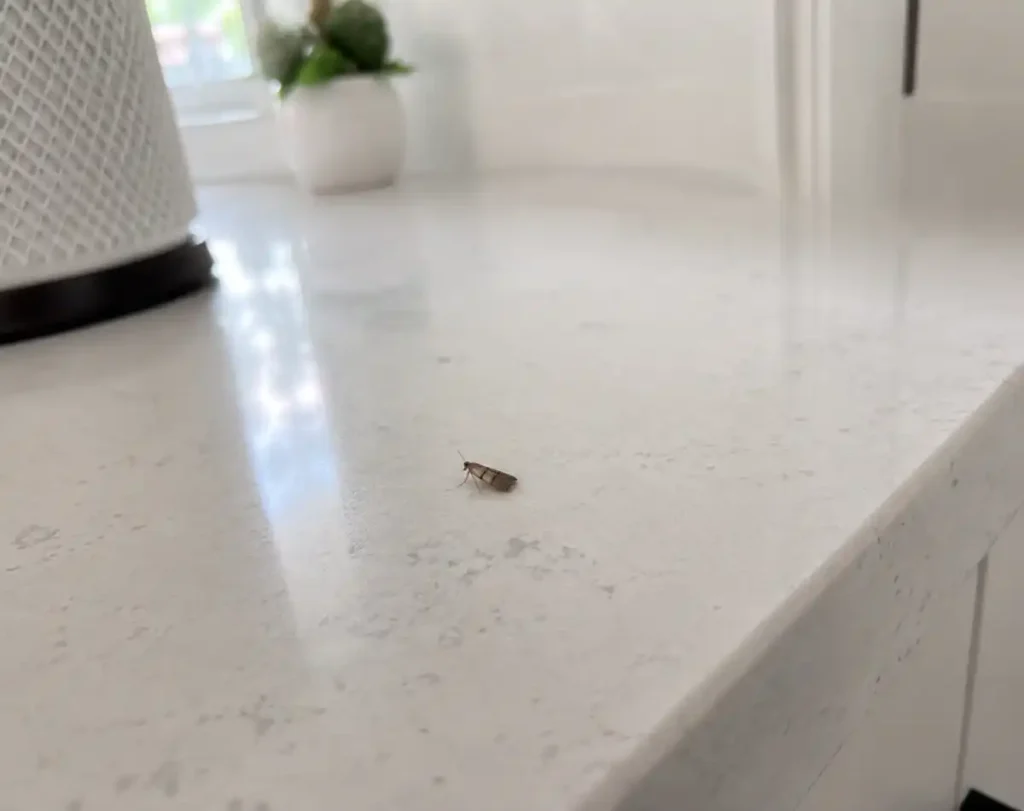
Pantry moths are commonly Indian meal moths, small household pests that are particularly attracted to stored dry foods. Adults are usually about a centimeter long, with wings that have a distinctive two-toned appearance: the portion closer to the body is pale while the outer section has a coppery or reddish-brown color.
The adults are not the stage that damages your food. Female moths lay hundreds of eggs, often in or around food packaging. Once the eggs hatch, the larvae feed on the stored food. These small, pale caterpillar-like larvae may also crawl away from food and hide in cracks, corners, or other protected places before forming cocoons.
Pantry moths can infest much more than flour and cereal. Check common hiding places and food sources such as:
- Flour, oats, rice, cereal, and pasta
- Nuts and seeds
- Dried fruit
- Pet food and birdseed
- Spices and baking ingredients
- Chocolate and other dry foods
- Older packages that have been sitting unused for months
A pantry moth infestation also does not necessarily mean your kitchen is dirty. Eggs or larvae can enter your home inside food products before you purchase them. Contaminated goods may have been exposed somewhere during processing, storage, transportation, or retail.
How to Get Rid of Pantry Moths Step by Step
The order of these steps matters. Cleaning only the area where you noticed a moth is rarely enough because eggs, larvae, and cocoons can be hidden throughout the pantry. A complete cleanup gives you a much better chance of breaking the infestation cycle.
Take it all out

Remove everything from the pantry rather than cleaning only one shelf. Take out food, containers, baskets, racks, organizers, and anything else stored inside.
As you remove each item, inspect it carefully. Throw away food that shows webbing, larvae, cocoons, unusual clumping, or other signs of infestation. Be cautious with opened packages and thin cardboard or plastic packaging because pantry moth larvae can get into packaging that appears perfectly normal from the outside.
Do not automatically assume a sealed-looking box is safe. If you are unsure about an item, throwing it away is often easier and safer than risking another infestation.
Food stored in intact glass or sturdy airtight containers can be set aside for closer inspection, but do not immediately return it to the pantry.
Vacuum before anything wet touches it

Vacuum the empty pantry thoroughly before washing it. Use the crevice attachment to reach corners, cracks, seams, shelf edges, peg holes, the underside of shelves, the top lip, ceiling, and other hidden spaces.
This step helps remove eggs, larvae, pupae, and cocoons that may be attached to surfaces. Simply wiping the shelves first may not remove everything hiding in cracks.
Once you finish vacuuming, empty the vacuum outside immediately. If you have a bagged vacuum, seal and dispose of the bag outdoors. For a canister vacuum, clean it according to the manufacturer’s instructions and make sure the contents do not remain inside the home.
Wash it all down

After vacuuming, wash the pantry surfaces with warm water and dish soap. Carefully clean the shelves, walls, corners, ceiling, trim, doors, and other accessible surfaces.
Pay special attention to places where you find silky webbing or small cocoons. Remove and dispose of any visible material rather than simply wiping over it.
A thorough physical cleaning is generally more useful than spraying insecticide around food-storage areas. Avoid applying pesticides directly to shelves or surfaces where food is stored unless the product label specifically allows that use.
The tubs. And, look, the baskets
Do not forget the items that normally sit inside the pantry. Wash food-storage bins, jars, lazy Susans, shelf risers, organizers, and other removable accessories with warm, soapy water when the material allows it.
Pay particular attention to woven baskets. Their fibers and gaps can provide places for larvae or cocoons to hide. Clean them thoroughly and inspect them carefully before putting them back.
If a basket is heavily infested and cannot be cleaned effectively, replacing it may be more practical than repeatedly trying to remove hidden pests.
Do Pantry Moth Traps Actually Work?

Yes, pantry moth traps can be useful, but they are not a complete solution.
Most pantry moth traps use pheromones that attract adult male moths. The moths become stuck to the adhesive surface, reducing the number of males available to reproduce and, more importantly, giving you a way to monitor ongoing activity.
Think of the trap as a monitoring tool rather than a cure. A trap cannot remove eggs and larvae that are already inside food packages or hiding around your pantry.
After cleaning, place an appropriate pantry moth pheromone trap in the area and monitor it regularly. If moths continue appearing or the trap keeps catching adults, the infestation may still be active. Continue inspecting food and cleaning hidden areas rather than assuming the trap has solved everything.
One more wipe
Before putting your food back, give the pantry another quick wipe. You do not necessarily need to repeat the entire deep-cleaning process, but a final pass helps remove anything that may have been missed during the first cleanup.
Make sure the shelves and surfaces are completely dry before restocking.
Refill – proper containers this time

The best long-term protection is proper food storage. Transfer vulnerable dry goods into airtight glass, metal, or sturdy hard-plastic containers with secure lids.
Focus especially on:
- Flour
- Rice
- Oats
- Pasta
- Cereal
- Nuts and seeds
- Dried fruit
- Baking ingredients
- Pet food
- Birdseed
A good container does more than protect food from new moths. It also helps contain a problem if an egg or larva was already present in one product. Instead of allowing an infestation to spread throughout multiple packages, the issue remains isolated to one container.
You do not have to replace every storage container at once. Start with the foods most likely to attract pantry moths and gradually improve the rest of your pantry.
How to Prevent Pantry Moths From Coming Back
One of the simplest prevention habits is to freeze susceptible dry goods after bringing them home. Foods such as flour, rice, oats, cornmeal, and other dry grains can be placed in the freezer for a few days before being transferred to airtight storage.
Freezing can help kill eggs or other early stages that may already be present in the food. Afterward, allow the product to return to an appropriate temperature and store it in a clean, airtight container.
It is also useful to inspect packages when shopping. Avoid damaged packaging, excessive dust, webbing, holes, or products that look unusual.
You may also see recommendations for bay leaves, lavender, or other strong scents as pantry moth deterrents. These may make the pantry smell pleasant and could potentially discourage some pests, but they should not be relied on to eliminate an active infestation. Cleaning, removing contaminated food, monitoring, and proper storage are much more important.
You’re fine, you’ve got this
Finding pantry moths can make the entire kitchen feel contaminated, but an infestation does not mean you have a dirty home. These pests can arrive inside food products, and once they establish themselves, they can be surprisingly difficult to notice until the adult moths start flying around.
The solution is straightforward, even if it takes some effort: empty the pantry, inspect and discard contaminated food, vacuum thoroughly, wash every surface, clean the storage accessories, use pheromone traps to monitor activity, and wait before restocking.
Once everything is clear, keep dry foods in airtight containers and consider freezing susceptible grains and flour when you first bring them home. The goal is not just to remove the moths you can see today but to break their entire life cycle and prevent another infestation from getting started.
Where do pantry moths come from?
Pantry moths most often enter homes through infested food products. Eggs or very young larvae may already be present in dry goods when you purchase them, meaning an infestation can begin even in a clean and well-maintained kitchen.
They can also enter through openings such as doors, windows, or vents, but contaminated dry goods are a common source. Checking new packages and transferring vulnerable foods into airtight containers can greatly reduce the chance of an infestation spreading.
How long does it take to get rid of pantry moths?
A minor infestation may be brought under control within a few weeks when you thoroughly remove contaminated food, clean the pantry, and monitor it with pheromone traps. A larger infestation can take longer because eggs and pupae may remain hidden and continue developing after the initial cleanup.
The important thing is not to stop simply because the adult moths disappear for a few days. Continue monitoring and inspecting your pantry until you are confident the infestation has ended.
Do pantry moths go away on their own?
Usually, no. Pantry moths can continue reproducing as long as they have access to suitable food and places to lay eggs.
Simply waiting for adult moths to disappear does not address eggs or larvae hidden inside food packages or pantry cracks. Removing their food source and thoroughly cleaning the storage area are essential for breaking the infestation cycle.
Are pantry moths harmful?
Pantry moths are primarily a food-contamination and nuisance pest rather than a biting or stinging insect. They do not typically pose the same health concerns as pests that transmit disease, but infested food can contain webbing, larvae, droppings, and other contamination.
For that reason, food showing clear signs of infestation should be discarded rather than eaten. The biggest practical problems are contaminated food, wasted money, and the time required to clean and reorganize the pantry.
What is the fastest way to get rid of pantry moths?
The fastest reliable approach is to tackle the entire pantry at once instead of treating only the area where you spotted an adult moth. Remove and inspect all food, discard contaminated or questionable products, vacuum cracks and hidden areas, wash the pantry with warm soapy water, clean storage containers, and use pheromone traps to monitor remaining adults.
Once the pantry is clean, move susceptible foods into airtight containers and continue checking for moth activity. Trying to save time by skipping the inspection or cleaning stages often allows hidden eggs and larvae to survive, causing the infestation to return.