Modern kitchen decor comes down to five key elements that shape how a kitchen looks, feels, and functions every day. This guide breaks those elements down with practical rules, realistic costs, and smart decisions so you can create a kitchen that feels modern, comfortable, and never overdesigned.
Modern kitchen decor sounds simple until you’re standing in your kitchen with three cabinet samples that look almost identical under questionable lighting, wondering why every inspiration photo feels calm while your own kitchen feels anything but.
I’ve been there. Kitchens are personal. They’re expensive, fairly permanent, and they’re also where everyday life gets messy.
So when most people say they want a “modern kitchen,” they usually mean calm, intentional, timeless, warm, and not trying too hard.
This guide focuses on five core elements that consistently appear in well-designed modern kitchens. These aren’t trends chosen simply because they’re popular. They’re practical choices that can help your kitchen look current while remaining functional for years.
Quick Start: What to Prioritize by Budget
If you want modern kitchen decor without overspending or filling the room with unnecessary design features, start with the changes that make the biggest visual difference.
Under $300
This budget is mainly about cleaning up the overall look. Replace dated cabinet hardware with elongated, streamlined pulls. Switch old bulbs to warm, dimmable LEDs around 2700K to 3000K. Add one intentional countertop accessory, such as a low tray or ceramic bowl, to keep everyday clutter looking organized.
$300 to $1,500
This is often the sweet spot for making a kitchen feel noticeably newer. Add under-cabinet LED strip lighting, upgrade the faucet to a modern shape in a warm metal finish, and repaint the walls with a warm neutral that complements the existing cabinetry.
$1,500 to $8,000
At this level, you can start improving both function and appearance. Consider a new backsplash using vertical tile or a slab-look porcelain panel. A workstation sink can turn the sink area into a practical prep station, while new pendants and layered lighting can completely change the atmosphere.
$8,000+
These are larger foundational improvements. New countertops made from quartz, quartzite, or porcelain slabs can transform the room. Cabinet refacing or replacement doors in flat-panel or slim-shaker styles can modernize the cabinetry, while layout changes can improve island proportions and walking clearances.
Sizing and Rules That Actually Matter (Without the Headache)
You don’t need to memorize every kitchen-design rule ever created. A few practical measurements can prevent expensive mistakes and make everyday movement much easier.
Most kitchen designers work within these ranges because they account for appliance doors, traffic flow, and the way people actually move through a kitchen.
Island clearance
- 36 inches is a practical minimum when space is limited.
- 42 inches provides a more comfortable everyday walkway.
- 48 inches is especially useful when multiple people cook together or appliances open into the walkway.
Pendant height
- The bottom of a pendant should generally sit about 30 to 36 inches above the countertop.
Cabinet pull sizing
- Common modern sizes include 160mm, 192mm, and 224mm, referring to center-to-center spacing.
- For wide drawers, pulls around 10 to 18 inches can create a more balanced and intentional appearance.
Layout basics
- The traditional work triangle between the sink, stove, and refrigerator still has value.
- Zone-based layouts can work even better in modern homes by separating prep, cooking, cleaning, storage, and serving areas.
You don’t need to measure every detail obsessively. Focus on the measurements that affect movement and daily use.
Clean Lines and Simplicity Are Doing More Work Than Any Trend
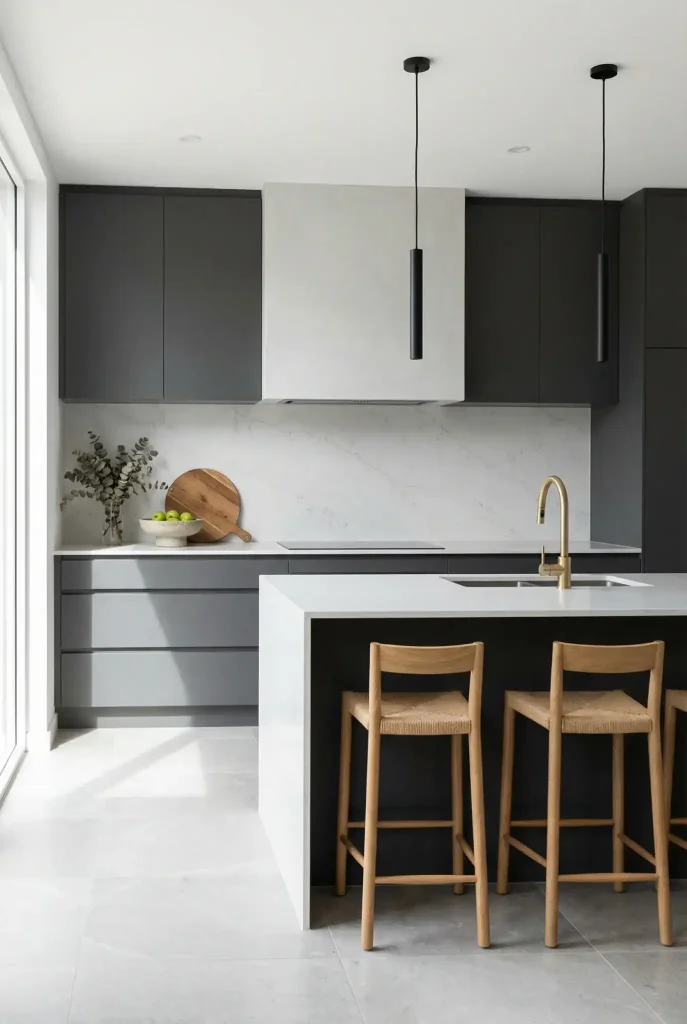
Clean lines are the foundation of modern kitchen decor. When this element is right, the rest of the design becomes much easier to coordinate. When it’s wrong, even expensive finishes can make the kitchen feel busy.
Today’s modern kitchens often sit somewhere between completely flat-panel cabinetry and slim shaker designs.
Flat panel cabinetry creates the cleanest, most architectural appearance.
Slim shaker cabinetry adds a little more warmth while avoiding excessive decoration. Traditional shaker doors with wide rails can quickly push the kitchen toward a transitional style, even when paired with contemporary finishes.
Clean lines also require consistency. Choose one main cabinet style, keep trim restrained, and avoid unnecessary visual interruptions. The goal isn’t to make the kitchen look empty. It’s to make it look thoughtfully edited.
Another advantage of simple cabinetry is longevity. When the basic structure remains restrained, future changes such as new hardware, lighting, or a backsplash can be introduced without competing with the original design.
Product-type shortcuts
- Cabinet doors: flat panel or slim shaker.
- Hood styles: simple box, plaster-style, or fully integrated.
- Backsplash layouts: vertical stack tile or slab-look surfaces.
Common mistake
Avoid putting too many statement pieces in the same space. A curved faucet, lantern pendants, decorative corbels, heavily patterned tile, and oversized hardware can all compete for attention. Choose one hero feature and allow the surrounding elements to stay quiet.
Neutral Color Foundations That Don’t Feel Flat or Builder-Grade
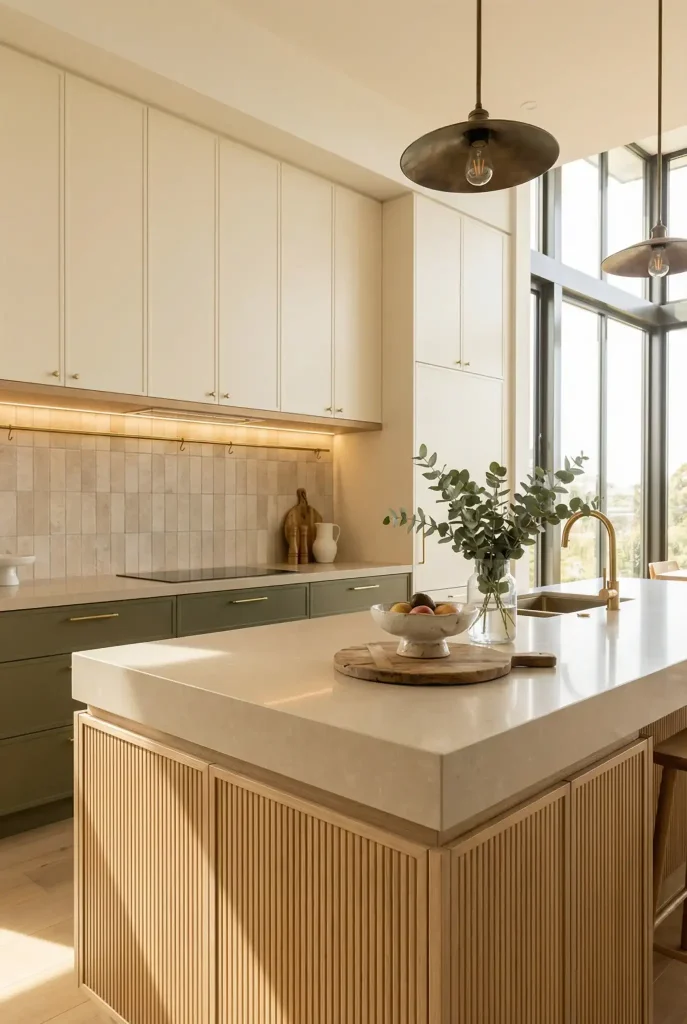
Neutral doesn’t have to mean boring. In 2026, many modern kitchens are moving toward warmer neutrals rather than the cool gray palettes that dominated earlier trends.
Think creamy whites, mushroom shades, warm greige, soft beige, and natural wood tones.
Gray-heavy kitchens are increasingly being replaced by palettes that feel softer and more natural, particularly in open-plan homes where the kitchen connects directly with the living and dining areas.
A practical cabinet color hierarchy includes:
- Warm white or soft beige for long-term flexibility.
- Natural stained wood such as oak, walnut, or white oak for warmth and texture.
- Muted greens such as olive or forest green when you want personality without overwhelming the space.
A neutral foundation also responds better to changing lighting conditions. Warm neutrals can look comfortable in morning sunlight, cloudy daylight, and artificial evening light, while some cooler colors can appear harsh or flat depending on the room’s lighting.
If you want the kitchen to feel consistent throughout the day, choosing the right undertone is more important than chasing the latest color trend.
Countertop Comparison Table
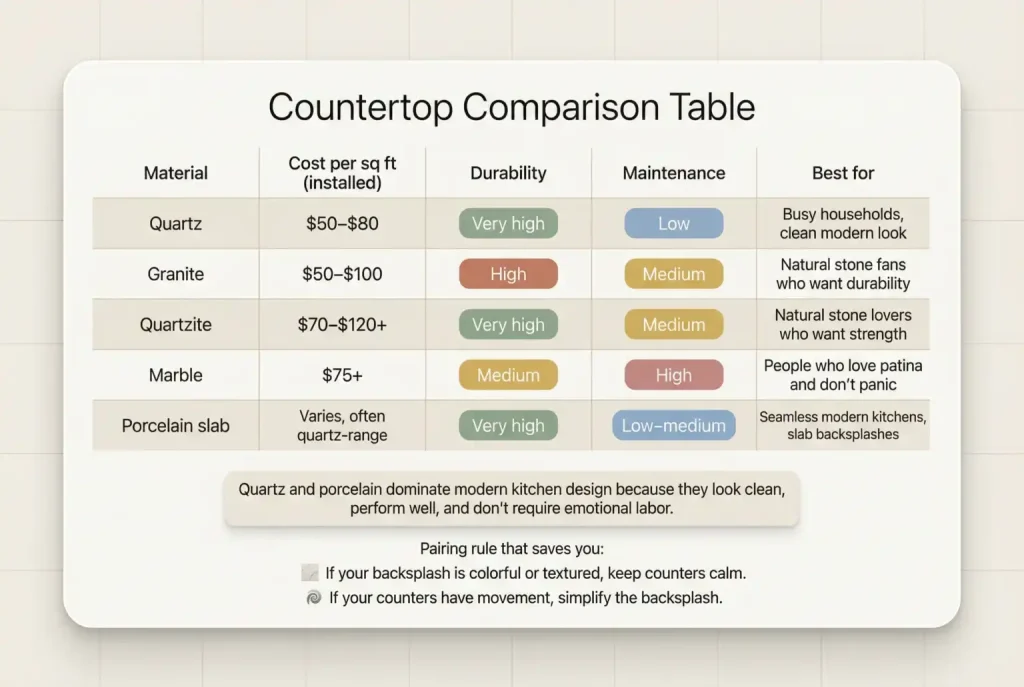
When choosing a countertop, think beyond color. Durability, maintenance, heat resistance, appearance, and budget all affect whether a material will work well in your kitchen.
Sleek Hardware and Fixtures That Quietly Do the Heavy Lifting
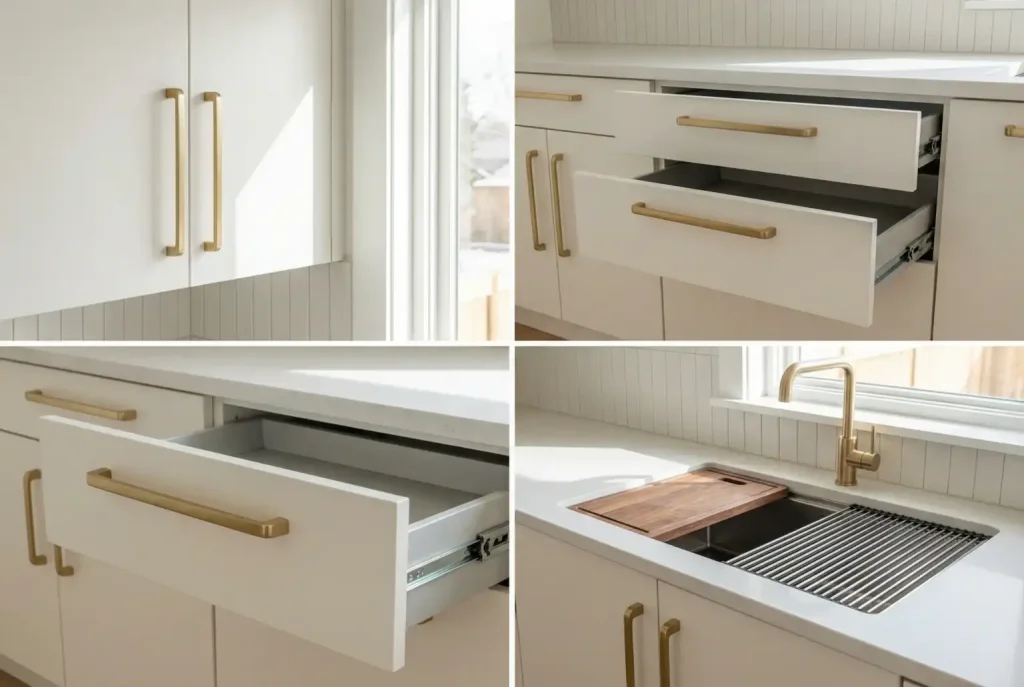
Hardware is one of the easiest ways to update modern kitchen decor, and it’s often underestimated. In 2026, modern hardware tends to favor elongated pulls, clean profiles, and warmer finishes.
Current finishes that work especially well include:
- Brushed or burnished brass.
- Matte black.
- Warm stainless steel or champagne tones.
Hardware is also one of the kitchen’s most frequently touched features, so comfort matters just as much as appearance.
Choose pulls with comfortable edges, enough grip space, and consistent placement. A modern kitchen should feel good to use, not just look good in photographs.
Concrete hardware guidance
- Use pulls on drawers in most cases.
- Keep the same general pull style throughout the kitchen.
- When uncertain between sizes, going slightly larger usually creates a more confident modern look.
Common pull sizes
- 160mm, 192mm, and 224mm for standard cabinetry.
- 10 to 18 inches for wider drawers.
Fixtures matter too. A streamlined faucet can change the overall impression of the kitchen with surprisingly little effort.
If you’re already replacing the sink, consider a workstation sink. It can turn the sink area into a useful prep zone rather than simply a place for washing dishes.
A 30- to 33-inch sink works well in many kitchens without taking up excessive cabinet space.
Common mistake
Avoid using hardware that looks too small for the drawer. Undersized pulls can make large drawers feel visually unbalanced and less intentional.
Minimalist Surfaces Without Losing Personality or Warmth
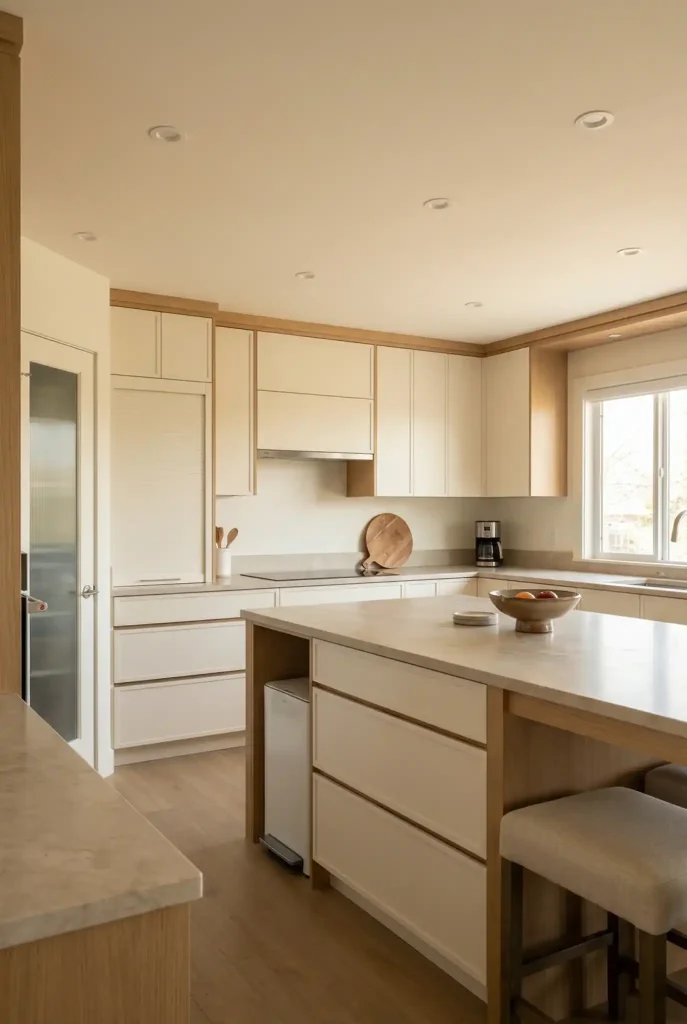
Minimalist surfaces are really about editing rather than pretending nobody actually lives in the kitchen.
Modern kitchens tend to look better when countertops remain relatively clear, but that only works when the kitchen has enough functional storage.
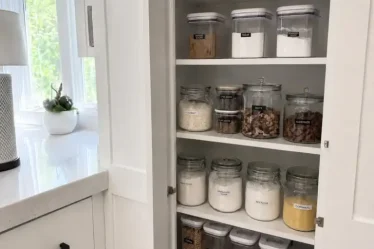
Deep drawers, organized pantry zones, and a dedicated place for appliances such as the air fryer often matter more than decorative styling.
Minimalist surfaces work best when everyday tools are clearly separated from decorative pieces. When everything on the countertop is either useful or intentionally displayed, the space feels calm rather than empty.
This is why storage improvements can sometimes create a bigger visual transformation than new accessories.
Islands are often the emotional center of the kitchen, but they work best when they have a specific purpose.
- Prep island with a trash pull-out and deep drawers.
- Seating island with sufficient overhang.
- Storage island designed to hide frequently used appliances.
Large islands remain popular, but clearance is more important than size. A huge island that makes it difficult to open the dishwasher or move around the room will become frustrating very quickly.
Functional Lighting That Makes the Kitchen Actually Work

Lighting is often what makes a modern kitchen feel complete rather than flat. The best modern kitchens use several layers of lighting instead of depending on a single ceiling fixture.
You generally want:
- Ambient lighting: recessed lights or ceiling fixtures.
- Task lighting: under-cabinet LED strips.
- Accent lighting: pendants, toe-kick lighting, or illuminated cabinet interiors.
Good lighting also affects how finishes appear. Warm cabinetry, stone countertops, and brass hardware can look dull or muddy when the lighting is poorly selected.
When lighting is layered and warm, materials show their texture and natural color more clearly. That visual depth is one reason professionally designed kitchens often feel more cohesive.
Product examples
- Under-cabinet LED strips: plug-in or hardwired.
- Pendant styles: globe, dome, or linear bar.
- Bulb temperature: 2700K to 3000K for a warmer atmosphere.
Dimmers and smart lighting are also useful because they allow the kitchen to serve different purposes throughout the day. Use brighter lighting while cooking and softer illumination when the kitchen becomes part of the evening living space.
Common mistake
Avoid mixing noticeably different bulb temperatures. Choose a warm range and keep the lighting consistent throughout the kitchen.
Three Finished Style Recipes (So You Can See It)
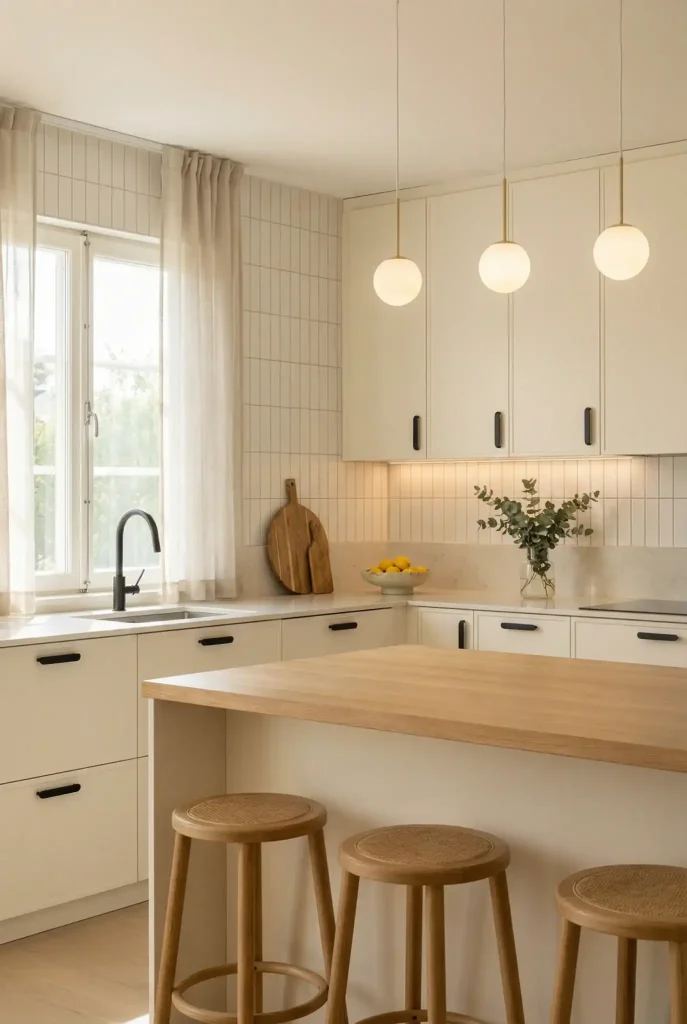
Modern Scandinavian
Start with a warm white base, then add oak or white oak accents for natural texture. Matte black hardware and a matching faucet provide contrast, while vertical off-white tile keeps the backsplash simple. Finish with quiet quartz countertops and globe or dome pendants supported by under-cabinet LEDs.
Modern Organic

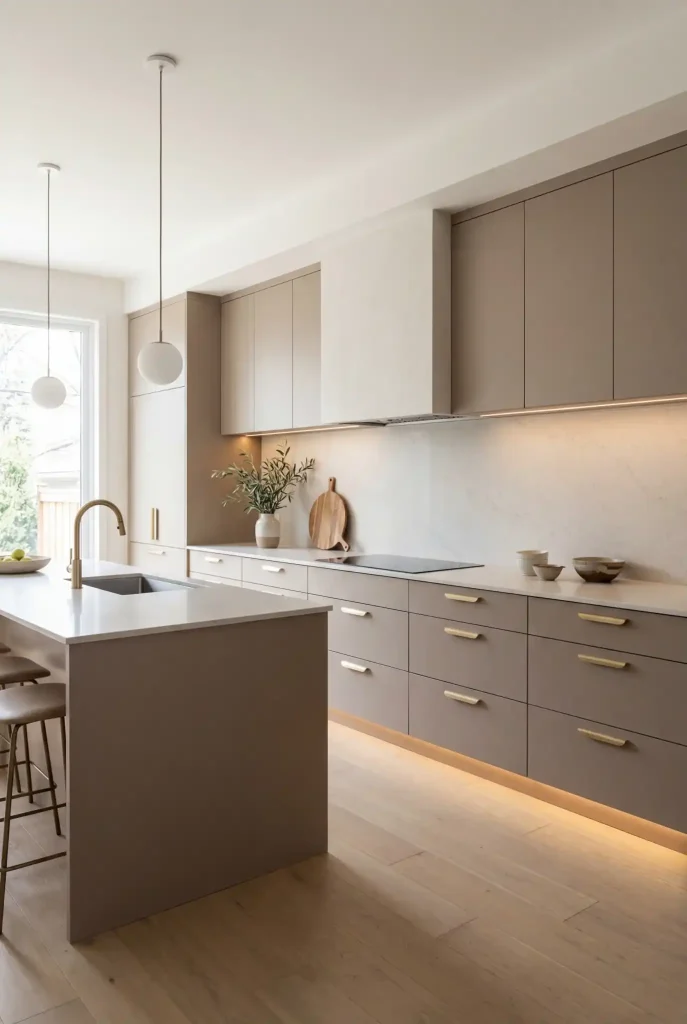
Use putty or warm greige cabinetry as the foundation. Pair it with porcelain slab countertops that mimic natural stone, warm brass hardware, and a textured ceramic backsplash. Add wood accents for softness and use layered lighting throughout the space.
Modern Urban
Choose a deeper neutral or refined warm-toned cabinet color and balance it with streamlined surfaces. Matte black or dark metal hardware can add definition, while large-format backsplash materials create a clean architectural appearance. Keep accessories minimal and use layered lighting to prevent the darker palette from feeling heavy.